
Livraison le jour même ou le lendemain

Qualité garantie

Débloquez vos offres de bienvenue: Livraison GRATUITE | Jusqu'à -80 % | 30 jours d'essai gratuits à JoyPlus
Téléchargez l'application
A dog treat can reward good behaviour, support a training session or simply keep your dog occupied between meals. But the packaging alone is not enough to make the right choice. Claims such as “natural”, “dental” or “low fat” should be considered alongside the ingredients, format and your pet’s actual needs.
Chew sticks for dogs can contribute to a mechanical cleaning action while your dog chews. Their shape and texture help rub against certain tooth surfaces, but they do not replace brushing or the care recommended by an animal health professional. A dental treat should therefore be viewed as part of an oral hygiene routine, not a complete solution.
A grain-free recipe is not automatically suitable for every dog. You should also check the ingredient list, fat content, moisture level and size of the pieces. Some natural treats are particularly rich or difficult to break into smaller portions, making portion control more complicated.
A treat designed for a 25 kg dog will not necessarily be suitable for a small dog. A piece that is too large may be difficult to chew, while one that is too small could be swallowed whole. Before buying, check the guidance for small, medium or large dogs, the minimum age and whether your pet needs to be supervised.
Ingredients are generally listed in descending order by weight. For chicken treats, check whether chicken appears among the first ingredients and whether the recipe also contains cereals, by-products or additives.
Analytical constituents provide useful guidance:
Treats are complementary foods. They should not replace main meals.
When rewarding your dog during training, a soft texture that is easy to cut is particularly practical. It allows you to give small portions throughout the session without constantly interrupting the exercise.
Chew sticks are more suitable for prolonged chewing. For a dental treat, examine the shape, texture and weight recommendations. Pedigree Dentastix, for example, is presented by the manufacturer with an “X” shape and a slightly abrasive texture. The product page recommends one stick per day for dogs in the specified weight category.
A large bag is only worthwhile if its contents are used before losing their freshness and the portions given remain under control. Compare the price per weight, number of pieces and recommended portion. Individual sachets are practical for preserving texture, while resealable packaging is better suited to products given out gradually.
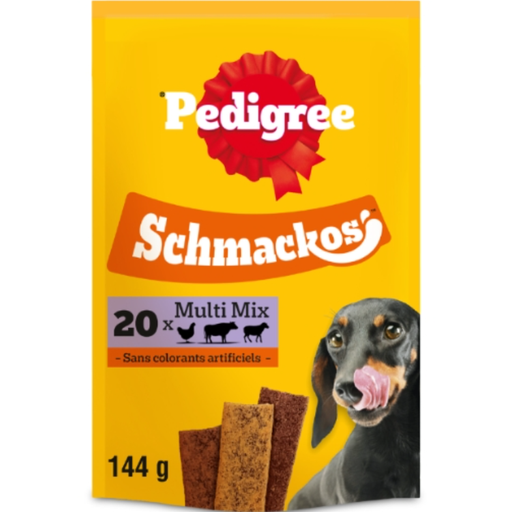
Why this choice suits this profile : The soft strips are suitable for everyday rewards and let you vary the flavours in a format that is easy to hand out.
The guide gives a daily quantity based on your dog’s weight, helping you avoid handing out treats at random.
Three varieties, 20 pieces and fewer than 30 kcal per strip according to the product page.
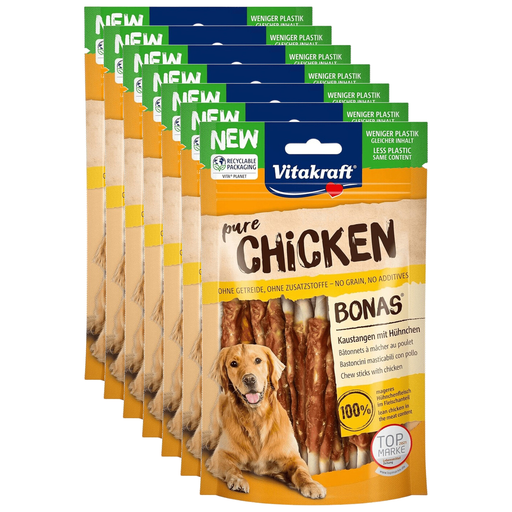
Why this choice suits this profile : The large pack is aimed at households that want a supply of chew treats for different uses.
The ingredients list mentions beef hide, 4 % chicken and 4 % cheese powder, so the highlighted ingredients should be checked without giving them more importance than they actually have.
560 g, with no cereals or added sugar according to the product page, in a resealable bag.
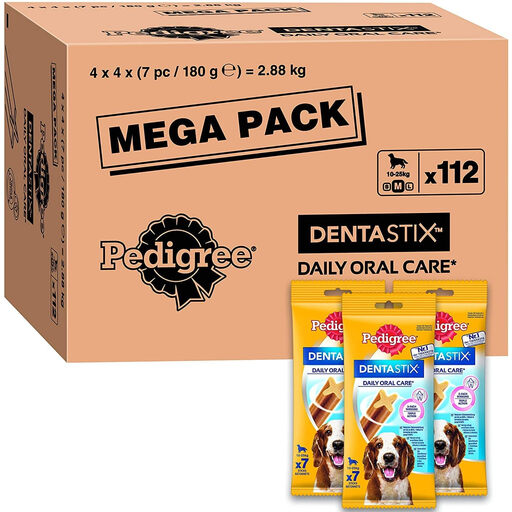
Why this choice suits this profile : The pack of 112 sticks is suitable for a daily routine for a dog weighing 10 to 25 kg.
The format is clearly intended for medium-sized dogs weighing 10 to 25 kg and provides for one stick per day, making the dosage easy to understand.
Packs of 7, an X shape and a slightly abrasive texture stated by the manufacturer; the product page also mentions a reduced fat content.
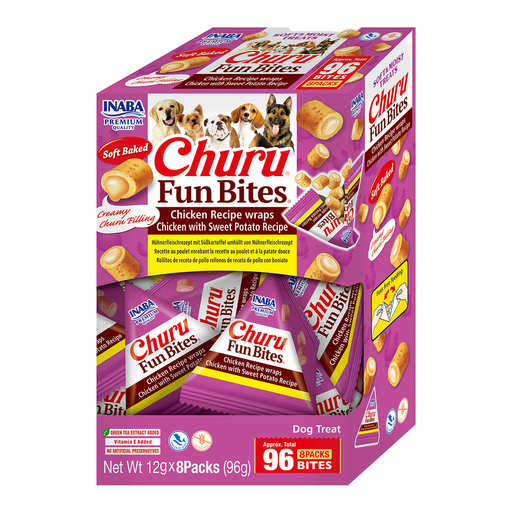
Why this choice suits this profile : Its soft texture and 40 g format make it easy to break into smaller portions during training or for small dogs.
The product page details the analytical constituents: 82 % moisture, 11.5 % protein and 2.2 % fat.
The recipe contains chicken, chicken broth and sweet potato; its soft texture is well suited to rewards between meals.
We have put together a complete, real-time updated selection of products that meet these demanding selection criteria and European safety standards.
The quantity depends on the product, your dog’s weight and its activity level. Check the feeding guide on the packaging and include treats in the daily intake. For training, very small pieces allow you to give more rewards without handing out an excessive amount.
No. Their texture can complement an oral hygiene routine, but it does not replace brushing or personalised advice from a professional. Choose a format suitable for your dog’s weight and follow the supervision recommendations.
Not necessarily. The absence of cereals is not enough to determine whether a recipe is suitable. Compare its ingredients, fat content and texture, taking any known sensitivities into account. If your dog follows a specific diet, ask your vet for advice.