
Livraison le jour même ou le lendemain

Qualité garantie

Débloquez vos offres de bienvenue: Livraison GRATUITE | Jusqu'à -80 % | 30 jours d'essai gratuits à JoyPlus
Téléchargez l'application
Condensation on windows, a persistent musty smell, traces of mould... These are unmistakable signs that your home is suffering from excess humidity. An air dehumidifier is an effective solution for restoring a healthy and comfortable environment. However, drowning in technical specs and marketing promises, it's easy to make the wrong choice.
As the Head of Product Recommendations at Joybuy, my role is to help you decode this information. Let's analyse the pitfalls to avoid and the essential criteria for choosing a device that is truly suited to your needs, with no unpleasant surprises.
Marketing often highlights impressive features that don't deliver under real-world conditions. Here are the key points to be aware of so you don't fall for the trap.
To avoid these pitfalls, focus on a few key parameters that define the real-world performance of a smart air dehumidifier and its suitability for your home.
The capacity (in litres per day) must be appropriate for the area to be treated and the ambient humidity level.
For living spaces, silence is not an option. A silent dehumidifier is essential for your comfort.
The water collection method directly impacts your daily convenience.
Here are a few models that stand out for their design and features, tailored to different user profiles.
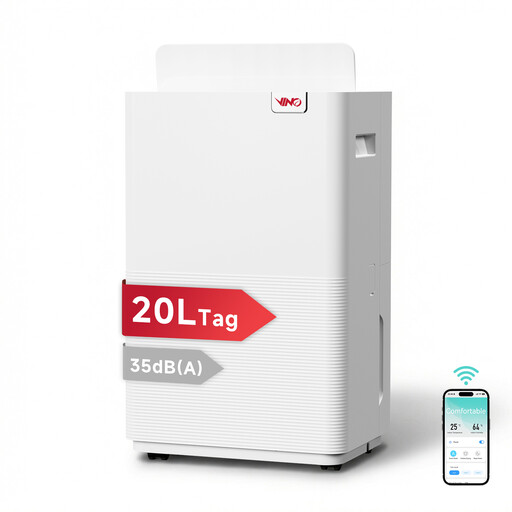
Why it stands out: Perfect for those who want to combine high performance with total control. Its 20L capacity efficiently handles large spaces up to 40 m?, and its Wi-Fi app control offers precise remote management, ideal for optimising comfort and consumption.
It avoids the noise trap by advertising a 35 dB night mode, a realistic figure suitable for nighttime use. Its capacity is clearly correlated with a surface area, giving a fair idea of its performance.
It combines a high extraction capacity with the convenience of Wi-Fi control. Its automatic internal drying function also simplifies maintenance.
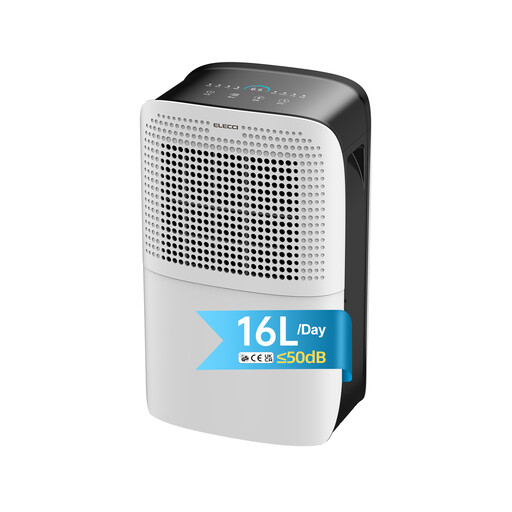
Why it stands out: Designed for families, this model shines with its versatility. Its 16 L/day capacity is suitable for living areas up to 32 m?, and its laundry dry function is a real plus for the laundry room on rainy days.
Rather than a vague promise of silence, it offers 4 clear modes (Standard, Rainy, Drying, Night). This allows the user to choose the best performance/noise trade-off for each situation.
Its preset modes, including a powerful "Drying" mode, and the continuous drainage option make it a practical and autonomous device for hassle-free use.
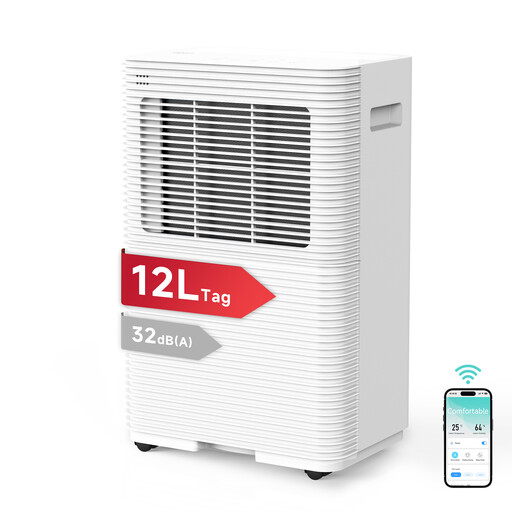
Why it stands out: Ideal for a bedroom or office. With a night mode at just 32 dB, it goes unnoticed and ensures quiet nights. Its 12L capacity is perfectly sized for a room up to 24 m?.
It counters the "false silence" trap by stating a noise level of 32 dB. This objectively very low value makes it a true silent dehumidifier, perfect for quiet rooms.
Its main asset: near-silent operation. Add to that the Wi-Fi connected control and a compact design that allows it to fit anywhere.
We have curated a complete range of products for you that meet our selection criteria and current safety standards.
Consumption depends on the device's power (in Watts) and its duration of use. A 200W model running for 8 hours a day will consume 1.6 kWh. Smart models equipped with a hygrostat (which turns the device off once the target humidity level is reached) are much more economical, as they only activate when needed. Prioritise devices that use a modern refrigerant gas like R290, which is more environmentally friendly and often more efficient.
Yes, most modern dehumidifiers are designed for safe, prolonged operation, with an automatic shut-off when the tank is full. For 100% autonomous operation, the continuous drainage option is the ideal solution: the provided hose evacuates water constantly, freeing you from the chore of emptying the tank.
For maximum efficiency, place the unit in the centre of the room. If this is not possible, leave a space of at least 20 to 30 cm around it to avoid blocking air circulation. Remember to close doors and windows to avoid needlessly treating the outside air. If you are using it to dry laundry, simply place it near your drying rack.