Joybuy Insights

How to Choose the Perfect Notebook: A Buyer’s Guide

By the Joybuy Team, your product experts – Published August 26, 2026

Choosing a notebook? It seems simple enough. But the market is flooded with options of wildly varying quality. The wrong choice guarantees a frustrating writing experience and means you'll need to buy a replacement far sooner than expected. Before you take the plunge, it's best to know the common pitfalls that can turn your new notebook into a real letdown.

Here are the three classic mistakes to avoid at all costs:

  1. Paper that bleeds: Paper that is too thin (low weight) or of poor quality is a recipe for disaster: smudging, ghosting (seeing the writing from the other side), or ink bleeding straight through the page. This can make your favourite fountain pen or marker unusable.
  2. Binding that doesn't hold up: A cheap spiral binding will end up bent out of shape at the bottom of a bag, while simple staples (saddle-stitching) can give way after a few weeks of heavy use. Say hello to loose pages!
  3. A size that's wrong for your needs: Buying a large A4 notebook for quick notes on the go is as impractical as using a tiny pocket notebook for a university lecture. Matching the size to your needs is crucial.

Key Criteria for a Choice You Won't Regret

To make the right choice, just focus on a few key technical specs that never lie. They are your guarantee of quality, durability, and comfort for your future notebook.

1. Paper Weight (g/m?)

Paper weight, expressed in grams per square metre (g/m?), is the main indicator of the paper's thickness and opacity.

  • 70 g/m?: Lightweight and thin, this paper is common in Moleskine-style notebooks. It's suitable for ballpoint pens and pencils but may show through with more liquid inks.
  • 80 g/m?: This is the standard weight for office supplies and many notebooks. It offers a good compromise for daily use, but wet-writing fountain pens might still bleed through.
  • 90 g/m?: Considered premium paper, often called "brushed vellum" by Clairefontaine or "Optik Paper" by Oxford. It's highly opaque, offers an exceptionally smooth glide, and resists most inks without bleeding or ghosting. It's the go-to choice for fountain pen enthusiasts.

2. The Binding Type

The way the pages are held together directly impacts the notebook's durability and practicality.

  • Saddle-stitched (stapled): Simple and budget-friendly, this is typical for school exercise books. It's lightweight but less durable for intensive use.
  • Spiral (or wire-bound): Very practical, this allows the notebook to open a full 180° flat or even fold back 360°. A spiral notebook is ideal for taking notes in tight spaces. However, the quality of the spiral is key to its durability.
  • Sewn or glued spine: This is the binding found on books and high-end notebooks like Moleskine notebooks. It's very sturdy and elegant, and allows for a lay-flat opening once the notebook is "broken in" by hand.

3. The Ruling (or Lining)

The ruling refers to the lines printed on the pages. Here, everything depends on how you'll use it.

  • Seyès Ruling (French ruling): The standard in the French school system, ideal for guiding students' handwriting.
  • Grid Ruling (5x5 mm): Highly versatile, it's suitable for note-taking as well as for diagrams, graphs, or mathematics.
  • Lined Ruling: Perfect for pure writing, such as keeping a journal or taking literary notes.
  • Plain Pages (blank): Intended for drawing, sketching, and unrestricted creativity. A sketchbook will have plain pages.
  • Dotted Pages: The star ruling for bullet journaling, offering a discreet guide to structure your pages with complete freedom.

Top Notebook Recommendations Reviewed

To illustrate these criteria in action, here are a few models that stand out from the crowd, suited for different profiles.
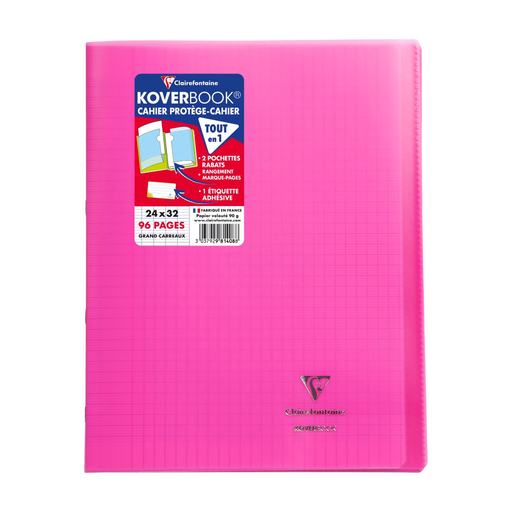
IDEAL FOR: THE PRAGMATIC STUDENT
Clairefontaine Koverbook transparent pink polypropylene stitched notebook 24 x 32 cm 96 pages French-ruled

Clairefontaine Koverbook Stitched Notebook 24 x 32 cm

Why we love it: Designed for the school-year marathon, this 2-in-1 notebook with a built-in cover is proof against the most chaotic school bags. Its flaps can be used to store documents, making it a true all-in-one for class.

How It Avoids the Pitfalls

Its ultra-durable polypropylene cover protects the stitched binding, often the weak link in classic notebooks. Its Clairefontaine 90g/m? paper is a fortress against ink bleed-through, even with a fountain pen.

The Key Feature

Integrated cover with storage flaps; 90g/m? Brushed Vellum paper for an unmatched glide.
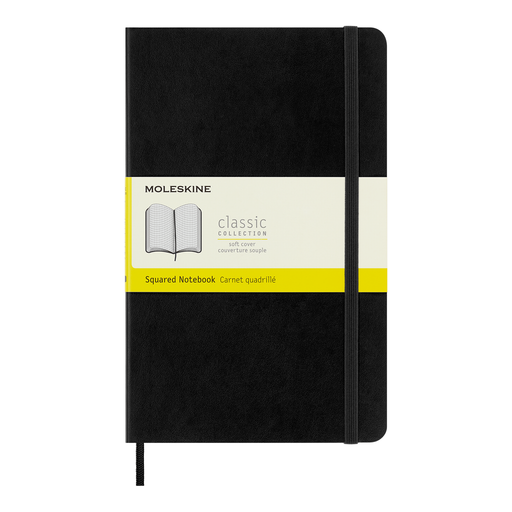
IDEAL FOR: THE CREATIVE PROFESSIONAL
MOLESKINE Classic Notebook - Large Squared

Moleskine Classic Notebook - Large, Squared

Why we love it: Its iconic, minimalist design makes it a work companion that's as elegant as it is discreet. Its Large size strikes the perfect balance between a comfortable writing area and portability, ideal for meetings and travel.

How It Avoids the Pitfalls

Unlike low-end models, its sewn binding guarantees a perfectly flat 180° opening. No more frustration from a notebook that snaps shut on its own! Its acid-free ivory paper ensures excellent long-term preservation of your notes.

The Key Feature

180° lay-flat opening; expandable inner pocket for business cards or receipts.
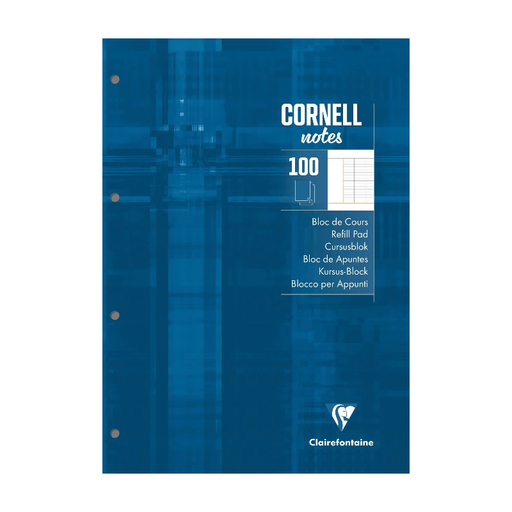
IDEAL FOR: THE BORN ORGANISER
CORNELL A4 notebook, 200 pages, wide ruled

Cornell A4 Notepad, 200 pages

Why we love it: Perfect for students and professionals who use structured note-taking methods. The Cornell layout is built right in to optimise revision and memorisation.

How It Avoids the Pitfalls

No more chaos from loose sheets! Its micro-perforated and pre-punched pages tear out cleanly for flawless filing. Its ultra-rigid cardboard back allows for comfortable note-taking, even without a desk (in a lecture hall, for example).

The Key Feature

Integrated Cornell layout; high-quality 90g/m? paper; detachable and perforated sheets for easy filing.

Want to Explore Other Options?

Discover our full selection of products that meet our quality criteria and current standards.

Your Questions, Our Answers

What's the real difference between 80g/m? and 90g/m? paper?

80g/m? paper is an excellent all-purpose standard, perfect for ballpoint pens and pencils. 90g/m? paper, like the famous Brushed Vellum from Clairefontaine, is noticeably thicker and smoother. It prevents ink from bleeding through the page and offers an unmatched smooth glide, which is ideal for fountain pens or felt-tip markers.

Is a spiral notebook really more durable?

It all depends on the quality. A sturdy spiral allows the notebook to open completely flat and fold back on itself, which is very practical. On the other hand, a cheap spiral will easily get bent out of shape in a bag. A sewn binding (like Moleskine's) is often the most durable in the long run, while saddle-stitching (staples) is the least resistant and should be reserved for occasional use.

Seyès, grid, or lined ruling: which to choose?

  • Seyès: This is THE standard for school supplies in France, designed to guide handwriting development.
  • Grid (5x5 mm): This is the most versatile. It's ideal for note-taking, maths, and science, but also for creating diagrams or tables.
  • Lined: This is perfect for pure and simple writing, like drafting, taking meeting notes, or keeping a journal. The choice depends entirely on your primary use case.