
Livraison le jour même ou le lendemain

Qualité garantie

Débloquez vos offres de bienvenue: Livraison GRATUITE | Jusqu'à -80 % | 30 jours d'essai gratuits à JoyPlus
Téléchargez l'application
Even in our digital-first era, the pleasure of writing in a quality notebook remains an irreplaceable experience. But finding the perfect one can quickly become a headache. Faced with a jungle of options and marketing promises, it's easy to end up with a disappointing notebook. Our mission: to help you see things more clearly. Let's break down the pitfalls to avoid and the criteria that truly matter to make the right choice.
A beautiful design isn't everything. Certain deal-breaking flaws can turn your purchase into a real letdown. Here are the 3 key things to watch out for before you buy.
To avoid these unpleasant surprises, you need to focus on objective characteristics. Three criteria are crucial for judging the true quality of a notebook.
Paper weight, expressed in grams per square meter (g/m? or gsm), is the key indicator of paper thickness and opacity.
The way the pages are held together defines the notebook's usability and durability.
The choice depends entirely on your intended use.
Because every user is unique, here is our targeted selection for three distinct profiles.
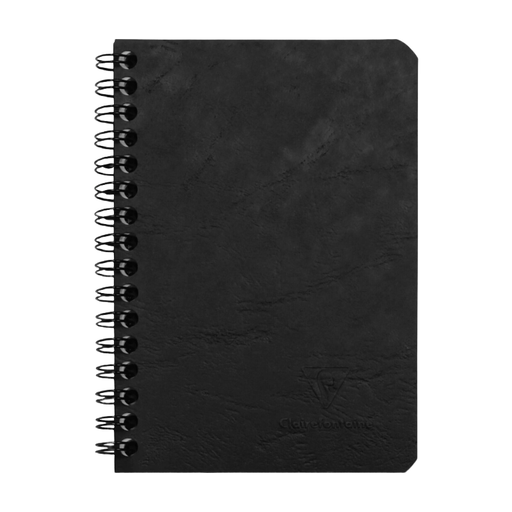
WHY IT'S THE RIGHT CHOICE: This pocket notebook combines a sturdy hardcover with a compact size, perfect for slipping into any bag. Its Clairefontaine 90 gsm paper provides peace of mind for those who love to sketch or switch between different pens without a second thought.
Its Vélin Velouté 90 gsm paper prevents ink from feathering and drastically limits show-through. Its spiral binding allows for a 360° opening, perfect for on-the-go use without a surface.
High-quality paper made in France (PEFC certified); durable, textured hardcover built for adventure.
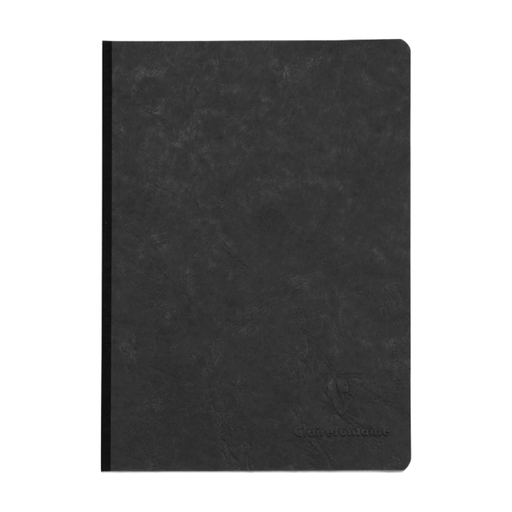
WHY IT'S THE RIGHT CHOICE: This A5 notebook is the ultimate professional companion. With 192 pages, it's built for intensive use. Its understated design and sewn binding make it a tool that is as reliable as it is elegant for meetings or project management.
Its sewn binding with a cloth spine guarantees a perfectly flat opening and rock-solid durability, eliminating the risk of pages coming loose. The textured cover is designed to age well.
High capacity (192 pages); perfect lay-flat opening to use the entire page; high-quality 90 gsm paper.
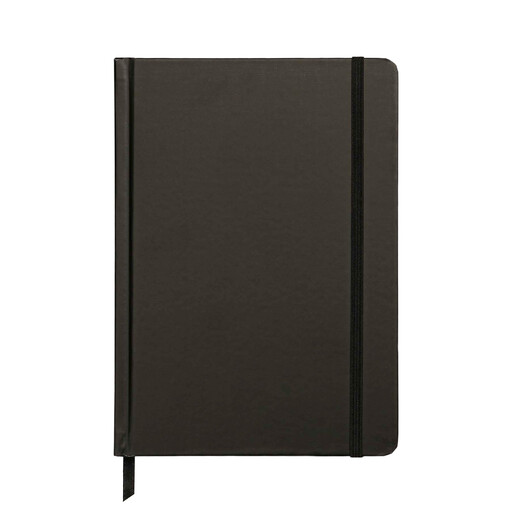
WHY IT'S THE RIGHT CHOICE: This undated planner is the ideal solution for those who like to organize without constraints, starting at any time of the year. Its flexible 18-month structure, with monthly and weekly views, adapts to any pace.
Thanks to its thick 100 gsm paper, the risk of show-through is virtually zero, even with colored markers. The hardcover and elastic closure are finishes that combine utility with durability.
Maximum flexibility thanks to the undated format; ultra-durable 100 gsm paper; comprehensive planning structure (monthly and weekly views).
We have compiled a complete selection of products that meet our strictest quality criteria.
The choice depends on your writing tools. For exclusive use with a ballpoint pen or pencil, 80 gsm paper may be sufficient. If you're a fan of fountain pens, markers, or simply enjoy a premium feel, opt for a weight of 90 gsm or more. It's a guarantee of comfort and versatility.
These two brands offer different experiences. Moleskine notebooks are renowned for their iconic design and 70 gsm ivory paper, which provides a unique writing feel, often appreciated with a ballpoint pen. Clairefontaine notebooks are famous for their 90 gsm white velvety vellum paper, which is remarkably smooth and highly resistant to ink, making it a top choice for fountain pen users. Ultimately, the choice is a matter of personal preference, writing feel, and your favourite pen.
Check the binding type. A sewn binding is the best guarantee for a 180° opening, allowing you to write comfortably across the entire page, even close to the center crease. Spiral-bound notebooks also open flat, and can even fold back on themselves, but the spiral can interfere with writing. Glued bindings are often the least flexible.