
Livraison le jour même ou le lendemain

Qualité garantie

Débloquez vos offres de bienvenue: Livraison GRATUITE | Jusqu'à -80 % | 30 jours d'essai gratuits à JoyPlus
Téléchargez l'application
Whether it's for the back-to-school season, organising your workday at the office, or simply unleashing your creativity, choosing a notebook seems simple. But that's just on the surface. When faced with the jungle of online stationery, the pitfalls are numerous. Paper that warps at the slightest drop of ink, binding that falls apart after a few weeks, a cover that gets worn out at the bottom of your bag… these are all-too-common disappointments.
As a product recommendation expert at Joybuy, my mission is to help you see things more clearly. Let's forget the marketing jargon and focus on the criteria that truly matter to find the notebook perfectly suited to your needs, without breaking the bank.
Before you start shopping, keep these two classic mistakes in mind that can turn a promising purchase into a real letdown.
To make an informed choice, three technical characteristics are all you need. They determine the quality, durability, and suitability of the notebook for your use.
The paper weight, expressed in grams per square meter (g/m?), is the key indicator of the paper's thickness and opacity.
The way the pages are held together directly impacts your daily user experience.
To help you make a clear choice, here are a few models that perfectly illustrate these criteria, each adapted for a specific use.
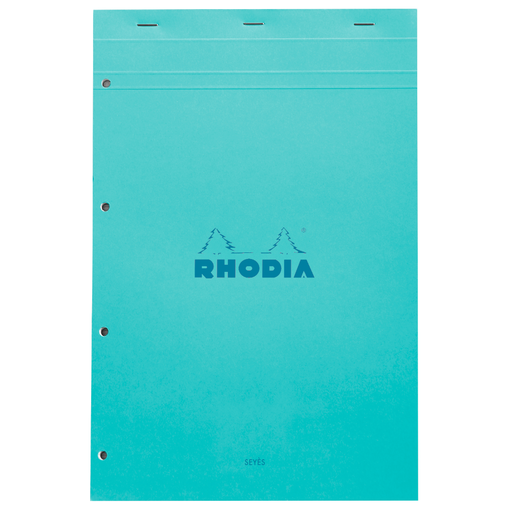
Why we love it: This Rhodia notepad is a must-have for students. Its Seyès ruling is the standard for French middle and high schools, and its ultra-rigid cardboard back allows for comfortable note-taking, even on your lap in a lecture hall. The 4-hole punch is perfect for immediate filing in a binder.
Its wire-o binding and micro-perforated sheets solve the problem of notebooks that don't open flat and tear easily. Here, pages detach cleanly, without any force.
Designed for the French school system: Seyès ruling, detachable and perforated sheets for direct filing.
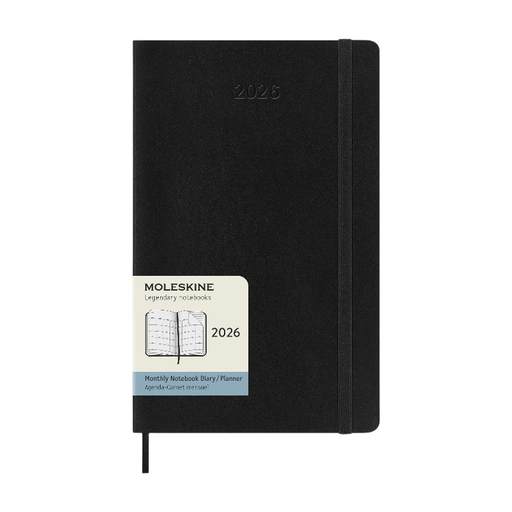
Why we love it: This Moleskine 2026-2027 planner is a true Swiss Army knife of organization. It combines a monthly view for long-term vision with weekly pages for day-to-day task tracking. Its iconic design and soft cover make it a stylish and discreet companion for meetings.
Its famous sewn binding guarantees a 180° lay-flat opening and rock-solid durability. The acid-free, 70 g/m? ivory-colored paper is optimized for smooth writing with most pens.
A complete organizational system (monthly + weekly view) and practical extras like the expandable inner pocket and stickers.
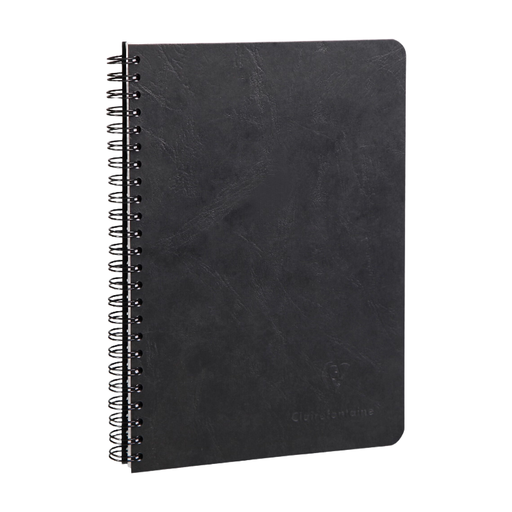
Why we love it: This notebook combines a beautifully executed vintage aesthetic with high-quality French manufacturing. Its textured hardcover is as beautiful as it is durable, and its wire-o binding allows for a 360° opening, perfect for comfortably writing or drawing anywhere.
It demolishes the low-quality paper pitfall with the legendary Clairefontaine "Vélin Velouté" 90 g/m? paper. This premium paper offers unparalleled smoothness and perfect opacity, even with felt-tip pens, which is essential for journaling.
The quality of the 90g Clairefontaine paper, the 360° opening, and the PEFC-certified French manufacturing.
Explore our full selection of products that meet our quality criteria and current standards.
It all depends on your favorite pens! For daily use with a ballpoint pen or pencil, a 70 to 80 g/m? paper is sufficient. If you're a fountain pen or rollerball enthusiast, or if you highlight a lot, aim for at least 90 g/m? (like Clairefontaine's) to prevent ink from bleeding through the page. For creative journaling with markers, a 100 g/m? paper or higher will be your best friend.
The spiral-bound notebook is the champion of flexibility: its 360° opening is perfect for writing without a desk. Its pages are often detachable. The stitched (or sewn) notebook is more elegant and built to last. Its binding allows for a lay-flat (180°) opening, ideal for writing comfortably across the entire two-page spread. It's the preferred choice for diaries or professional notebooks that you want to keep for a long time.
For a 2026-2027 planner, it's all about the layout. A weekly view is perfect for managing a busy schedule (tasks, appointments). A planner with a monthly view helps with long-term planning (projects, deadlines, birthdays). The best ones, like those from Moleskine, combine both. Don't forget the size: a pocket-sized planner for mobility, a more comfortable A5 format for the office.