
Livraison le jour même ou le lendemain

Qualité garantie

Débloquez vos offres de bienvenue: Livraison GRATUITE | Jusqu'à -80 % | 30 jours d'essai gratuits à JoyPlus
Téléchargez l'application
Boosting your vitamin intake with fresh homemade juice is an excellent way to take care of yourself. But the market is a real jungle. Between a cold press juicer, a centrifugal juicer, and a simple electric citrus press, it's hard to know where to start. Which appliance is right for you?
This guide is here to cut through the noise. We'll break down the differences between these machines and give you the keys to making the right choice based on concrete, objective criteria.
Before you jump on the first model you see, take a moment to consider three fundamental points that will guide your purchase.
This is THE key difference, the one that determines everything else: the extraction method.
Let's be honest: a juicer that's too complicated to use or clean will end up at the back of a cupboard. For your purchase to be worthwhile, two points are crucial:
A good juicer can sometimes do more than just make juice. Some models can prepare instant sorbets with frozen fruit, plant-based milks, or even purées. As for materials, vigilance is key: ensure that all parts in contact with your food are guaranteed BPA-free (Bisphenol A) for complete peace of mind.
To illustrate these differences, here are three models that represent each category well and cater to distinct uses.
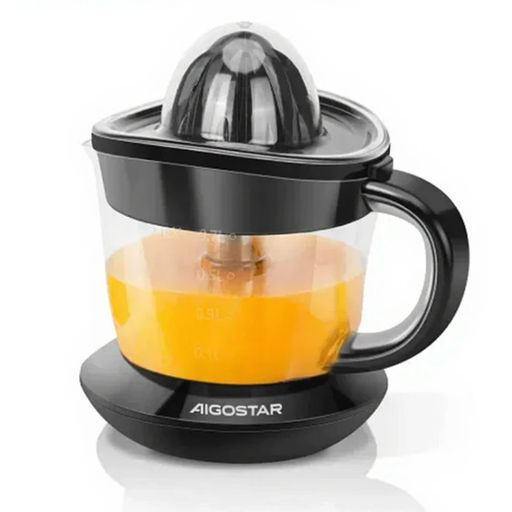
What sets it apart
This citrus press gets straight to the point: pressing citrus, and doing it well. Its secret? A bi-directional rotation that ensures not a single drop of juice is wasted. Compact and discreet, it blends into any kitchen decor.
Key Features
Who is it for?
For die-hard fans of freshly squeezed orange juice in the morning who want an efficient, affordable, and space-saving appliance. In short, the essentials, with no frills.
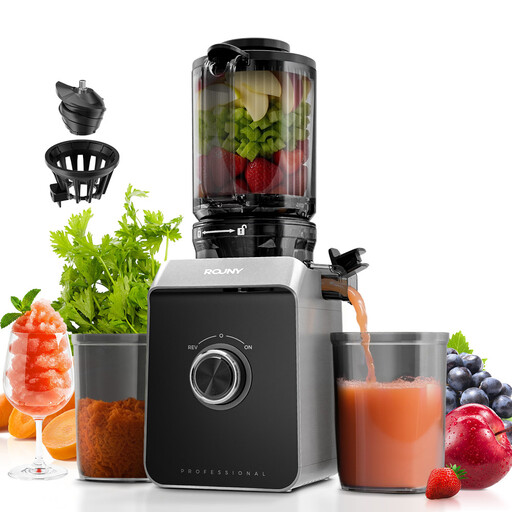
What sets it apart
This slow juicer plays in the big leagues, thanks in particular to its impressive 130 mm feed chute. No more tedious chopping—you can drop in whole apples! Its other secret weapon: a filter-free design that promises a quick rinse-clean with water.
Key Features
Who is it for?
For those who want to get serious about making a variety of juices (fruit, vegetable, herb) and who refuse to compromise on convenience. Ideal for daily family use where every minute counts.
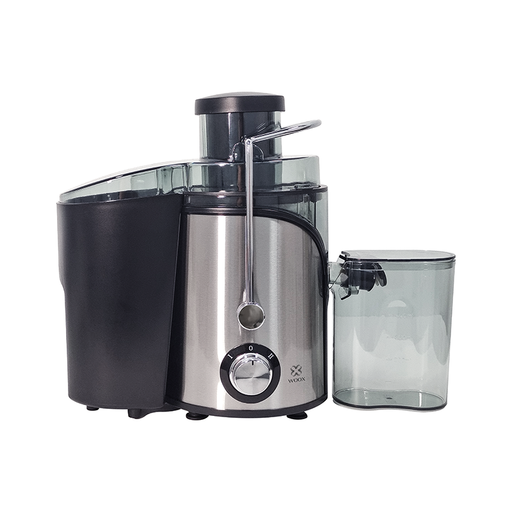
What sets it apart
Here, the key word is speed. Armed with a 600W motor, this centrifugal juicer is a powerhouse: it pulverizes hard fruits and vegetables to extract juice in a matter of seconds. Its wide 3-inch (approx. 7.6 cm) chute also helps reduce the chore of chopping.
Key Features
Who is it for?
For those in a hurry who want a glass of apple, carrot, or celery juice in record time. If speed is your number one criterion, this is the right choice.
Our selection gives you an overview of the three main types of appliances. If none of them tick all your boxes or if you're simply curious to see other models, the selection is vast.
To explore a more complete range of juicers, centrifugal juicers, and accessories, feel free to browse our dedicated category: Black Juice.
It all comes down to method and speed. The centrifugal juicer is the sprinter: it grates food at very high speed to extract juice by centrifugal force. It's ultra-fast, but the speed generates some heat. The cold press juicer (slow juicer) is the marathon runner: it slowly presses food with an auger. It takes longer, but this cold press process is known to better preserve nutrients and excels with green vegetables and herbs.
That used to be their major drawback, but manufacturers have made huge progress. Today, an easy-to-clean juicer is no longer a myth. To make your life easier, look for models with few parts, dishwasher-safe components, an included cleaning brush, and, the best of the best, a filter-free design like the ROUNY model we feature.
Yes, provided you choose the right model! It all depends on the width of its feed chute. A wide-chute juicer (over 7.5 cm in diameter) can swallow apples, pears, or peeled oranges without a problem. It's a phenomenal time-saver. On models with narrower chutes, you'll have to get out the knife and pre-cut your ingredients.