
Livraison le jour même ou le lendemain

Qualité garantie

Débloquez vos offres de bienvenue: Livraison GRATUITE | Jusqu'à -80 % | 30 jours d'essai gratuits à JoyPlus
Téléchargez l'application
Choosing a new duvet? It seems straightforward enough. But between the technical jargon and marketing promises, it's easy to get lost. The wrong choice can lead to restless nights, allergies, and a purchase you'll quickly regret. As a Product Expert at Joybuy, my role is to bring you clarity and help you find the model that's perfectly suited to your needs.
To start, let's review the classic mistakes that could ruin your sleep.
Nothing is more frustrating than a duvet that makes you sweat in the summer or shiver in the winter. Here's how to avoid disappointment.
To find the perfect match, three key parameters need close attention.
This is the core component that will define your duvet's comfort, warmth, and breathability.
Expressed in grams per square metre (g/m?), the weight indicates the density of the fill. It should be chosen based on the season and the temperature of your bedroom.
For maximum comfort and to avoid uncovering yourself at night, your duvet should hang over the sides of the bed by at least 20 to 40 cm on each side.
To illustrate these criteria in practice, here are three models that meet very specific needs.
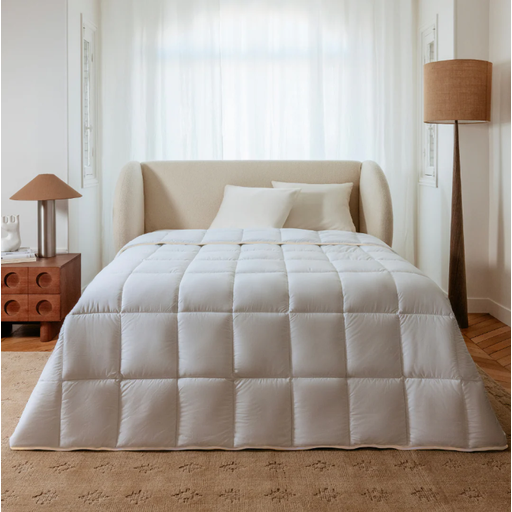
Why we chose it: This model is for those seeking intense warmth and cosy comfort during the coldest months. Its natural fill is perfect for people who feel the cold or for poorly heated rooms.
It isn't marketed as a do-it-all solution. It's a pure and simple winter duvet, whose thermal performance comes from the quality of its fill (90% feathers, 10% down), not from an excessive weight.
It offers excellent thermal regulation thanks to its natural fill, providing healthy warmth without the 'pressure cooker' effect.
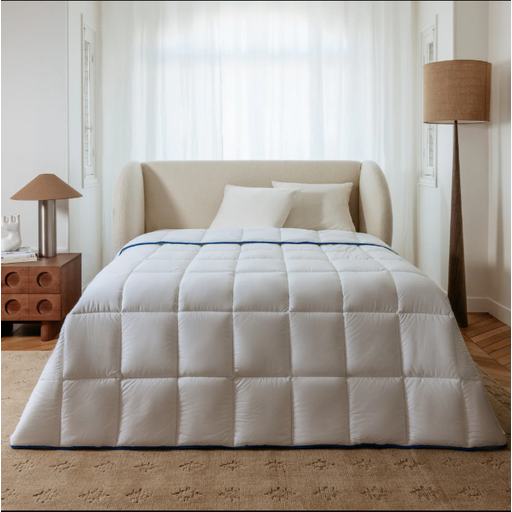
Why we chose it: Perfect for people prone to allergies, this duvet combines a siliconised hollow-fibre polyester fill with a cotton cover. Its numerous certifications are a seal of confidence for healthy sleep.
There are no vague promises here. The Oeko-Tex Standard 100, Certipur, and Sanitized certifications are tangible proof of its hypoallergenic and anti-dust-mite properties.
Its synthetic fill is very easy to care for (machine washable at 40 °C), a decisive advantage for maintaining impeccable hygiene.
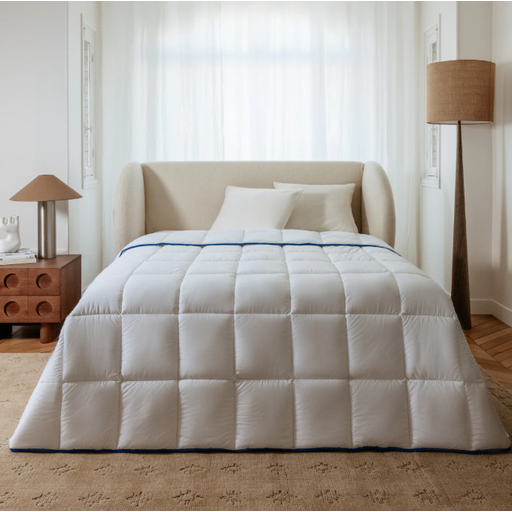
Why we chose it: With its low weight (250 g/m?) and hollow-fibre fill, this duvet was designed to provide coolness and lightness when the temperature rises above 20 °C.
It's a much more pleasant alternative to an 'all-season' duvet in the summer, which is often far too warm. As a dedicated summer duvet, it meets a specific seasonal need.
Its fill promotes excellent air circulation and wicks away moisture, which prevents excessive sweating during the night.
If you're convinced by synthetic fills, discover our complete selection of models that meet our high standards for comfort, hygiene, and durability.
How often should you wash your duvet? Ideally, once or twice a year. For allergy sufferers, washing every three months is good practice. Always remember to check the label and use a large-capacity washing machine to avoid compressing the fill. A complete cycle in a tumble dryer with dryer balls is crucial to restore its loft.
What is the lifespan of a duvet? It all depends on its quality and how you care for it. A well-made synthetic duvet will last about 5 years. A natural down and feather duvet, if you take good care of it, can last for 10 years or even longer. The secret? Shaking it out vigorously and regularly to air out the fill.
Is an anti-dust-mite duvet really necessary? If you have no known allergies, a standard, well-maintained, and regularly aired duvet is perfectly sufficient. However, for sensitive individuals, an anti-dust-mite duvet is a real plus. These models either incorporate a synthetic fill that is hostile to dust mites or have a specific treatment (like the certified Sanitized) that acts as a protective shield.