
Livraison le jour même ou le lendemain

Qualité garantie

Débloquez vos offres de bienvenue: Livraison GRATUITE | Jusqu'à -80 % | 30 jours d'essai gratuits à JoyPlus
Téléchargez l'application
A well-chosen bookcase is much more than just a storage unit. It's a statement piece that defines a space, reflects your personality, and showcases your books and decorative items. With the sheer abundance of styles, sizes, and materials available, finding the perfect model for your home can quickly become a challenge.
This guide is designed to give you clear pointers and help you make an informed decision. We'll review the essential criteria to consider before you buy, before presenting a selection of models that cater to every need and space constraint.
Before you dive in, take the time to carefully assess your needs. Proper preparation will help you avoid any unpleasant surprises and ensure your new furniture fits seamlessly into your home and daily life.
The first and most crucial step is to precisely measure the intended location for your future bookcase (height, width, and depth). Remember to consider the room's traffic flow to avoid obstructing pathways.
Naturally, the style of your bookcase should harmonise with your existing decor.
Consider the primary use of your future furniture. Will it be for storing a large collection of paperbacks, heavy art books, vinyl records, or simply for displaying decorative items?
Remember to check the maximum weight capacity of each shelf. For greater modularity, some models offer height-adjustable shelves. An open-compartment shelving unit provides easy daily access, while closed modules with doors or drawers help conceal clutter and protect your belongings from dust.
To guide you, we have selected four standout models, for both their aesthetic appeal and practicality.
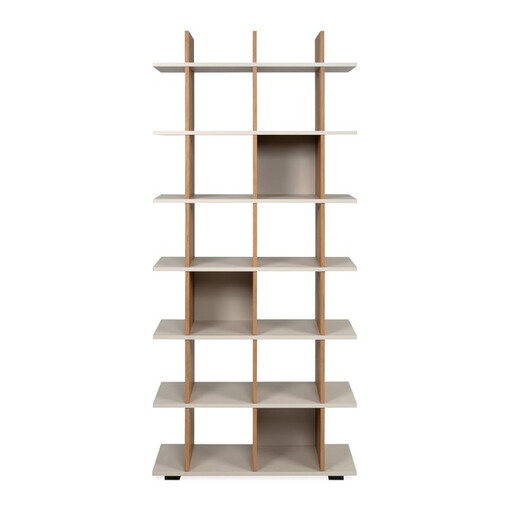
What sets it apart: The Navas 20A bookcase combines an artisan oak finish with cashmere-coloured accents for a look that is both modern and warm. Its interplay of open compartments, some with back panels and some without, creates a compelling visual rhythm while providing generous storage space.
Key features:
Who is it for? Ideal for those seeking a bookcase unit that is as functional as it is stylish, perfect for a contemporary living room, office, or bedroom.

What sets it apart: This corner shelf transforms an unused corner into a functional storage and display area. With its 5 tiers and clean white design, it adds a sense of height and lightness to the room without ever feeling bulky.
Key features:
Who is it for? Perfect for students, studio apartment dwellers, or anyone looking to optimise every square foot of a small room, be it a living room, entryway, or office.
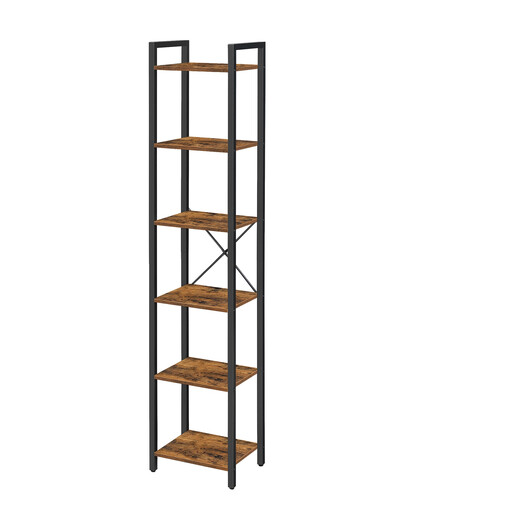
What sets it apart: This industrial bookcase combines the warmth of rustic-look wood with the sturdiness of a black steel frame. Its tall, narrow design (30 x 40 x 187.5 cm) makes it an ideal storage solution for tight spaces, without compromising on style.
Key features:
Who is it for? For fans of the industrial style looking for a shelving unit that is both sturdy and compact to organise their books and documents.
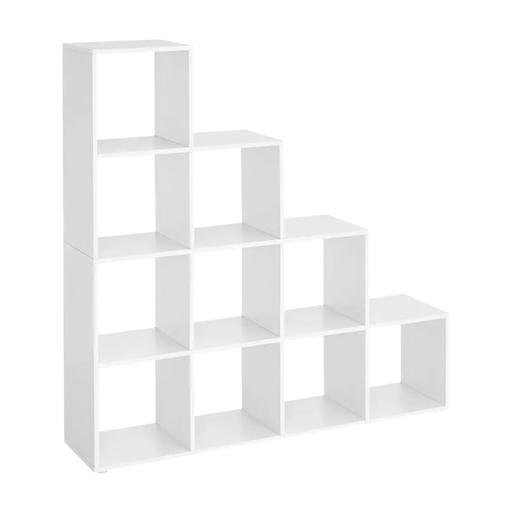
What sets it apart: With its staircase shape and 10 cubic compartments accessible from both sides, this designer bookcase is as practical as it is original. It can be placed against a wall or used as a room divider to define spaces in a large living room or studio.
Key features:
Who is it for? For those looking for a multifunctional and graphic piece of furniture to structure an open-plan living space while adding a touch of design.
Our selection is just a glimpse of what's available. If you haven't found the perfect fit yet, or if you simply want to explore other styles, sizes, and finishes, feel free to browse our full catalogue.
? Discover our complete collection of Living Room Shelving Units.
Most tall or narrow bookcases come with an anti-tip kit. This usually consists of one or two straps or brackets that you screw to the top of the unit on one end, and to the wall on the other, using screws and wall plugs appropriate for your wall type (plasterboard, brick, concrete, etc.). This step is essential, especially if you have young children, to eliminate any risk of the bookcase tipping over.
For a harmonious look, alternate between stacking books vertically and horizontally. Break up the composition by leaving some empty spaces to incorporate decorative objects of different sizes and shapes: a small plant, a vase, a photo frame, a candle... Play with colours by grouping books by shade or by creating colour echoes with your decorative items.
Although the two terms are often used interchangeably, a bookcase is, by definition, designed to hold books, with shelf dimensions often tailored to standard formats (paperback, trade paperback, etc.). A shelving unit is a more generic term for any piece of furniture with shelves intended for storing or displaying various items, not limited to books. In practice, most modern furniture now combines both functions.