
Livraison le jour même ou le lendemain

Qualité garantie

Débloquez vos offres de bienvenue: Livraison GRATUITE | Jusqu'à -80 % | 30 jours d'essai gratuits à JoyPlus
Téléchargez l'application
Buying a new bike should be an exciting experience. Yet, the process often turns into a headache. Overwhelmed by technical jargon and marketing promises, it's easy to end up with an unsuitable model that gathers dust in the garage. To avoid this common pitfall, it's essential to sidestep the classic traps and focus on what truly matters for your riding style.
The most common mistakes? Choosing the wrong frame size—guaranteed discomfort and pain—investing in complex, expensive features you'll never use, or underestimating the bike's weight. This last detail can turn a simple ride into an ordeal, especially with a folding bike or a kids' bike.
This guide is here to provide clear benchmarks and help you buy a bike online with confidence by getting straight to the essentials.
To make an informed choice, you need to understand a few technical concepts. These are what will determine the comfort, performance, and lifespan of your future ride.
The frame is the skeleton of the bike. Its material has a direct impact on weight, stiffness, and, of course, price.
Safety is non-negotiable, and the braking system is its cornerstone.
A correctly sized bike is fundamental. Sizing is determined by frame height and wheel diameter. While the 26-inch bike was long the standard for MTBs, 27.5-inch and 29-inch formats have now become dominant for adults. For children and folding bikes, you'll more often find 20-inch wheels or smaller. The key takeaway: always consult the manufacturer's size guide, which matches your height to the recommended frame size.
To illustrate these criteria in action, here are a few models tailored to specific uses.
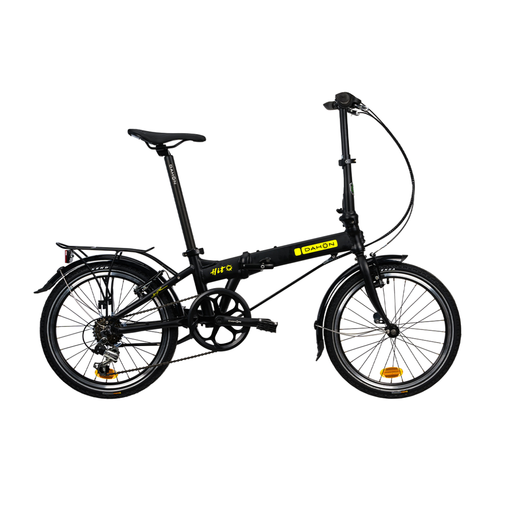
Why It's the Right Choice: Perfect for a multimodal commute (bike + public transport), this folding bike shines with its light weight and compact design. A must-have for anyone short on space at home or the office.
Its aluminium frame ensures a low weight (11.54 kg), avoiding the pitfall of a bike that's too heavy to carry. The 6-speed Shimano drivetrain is simple, efficient, and perfectly suited for the city, without unnecessary frills.
Its folded dimensions (65x34x82 cm) and great versatility (suitable for riders from 145 to 190 cm) make it a formidable urban mobility solution.

Why It's the Right Choice: Built for trails and rough terrain, this MTB relies on technical components focused on safety and performance, like its suspension fork and disc brakes.
It features dual disc brakes, an essential safety feature for MTBs that is far from a gimmick. The Hi-ten steel frame is a deliberate choice, prioritising durability on demanding terrain.
The combination of an 18-speed drivetrain, suspension fork, and disc brakes offers complete control to tackle climbs and descents with confidence.
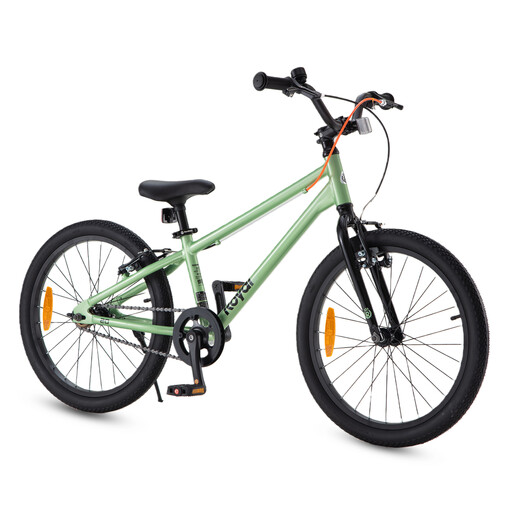
Why It's the Right Choice: For a kids' bike, the priorities are clear: light weight for easy handling, and safety above all. This model was designed for young riders, with custom geometry and components.
It tackles the main enemy: weight. Its aerospace-grade aluminium alloy frame is ultra-light (0.9 kg), which makes balance and control much easier for a child.
The dual V-brakes ensure safe stopping, while the adjustable saddle allows the bike to "grow" with the child, ensuring its longevity.
Discover our full selection of bikes that meet our selection criteria and current safety standards.
Most bikes sold online arrive 85% pre-assembled. You will typically need to install the handlebars, front wheel, pedals, and saddle. Tools are often included. Follow the instructions carefully and, before your first ride, double-check that all bolts are tight and the brakes are properly adjusted.
With proper maintenance, both materials are designed to last for years. A steel frame, which is very impact-resistant, can rust if the paint gets chipped. Aluminium, on the other hand, doesn't rust but can show signs of metal fatigue over the very long term (after tens of thousands of kilometres). For typical use, both options offer excellent longevity.
For mostly flat urban commutes, a large number of gears is overkill. A 6, 7, or 8-speed system, found on many city or folding bikes, is more than enough and simpler to maintain. Drivetrains with more than 18 speeds are mainly relevant for MTB use on hilly terrain, where a wide gear range is needed to climb and descend slopes.