
Livraison le jour même ou le lendemain

Qualité garantie

Débloquez vos offres de bienvenue: Livraison GRATUITE | Jusqu'à -80 % | 30 jours d'essai gratuits à JoyPlus
Téléchargez l'application
A household sponge may seem like an insignificant purchase. However, choosing the wrong model can mean it quickly loses its shape, retains odours, scratches a hob or leaves marks on mirrors. To avoid unpleasant surprises, it is worth looking beyond the colour, number of pieces or claims displayed on the packaging.
Here are the criteria to consider when choosing a cleaning sponge suitable for washing-up, the kitchen, the bathroom and other everyday tasks.
An abrasive side can remove baked-on residue, but it is not necessarily suitable for non-stick pans, painted surfaces, glass or glossy finishes. An overly aggressive scrubbing sponge can leave marks, particularly when dirt particles become trapped between the sponge and the surface.
For delicate materials, choose a non-abrasive sponge or start by testing the soft side on a discreet area.
An absorbent sponge must also drain water properly and dry between uses. Foam that stays damp at the bottom of the sink can quickly develop unpleasant odours. Plant-based cellulose holds liquids effectively, while some synthetic foams are softer or easier to wring out.
Size also matters: a compact sponge fits more easily into corners, around taps and inside small containers.
Even a washable sponge should be rinsed after every use, wrung out and left to air-dry. The term machine-washable sponge does not mean it can remain in use indefinitely. Check the washing temperature specified by the manufacturer and replace it as soon as it starts to fray, loses its shape or retains odours.
A double-sided sponge generally combines a soft section for wiping with a scrubbing surface for stubborn dirt. This configuration is suitable for everyday washing-up, provided the abrasive side is reserved for compatible materials.
For glasses, mirrors, delicate sinks or chrome-plated surfaces, a microfibre sponge or non-abrasive sponge makes wiping easier while leaving fewer marks. In the bathroom, a texture designed to tackle limescale can be useful. However, follow the manufacturer’s recommendations and always test it first.
Plant-based cellulose is valued for its ability to retain water and its soft feel. Some models combine cellulose, foam and scrubbing fibres to cover several uses. Check the composition if you are looking for a kitchen sponge capable of absorbing splashes, or a bathroom sponge intended for wiping walls and the washbasin.
Terms such as recycled fibres, cellulose from sustainably managed forests and PEFC certification refer to specific material characteristics. They do not replace usage instructions or regular care.
Washable products generally specify a maximum temperature or number of cycles. Some models can be washed in a washing machine or dishwasher, while others are hand-wash only. Avoid fabric softener with microfibre items and do not automatically tumble-dry a product when the manufacturer advises against it.
For washing-up, avoid using the same sponge for very greasy residue, sanitary surfaces and sensitive food-related items. Keeping a small supply of several different models is often more practical than relying on a single supposedly multi-purpose sponge.
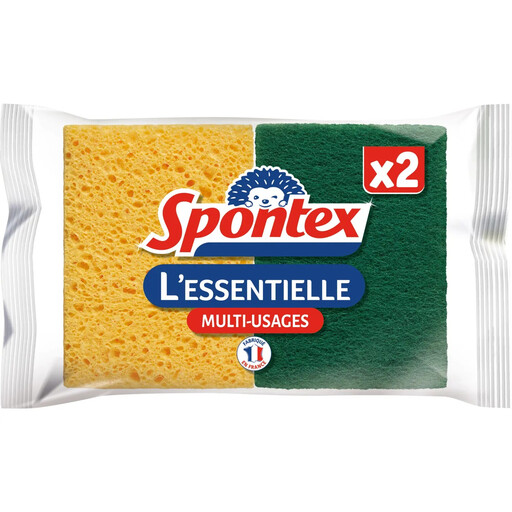
Why this choice suits this profile : The two-pack covers everyday washing-up and household cleaning needs without requiring multiple products.
The two sides let you separate scrubbing from gentle cleaning. The plant-based side is stated to be PEFC-certified and should be rinsed and dried after use.
Two sides, absorbent plant-based cellulose and stated French manufacturing.
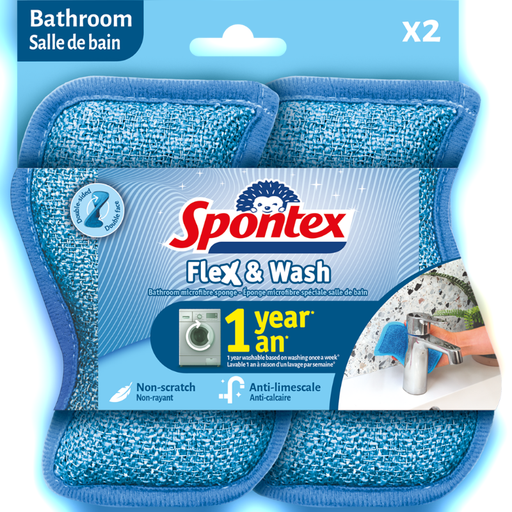
Why this choice suits this profile : This model is suitable for households that regularly clean mirrors, windows, tiles and bathroom fittings.
The microfibre side is designed for wiping, while the scrubbing side tackles limescale. The manufacturer states that it can be washed at up to 40 °C for up to 52 washes.
Microfibre for a streak-free finish and an absorbent foam core.
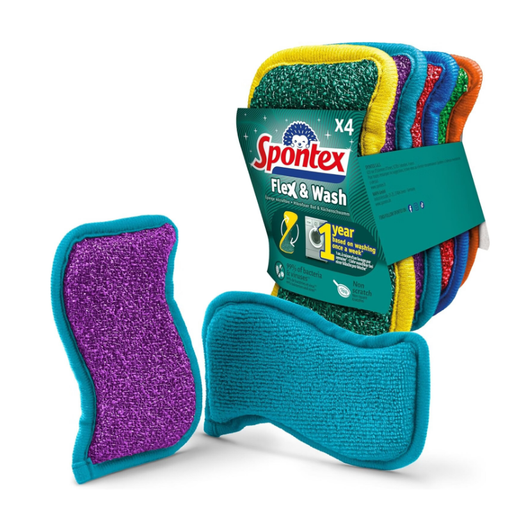
Why this choice suits this profile : Their reusable format and flexible shape are suited to frequent cleaning in the kitchen, bathroom or car.
The stated washability means you can replace them less often. It is still essential to rinse and wring out the sponges, while using them only on compatible surfaces.
Up to 52 wash cycles stated, with a microfibre side combined with a scrubbing side.
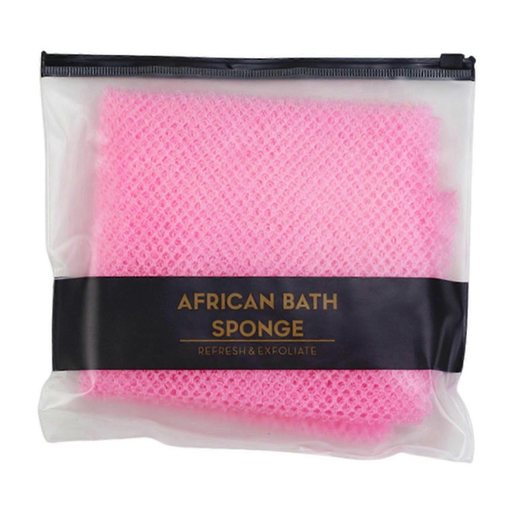
Why this choice suits this profile : This extra-long African exfoliating net is used with soap or shower gel to reach your back and shoulders more easily.
Its open-weave structure dries quickly, but it should be rinsed and hung up. This product is for external use only and is not suitable for irritated or delicate skin.
100 % nylon, integrated cords and machine washing recommended in a protective laundry bag.
Choose a non-abrasive sponge and avoid conventional scrubbing sides, even when they appear only mildly rough. Testing it on a discreet area is still recommended, as coatings can vary from one model to another.
It can reduce how often you need to buy replacements if it retains its shape and effectiveness through repeated washing. However, compare the stated number of cycles, permitted temperature and care instructions. Washing does not remove the need to rinse and dry it after every use.
A bathroom sponge with a side suitable for limescale can be used on shower walls, washbasins and taps. Use the soft side on glass and glossy surfaces, follow the surface manufacturer’s recommendations and rinse thoroughly after applying the cleaning product.