Priorities before replacing an appliance
Continuously running refrigeration appliance
Consider this if: your fridge, fridge-freezer or freezer runs without interruption, seems oversized or no longer meets your needs.
Key consideration: compare kWh/year alongside capacity, compartments and noise level, as a larger model may change the comparison.
Frequent washing or drying
Consider this if: you run many cycles and a replacement is already necessary.
Key consideration: a low reference figure does not make up for unsuitable capacity, duration, noise level or installation requirements.
Equivalent models
Prioritise this if: several appliances perform the same function with a similar capacity.
Key consideration: the consumption unit varies by category: annual consumption for refrigeration, and per 100 cycles for washing machines.
First compare appliances that match your household’s actual routine, then check the figures on a like-for-like basis. ADEME, the French Ministry for the Economy and the European Commission present the energy label as a tool for comparing similar models.
| Priority |
What to check |
Your needs |
| Identify the priority appliance |
Make a note of appliances that run continuously or are used very often. Compare their condition, capacity and available consumption data with a model in the same category. |
I want to avoid replacing an appliance simply because it is old when another piece of equipment has a greater impact on my everyday use. |
| Read the correct unit |
For refrigeration, compare kWh/year across models with similar capacities and compartments. For washing machines, compare kWh/100 cycles and water/cycle on the Eco 40-60 programme. |
I want to compare figures based on the same scenario, without comparing a large appliance directly with a compact model. |
| Keep a suitable capacity |
Check the volume, capacity, cycle duration, noise level and installation requirements. For a tumble dryer, also check the ventilation or condensate management requirements for the type you choose. |
My energy consumption matters, but the appliance must also suit my usual loads, available space and routine. |
| Plan for lifespan and collection |
For a washing machine, check the durability index when available. Also check the model’s repair information and the collection arrangements offered when you place your order. |
I want to reduce the risk of replacing the appliance prematurely and arrange for the old one to be taken away. |
Brand guidance
There is no brand guidance to display in this section.
Joybuy options to compare
These Joybuy options include washing machines for frequent use and a fridge-freezer designed for an appliance that runs continuously. Compare each model with your available dimensions, usable capacity and installation requirements.
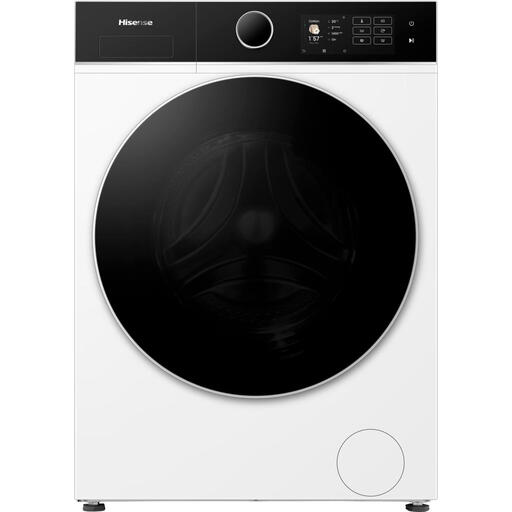 Image unavailable
Hisense WF5I8043BWF, 8 kg, 1 400 rpm
An option to compare for frequent laundry when available space is a key consideration.
Advertised Eco 40-60 figures: 33 kWh/100 cycles, 38 L/cycle and 3 h 38, with an 8 kg capacity, a spin noise level of 72 dB(A) and a depth of 470 mm. Check that the programme duration suits your routine.
Joybuy
 Image unavailable
Haier T Series 7 THASN276TM6-S, top-loading, 7 kg
This top-loading design may suit a narrow space and regular laundry loads.
The advertised width is 40.5 cm. For Eco 40-60, the stated figures are 40 kWh/100 cycles, 42 L/cycle and 3 h 28; the advertised spin noise level is 77 dB(A).
Joybuy
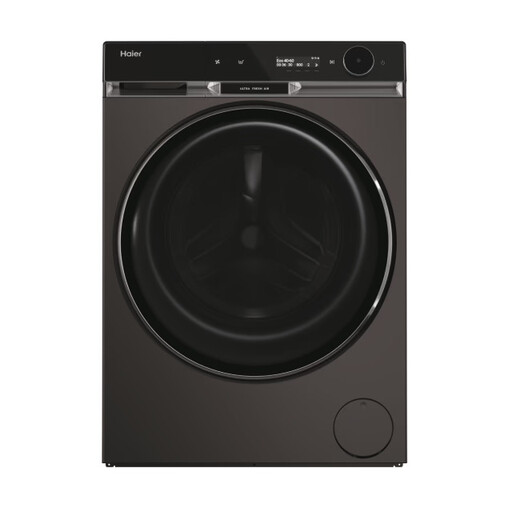 Image unavailable
Haier X Series 11 HW100-BD14397PGU1, 10 kg
A 10 kg capacity may suit large family loads if you have enough space.
The advertised Eco 40-60 figures are 41 kWh/100 cycles, 48 L/cycle and 3 h 58. The advertised spin noise level is 68 dB(A) and the depth is 611 mm; check the dimensions, clearances and connections.
Joybuy
 Image unavailable
LG GBBSJ1CCSW, 333 L fridge-freezer, class C
Compare it with other fridge-freezers offering similar capacities and compartments for an appliance that runs continuously.
The advertised annual consumption is 169 kWh/year, with 333 L in total: 183 L fridge capacity, 113 L freezer capacity and a 37 L cold compartment. The advertised noise level is 34 dB; allow for the clearances specified for installation.
Joybuy
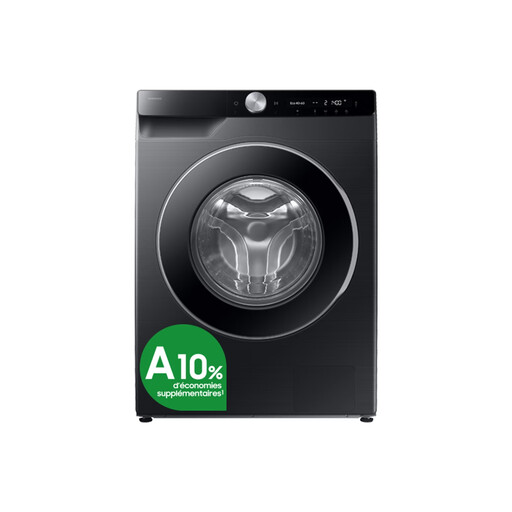 Image unavailable
Samsung WW90DG6U85LBU3, 9 kg, class A
This capacity may suit frequent family laundry loads, provided the dimensions match your installation.
For Eco 40-60, the product information states 44 kWh/100 cycles, 50 L/cycle and 3 h 48, with an advertised spin noise level of 72 dB. Compare these figures with washing machines of a similar capacity.
Joybuy
Frequently asked questions
Should you replace the oldest appliance first?
Not necessarily. Make a note of appliances that run continuously or are used often, then compare their capacity, condition and actual use. ADEME states that fridges and freezers run continuously, but a newer appliance may still be unsuitable if it is larger or has more features than you need.
How should you compare two fridges for energy consumption?
Compare kWh/year only between appliances with similar capacities, compartments and features. According to the European Commission, the label on refrigeration appliances also shows storage capacities and airborne acoustical noise emissions, which are useful when interpreting annual consumption.
How do you read a washing machine energy label?
Compare the energy used per 100 cycles, water consumption per cycle, duration, noise level and capacity. The European Commission specifies that washing machine efficiency, duration and water requirements relate to the Eco 40-60 programme, so use the same basis when comparing models.
Is a new heat-pump tumble dryer required in France?
For tumble dryers placed on the European Union market since 1 July 2025, the European Commission states that only models incorporating the most efficient heat-pump technology are permitted. Check the installation requirements too: a vented model needs an outlet to the outside, while a condenser appliance collects water in a tank or sends it to a drain.
Where can you check information for the exact model before buying?
Use the label’s QR code or search for the model in EPREL. The European Commission’s public database lets you view the main parameters of models sold in the European Union and, where provided by the manufacturer, information relating to repairs and spare parts.


