
Livraison le jour même ou le lendemain

Qualité garantie

Débloquez vos offres de bienvenue: Livraison GRATUITE | Jusqu'à -80 % | 30 jours d'essai gratuits à JoyPlus
Téléchargez l'application
Washing dishes, deep cleaning, preparing meals... gloves are a staple in every home. Yet, choosing the right pair can be a real headache. Between allergenic materials, models that tear on the first use, and those that offer no real protection, it's all too easy to make the wrong purchase. Before you head to the checkout, let's review the common pitfalls and essential criteria to help you make the right choice, every time.
Faced with well-stocked shelves and unclear packaging, it's easy to end up with gloves that are useless, or even dangerous. Here are the three most common mistakes.
To find the perfect pair, you only need to consider two criteria: the material and the intended use.
Each material has distinct properties that make it more or less suitable for specific tasks.
The type of glove you need depends directly on the task at hand.
To help you choose, our editors have selected three proven models, each designed for a specific need.
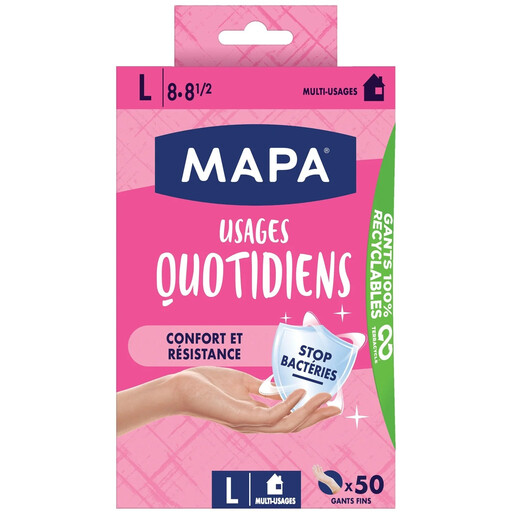
Why we chose it : Perfect for small household tasks where hygiene is key (cleaning surfaces, handling rubbish...), without needing heavy-duty resistance.
Its vinyl composition is the perfect alternative for skin sensitive to latex. Its disposable format is designed for short, hygienic uses, preventing you from wasting a heavy-duty glove on a simple task.
MAPA advertises an antibacterial certification, creating an effective barrier against germs. The box of 50 gloves format is both practical and cost-effective.
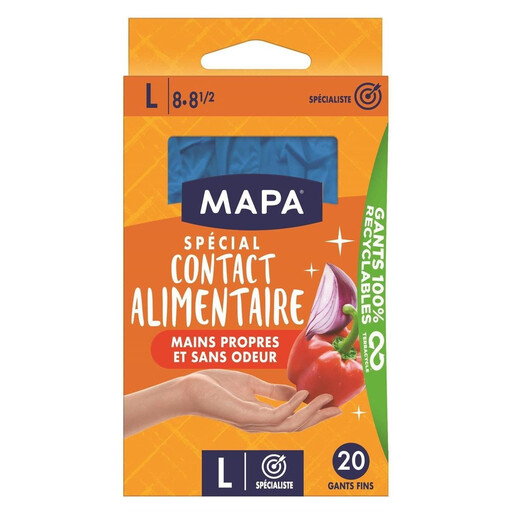
Why we chose it : Specially designed for the kitchen, it allows you to handle meat, fish, or vegetables safely, without transferring odours or flavours.
It checks the most important box: the food contact certification, as indicated by Spontex. Made from nitrile, it is latex-free, thus eliminating any risk of allergies in the kitchen.
Its nitrile composition gives it superior resistance compared to vinyl, a real plus for preparations that require a bit more dexterity or force.
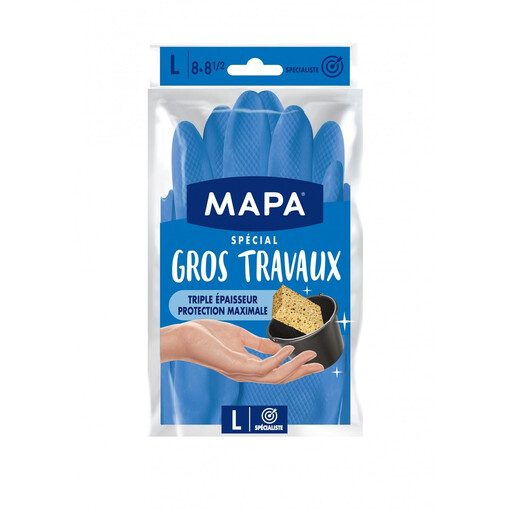
Why we chose it : It offers ironclad protection for your hands during the toughest jobs: gardening, DIY, or deep cleaning with powerful detergents.
Its triple thickness of latex and its cotton lining make it virtually tear-proof, where a thin disposable glove would give out in seconds. This is a reusable model, built to last.
Extremely high resistance to mechanical stress, combined with the comfort of the cotton lining, which allows for extended wear without fatigue or irritation.
Discover our full selection of certified food-safe gloves, tested and approved by our experts.
What's the difference between nitrile and vinyl? Nitrile reigns supreme in durability: it's stronger against punctures and chemicals and also offers better tactile sensitivity. Vinyl is the smart, cost-effective choice, perfect for short, low-risk tasks. Both are excellent latex-free alternatives.
Can you really reuse disposable gloves? Absolutely not. The word "disposable" isn't just for show! They are designed for single use only. Reusing them negates their protective qualities, promotes cross-contamination, and increases the risk of tearing. Dispose of them after each use, without exception.
How do I choose the right glove size? This is crucial for both comfort and safety. A glove that's too large will slip, while one that's too tight can cause hand fatigue and tear easily. Most brands offer a size guide (S, M, L). To find your size, measure the width of your palm flat (across the knuckles, excluding the thumb) and compare it with the measurements on the packaging.