What should you look for?
Think about how much space your usual shop takes up before comparing storage features. More litres won’t solve a lack of space in the compartment you need.
| Criteria |
What to check |
Who it matters to |
| Usable capacity |
Compare the fridge and freezer capacities separately. UFC-Que Choisir suggests 100 to 150 L for one person, then around 50 L for each additional person. Adjust this to suit your shopping habits. |
If my shopping quickly fills the appliance, I want enough room for the meals I’ve planned without choosing a capacity that’s bigger than I need. Around 31% of consumers prioritise getting the right capacity. |
| Access to food |
Consider the position and adjustability of the shelves, the size of the drawers and the lighting, bearing in mind the containers you usually use. |
When leftovers and fresh groceries start to pile up, I want to find what I need without clearing a shelf. Visibility comes first for around 25% of consumers. |
| Storage zones |
Check the cooling system, what the specialist drawers are designed for and how much freezer capacity you need. |
If I often store delicate foods or portions to freeze, I prioritise compartments suited to those uses. This is the top priority for around 19% of consumers. |
| Kitchen space |
Measure the space and check that the doors can open fully. Consult the instruction manual for ventilation requirements and check the climate class. Also compare the energy consumption and noise information. |
In a kitchen where every centimetre counts, I need to be able to open and ventilate the appliance properly every day. Around 25% of consumers put these restrictions first. |
Fridges to consider on Joybuy
These models offer different ways to store your shopping: fridge freezers, zoned storage, a larger overall capacity or a narrower design. Compare their layouts with the food you usually buy and the space available in your kitchen.
 Image unavailable
Haier HTW5618ENMG, 3-door fridge freezer, 360 L
Worth considering if you want to separate fresh and frozen food, with a My Zone compartment too. The model name lists a 360 L capacity, Total No Frost, an E rating and Wi-Fi. Consult the instruction manual for how to use the zones and the installation clearances required.
View on Joybuy
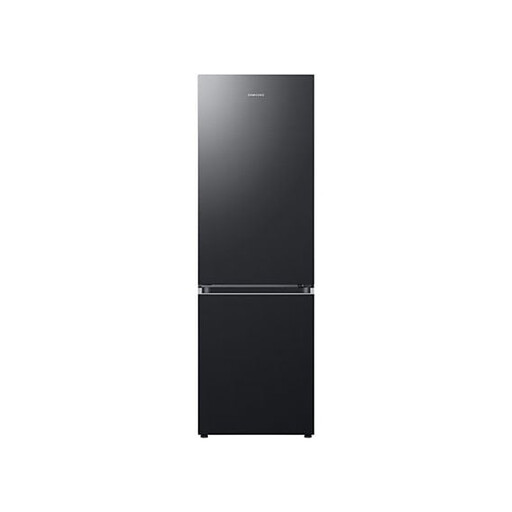 Image unavailable
Samsung RB34C704DB1, black fridge freezer, 344 L
A fridge freezer to consider if you need to split your shopping between chilled and frozen food. The model name lists a 344 L capacity and a D rating. Before choosing it for your kitchen, check the depth, climate class and required clearances in particular.
View on Joybuy
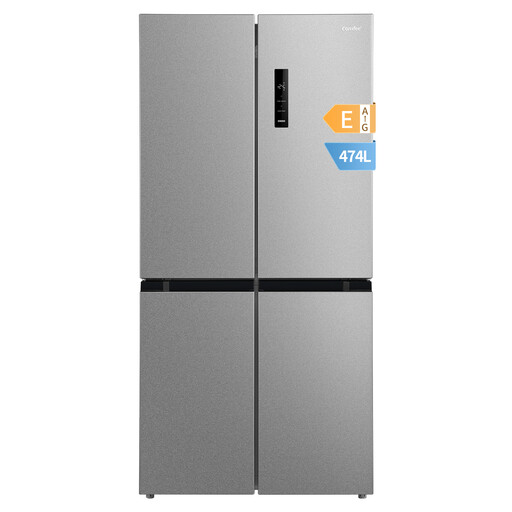 Image unavailable
COMFEE' RCF470LS2EU(E), 4-door fridge, 474 L
Worth considering if you store a large shop and want to explore a four-door layout. The model name lists a total capacity of 474 L, a three-temperature crisper drawer, Vario Box and an E rating. Compare the usable capacity of each compartment and the installation dimensions before making your choice.
View on Joybuy
 Image unavailable
Bosch KGN33NLEB, fridge freezer with bottom freezer, 282 L
This style gives you separate storage for fresh and frozen food. The model name lists a 282 L capacity, an E rating and a stainless steel finish. Check the climate class for this model and the space it needs in your kitchen.
View on Joybuy
 Image unavailable
CHiQ JR227LSE, silver fridge freezer, 227 L, 54 cm wide
Worth considering if you have limited width but still want a separate freezer. The model name lists a 153 L fridge capacity, a 74 L freezer capacity, a reversible door, Low Frost and an E rating. Low Frost doesn’t mean you’ll never need to defrost the appliance. Also check the height, depth and required clearances.
View on Joybuy
Frequently asked questions
What fridge capacity does my household need?
Start with the usable capacity: UFC-Que Choisir suggests 100 to 150 L for one person, then around 50 L for each additional person. Adjust this based on how often you shop and the containers you need to store. If you use a freezer regularly, compare its capacity separately.
Are all fridge compartments kept at the same temperature?
Not necessarily. According to UFC-Que Choisir, fan-assisted or ventilated cooling provides a more even temperature than static cooling. If you store food in a dedicated zone, check the temperatures and intended uses listed in the model’s instruction manual.
What should I check before putting a fridge in a kitchen or garage?
Check the dimensions, door clearance and ventilation requirements in the instruction manual. Also make sure the room’s ambient temperature is within the range specified by the appliance’s climate class. Don’t assume a garage or conservatory will be suitable.
What should I compare on a fridge’s energy label?
For household appliances covered by EU energy labelling, compare the A to G rating, annual energy consumption, stated capacities and noise level, as set out by the European Commission. Then check the dimensions and layout separately: the energy rating won’t answer those questions.


