
Livraison le jour même ou le lendemain

Qualité garantie

Débloquez vos offres de bienvenue: Livraison GRATUITE | Jusqu'à -80 % | 30 jours d'essai gratuits à JoyPlus
Téléchargez l'application
Baked-on grease on a hob, deposits in a dishwasher, or a cooker hood caked with splatters – each situation may call for a different formula. Yet many households rely on a single multi-purpose cleaner to tackle every surface. The result? Streaks, limited effectiveness, and even damage to certain materials.
Before you choose from the range of household degreasing products, it’s worth considering the surface you need to clean, the level of soiling, and how you’ll apply the product.
An oven degreaser may contain alkaline agents that can dissolve burnt-on grease, but these can be too harsh for aluminium, certain paints, or seals. Conversely, a gentle surface cleaner is perfect for everyday maintenance but won’t be powerful enough for a heavily soiled barbecue grate.
Always check the label for compatible surfaces and those to avoid. The term “multi-surface” doesn’t mean you can skip verifying that the product is suitable for your appliance.
Phrases like “fast-acting”, “ultra-degreasing formula”, or “effortless” are largely marketing speak. The actual result depends on the dwell time, surface temperature, amount used, and rinsing.
A product that works well on a warm surface may need longer on a cold one. Always follow the recommended dwell time and never mix different products.
Products containing bleach, caustic soda, or solvents require special care. Never mix a chlorine-based formula with an acidic product or another cleaner – dangerous gases can be released. Wear gloves if the label advises it, ventilate the room, and keep products out of reach of children and pets.
In the kitchen, check that the product is compatible with enamel, tiles, stainless steel, glass, ceramic hobs, or painted surfaces. Aluminium and light alloys are often incompatible with the strongest alkaline formulas.
A standard kitchen degreaser is generally suitable for a cooker hood, a wipe-clean worktop, or a hob. An oven cleaner, on the other hand, is formulated for baked-on and carbonised residues. For an air fryer, choose a degreaser for air fryers that is compatible with the basket, walls, and accessories. Never spray product onto electrical components or heating elements.
A dishwasher degreaser designed for machine maintenance does not replace a washing tablet. It is used to clean the appliance and remove deposits that build up in its internal circuits. For hand-washing dishes, opt for a degreasing washing-up liquid and follow the recommended dilution.
Examine the ingredient list, hazard pictograms, rinsing advice, and any certifications. A formula with an environmental label or a high proportion of naturally derived ingredients may align with your priorities, but that doesn’t mean it’s harmless or suitable for all surfaces.
Terms like “biodegradable” generally refer to specific ingredients under certain conditions. They don’t excuse you from following the dosage or disposal instructions. To choose an eco-friendly degreaser, check the certification, packaging, instructions for use, and safety precautions.
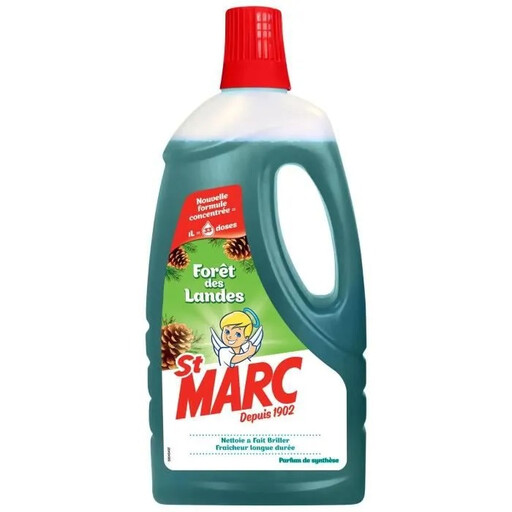
Why this suits this profile: Its concentrated formula can make up to 33 doses, according to the product page, for regular maintenance of several washable surfaces.
The adjustable dosage means you don’t have to use it undiluted for light soiling. Surfaces that come into contact with food must be rinsed.
A one-litre bottle, use diluted or neat, and a fragrance inspired by regional scents, according to the description.
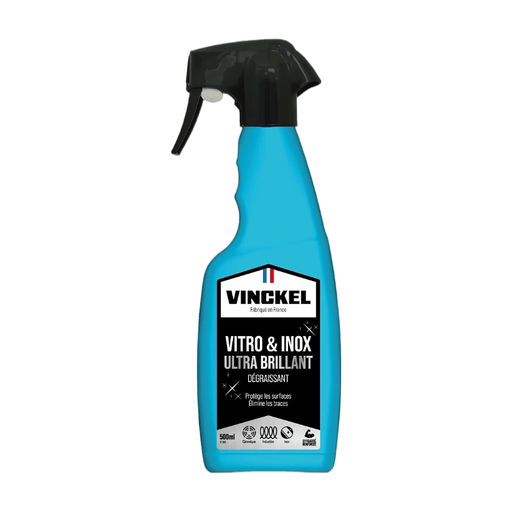
Why this suits this profile: It targets the most visible kitchen surfaces, particularly stainless steel, ceramic hobs, and induction hobs, when streaks and marks are especially hard to tolerate.
Its targeted use prevents cleaning stainless steel or glass with a potentially too-harsh oven cleaner. A soft cloth and a final wipe are recommended.
A 500 ml format, use on stainless steel, ceramic hobs and induction hobs, plus French manufacture and Origine France Garantie certification, according to the product page.
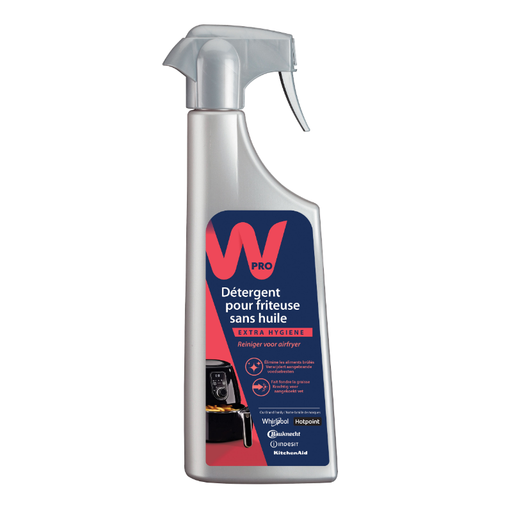
Why this suits this profile: Its dedicated formula is suitable for baskets, interior walls, grills, and accessories of an air fryer.
The product page specifies not to apply it to electrical components, heating elements, aluminium, or microwaves.
A spray format, application possible on warm or cold surfaces, and thorough rinsing of parts before drying.
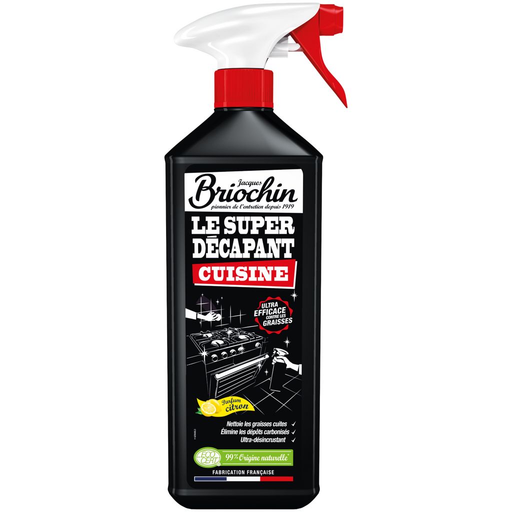
Why this suits this profile: It is aimed at those looking for a formula stated to be 99.5% naturally derived and ECOCERT certified for the kitchen.
The product page specifies usage limits: avoid aluminium, painted surfaces, and delicate materials, then rinse thoroughly.
A 500 ml spray, a foam that adheres well, and intended use for ovens, hobs, cooker hoods, grills, and barbecues.
To maintain your home sustainably, it’s better to combine products according to the task rather than over-dose a single formula:
An oven cleaner with a clearly stated dwell time will generally be more suitable than a multi-purpose cleaner. Check for incompatible surfaces, ventilate the room, wear the recommended protection, and rinse thoroughly. Do not use the pyrolytic cleaning function while product residues are still inside the oven.
No. A surface degreaser is not designed to circulate through the internal system of a dishwasher. Use a dedicated maintenance product for descaling and degreasing the machine, then a tablet or capsule intended for washing dishes.
The shelf life depends on the formula and the manufacturer’s instructions. Keep the packaging, check the date or batch number when indicated, and store the product sealed, in a dry place away from heat. An unusual smell, texture, or colour should prompt you to check the label before use.