
Livraison le jour même ou le lendemain

Qualité garantie

Débloquez vos offres de bienvenue: Livraison GRATUITE | Jusqu'à -80 % | 30 jours d'essai gratuits à JoyPlus
Téléchargez l'application
Between the promises of disinfection, long-lasting fragrances and concentrated formulas, choosing the right household cleaning products can quickly become a headache. A product suited to the toilet won't necessarily work for laundry, leather or food-contact surfaces.
To avoid unnecessary purchases, start by checking the product's actual function, its instructions for use and any precautions to take. Here are the key criteria to consider before stocking your cupboard.
A product can remove dirt without disinfecting. Conversely, a laundry or toilet disinfectant must be used with a precise dosage and contact time. A hanging toilet block helps maintain a feeling of freshness between cleans, but doesn't necessarily replace a toilet gel.
So start by reading the function stated on the label: cleaner, descaler, disinfectant, bleach or simply deodoriser.
Bleach can whiten certain surfaces and be suitable for cleaning specific areas, but it is far from universal. It can damage coloured fabrics, some metals and sensitive finishes. Products containing hypochlorite must never be mixed with acids, vinegar, ammonia or other cleaning products.
A bathroom limescale remover doesn't serve the same purpose as a chlorinated product. To remove soap scum and limescale marks, it's better to choose a formula specifically designed for that type of deposit.
A magic eraser works using a micro-abrasive foam. It can remove certain marks on washable surfaces, but it can also dull a glossy finish, varnished wood, stainless steel or a delicate coating.
The same rule applies to a fabric stain remover, a leather protector or a glass cleaner: always test the product on an inconspicuous area and check the manufacturer's recommendations.
Start by identifying exactly what you need:
This distinction stops you paying for a feature you won't actually use.
A large bottle isn't necessarily more economical. Compare the volume, the recommended dosage and how often you'll use it. A concentrated fabric softener or refill can take up less space, provided you stick to the stated dose.
For laundry, also check the usage temperature. Several disinfectants in this selection are claimed to be active from 20 °C, provided you follow the instructions on the packaging.
Biocidal products, chlorinated toilet gels and drain unblockers can be corrosive or irritant. Wear gloves when the label recommends it, ventilate the room and store bottles out of reach of children and pets.
Never mix a drain unblocker with another product. The same safety rule applies to bleach and acidic products. In case of contact with eyes or skin, follow the first aid instructions on the packaging.
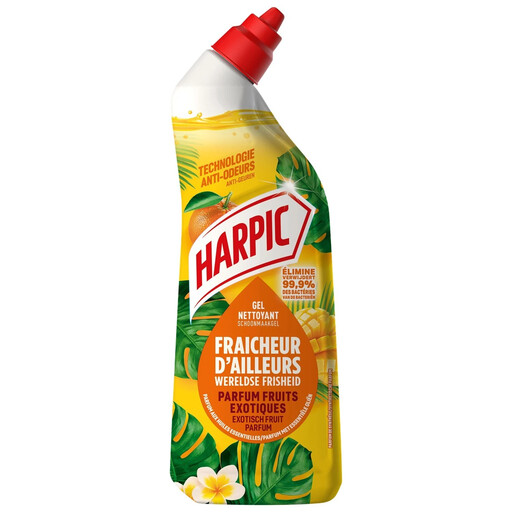
Why this choice suits this profile: Its 750 ml format and application under the toilet rim make daily toilet maintenance easy.
It doesn't just perfume the bowl: it's designed for cleaning and states a dwell time before brushing and rinsing.
Toilet gel, claimed anti-odour action and exotic fruit fragrance. For external use only.
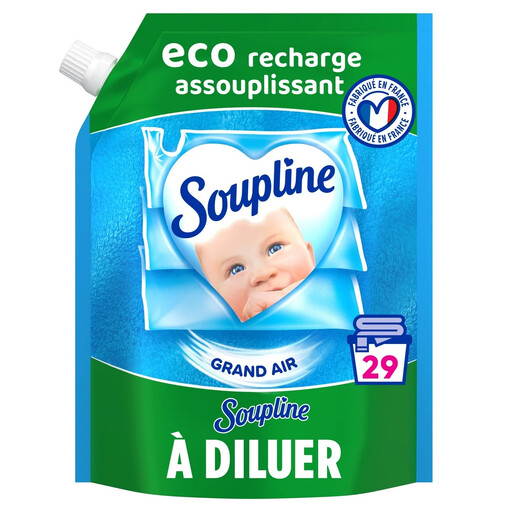
Why this choice suits this profile: This 600 ml refill is aimed at households looking for a fragrant experience while saving cupboard space.
With a concentrated formula, it's essential to follow the recommended dose rather than pouring the product by eye.
Eco-designed refill according to the product sheet, 600 ml format, use from 25 °C and 92% naturally derived ingredients claimed.
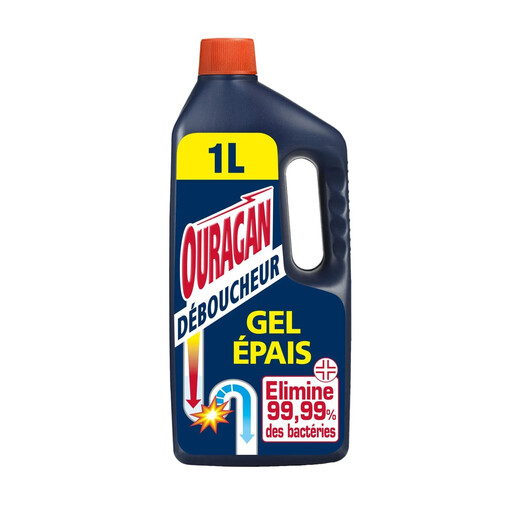
Why this choice suits this profile: This gel is designed for blocked drains and is used occasionally when the flow slows down or stops completely.
The product sheet states it is exclusively for unblocking, with a 15-minute action time. It also reminds you not to mix products.
Gel texture, 1 litre format and formula based on caustic soda and chlorinated agents. Corrosive product – handle with appropriate protection.
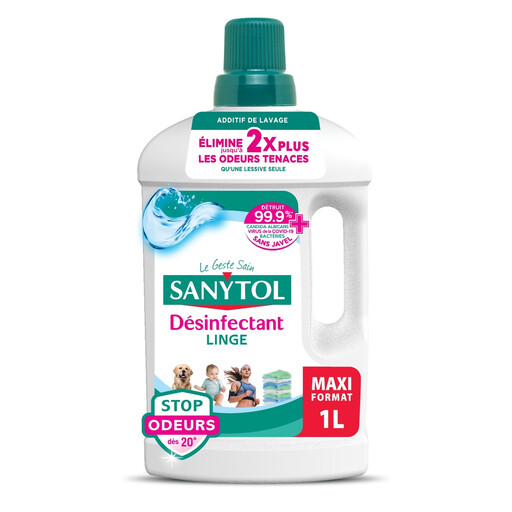
Why this choice suits this profile: Its one-litre format and use in the fabric softener compartment make it ideal for frequent washing.
It must not be poured directly onto dry laundry. The dosage is designed for a standard machine load.
Claimed use from 20 °C, action against bad odours and Active Fresh fragrance. Check garment labels before use.
No. A glass cleaner, toilet gel, fabric stain remover and drain unblocker serve very different purposes. An unsuitable formula can leave marks, damage a surface or cause a dangerous reaction if mixed with another product.
The shelf life depends on the formula, storage conditions and the date stated on the packaging. Keep bottles sealed, away from heat and direct sunlight. For biocidal products, always check the date, batch number and safety information.
It depends entirely on the surface and the product used. Food-contact surfaces generally need to be rinsed with drinking water when the label specifies this. For a bathroom cleaner or toilet product, follow the dwell time and the manufacturer's specific instructions.