
Livraison le jour même ou le lendemain

Qualité garantie

Débloquez vos offres de bienvenue: Livraison GRATUITE | Jusqu'à -80 % | 30 jours d'essai gratuits à JoyPlus
Téléchargez l'application
Buying household cleaning products seems simple… until you start comparing sprays, gels, wipes and bulk sizes. A multi-purpose cleaner can be very handy, but it may not be suitable for wooden flooring. Similarly, a product labelled as a disinfectant must be left to work for a specific contact time. And formulas containing bleach require a few extra precautions.
To avoid unnecessary purchases, it’s best to start by identifying the surface you need to treat, the level of dirt and how often you’ll use it, rather than relying solely on the scent or marketing claims.
A cleaning product removes dirt, grease and some marks. A surface disinfectant has different usage requirements. To achieve the claimed effectiveness, the surface generally needs to stay wet for the time stated on the label.
Antibacterial cleaning wipes can be handy for handles, worktops or light switches. But a quick wipe may not follow the required protocol. So always check the biocide claim, the stated standard and the contact time.
A kitchen degreaser, designed for hobs, extractor hoods or grills, can be too harsh on waxed wood, painted surfaces or certain metals. Conversely, a floor cleaner or diluted liquid black soap may struggle to shift baked-on grease.
Before buying, always check which materials are compatible and test the product on an inconspicuous area. This precaution is especially important with unvarnished wood, aluminium, natural stone and delicate surfaces.
A 5-litre economy bottle is only good value if the product is concentrated or used regularly. Compare the price per litre ready to use, not just the price of the bottle. A large format also needs suitable storage space and a clean, accurate way to measure it out.
For everyday cleaning, a multi-purpose spray cleaner works on most washable hard surfaces. Formulas with black soap or bicarbonate can handle moderate degreasing and streak-free cleaning, as long as you follow the manufacturer’s instructions.
In a busy kitchen, look for a formula specifically designed to dissolve grease. A degreasing gel stays on vertical surfaces longer and can be especially useful on an extractor hood, a grill or oven walls. Products containing bleach should be used with gloves if the label recommends it, in a well-ventilated room, and never with an acid, ammonia or another cleaner.
Products that mention EN 1276, EN 13697 or EN 14476 should be examined carefully. These standards correspond to specific test conditions, including a defined contact time and level of soiling. They do not mean the product is automatically suitable for all domestic uses.
Sprays of 500 to 800 ml are easy to store and handy for occasional jobs. Ready-to-use wipes save time, but they must be disposed of with household waste, never down the toilet. For professional cleaners, catering businesses or offices, a 5-litre bottle can reduce packaging and restocking, provided you have an accurate dosing system.
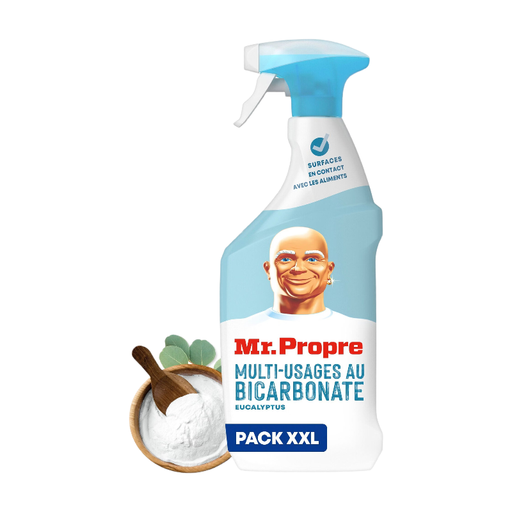
Why this choice suits this profile: An 800 ml multi-purpose spray lets you start with just one product for the sink, hob, shower doors and washable floors.
Its product page lists compatible surfaces and reminds you to rinse areas that come into contact with food, helping you avoid using one cleaner everywhere without thinking.
Bicarbonate formula, spray application and intended use on several hard surfaces.
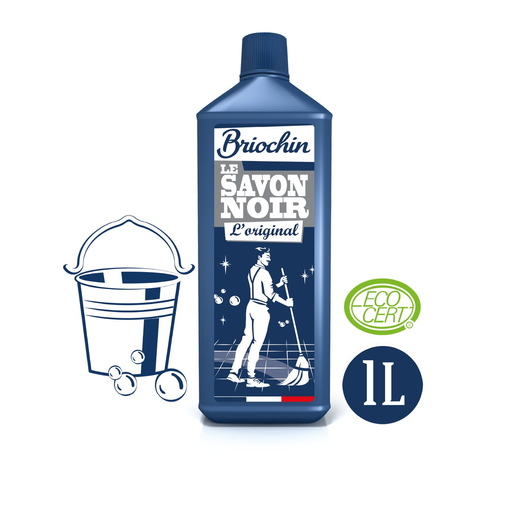
Why this choice suits this profile: This option is for households looking for a certified formula and a versatile product for floors as well as small surfaces.
The stated dilution – one capful per litre of water for floors – helps avoid overdosing and keeps the cost of use under control.
ECOCERT certification stated, 99% naturally derived ingredients according to the product page, and a concentrated formula.
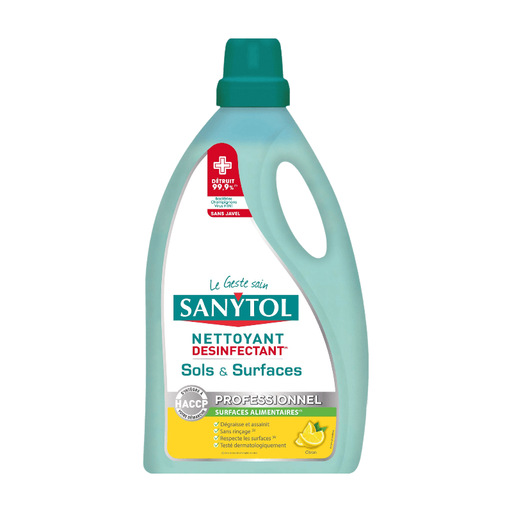
Why this choice suits this profile: The 5-litre bottle is suitable for offices, professional kitchens, public-access buildings and households that wash their floors very frequently.
The product page distinguishes cleaning from disinfection and refers to the dilution and contact time instructions, rather than making a general claim.
5 L format, bleach-free formula and European standards mentioned for bactericidal, fungicidal and virucidal action.
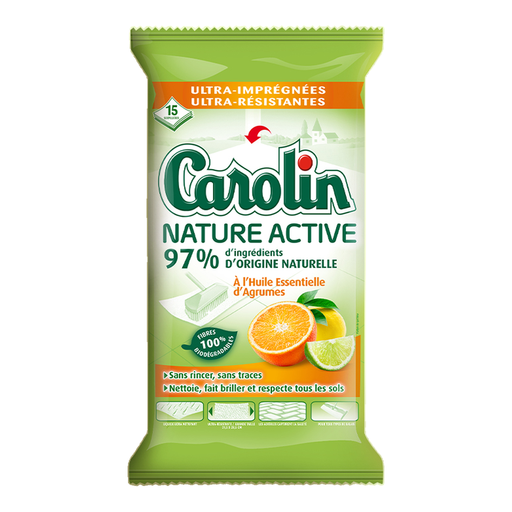
Why this choice suits this profile: Ready-to-use wipes are ideal for quick touch-ups on a modern parquet floor, without having to prepare a bucket or measure out a solution.
The instructions recommend avoiding excess moisture and state that these wipes should not be used on unvarnished floors without testing first.
Fibres of natural origin claimed as biodegradable, pack of 15 wipes and targeted use for wood floors.
A multi-purpose cleaner is fine for everyday dirt on hard surfaces. For stubborn grease, choose a kitchen degreaser and follow the recommended dwell time. Surfaces that come into contact with food should be rinsed if the label says so.
Follow the recommended dose, use a clean microfibre cloth and avoid soaking the floor. For parquet, choose a formula specifically compatible with washable wood. Too much product can leave a film, even when it’s labelled as no-rinse.
They can be for a large area or frequent cleaning, especially in a 5-litre bottle. However, compare the dilution, the price per litre ready to use, storage conditions and whether you might need protective equipment.