
当日/次日达

品质保障

开启新人专享福利: 全场免邮 | 低至 2 折 | 免费试用 30 天 JoyPlus 会员
下载 Joybuy
Buying household cleaning products is not simply about choosing a familiar brand or a pleasant fragrance. Multi-purpose cleaner, toilet gel, drain opener or disinfecting wipes: each formula is designed for a specific purpose. Choosing the wrong product can quickly lead to repeat purchases, damaged surfaces or unsafe use.
For 2026, Joybuy’s selection focuses on intended use, pack sizes and the precautions stated on the label. Here is what to check before stocking your cupboard, whether you are a homeowner, tenant, private individual or cleaning professional.
A multi-purpose cleaner removes everyday dirt, grease and marks. A disinfectant cleaner, on the other hand, contains an active substance designed to reduce certain microorganisms under the conditions specified on the label. A toilet block or toilet freshener mainly works with every flush, releasing fragrance while supporting routine maintenance.
A fragranced product is therefore not necessarily a disinfectant. Bleach may clean, whiten or disinfect depending on its concentration and instructions for use. However, some products specifically state that they are not intended for disinfection. Rely on the function stated on the label rather than the word “hygiene” alone.
Bottles ranging from 500 to 750 ml are generally sufficient for everyday household use. However, for a large home, professional premises or frequent cleaning, a 1.5- to 5-litre container can reduce the cost per use. Always check the dosage: a concentrated product that is diluted incorrectly may leave residue, increase consumption and damage certain surfaces.
Professional cleaning products are not automatically suitable for every material. Their usefulness depends primarily on the surface being treated, the type of dirt involved and whether the container can be stored safely.
Never mix a drain opener with another product. Also avoid combining an acidic formula with bleach or ammonia, as dangerous fumes may form. Hydrochloric-acid toilet gels and chlorine-based solutions require particular care, suitable gloves and a properly ventilated room.
Disinfecting wipes should be disposed of in the bin, never flushed down the toilet. Products, packaging and instructions for use must be kept out of the reach of children and pets.
For floors, worktops and washable surfaces, look for a clear statement confirming compatibility. A floor and surface cleaner may be used diluted, while a ready-to-use formula can be applied directly. Surfaces that come into contact with food are subject to specific requirements: after disinfection, some products require rinsing with potable water.
To tackle stubborn marks, a melamine sponge can complement your cleaning routine. However, it works through abrasion and is not suitable for polished wood, glossy surfaces, non-stick coatings or certain stainless-steel finishes. Always test it first on an inconspicuous area.
Check the active substances, hazard pictograms and contact time. A limescale-removing toilet gel does not serve the same purpose as a toilet block. A stain remover for textiles should be tested on an inconspicuous area, while household baking soda can be used as a powder, paste or solution, depending on the manufacturer’s instructions.
For a limescale remover, check compatibility with marble, natural stone, certain metals and acid-sensitive joints and seals. When using a drain opener, also check any restrictions relating to aluminium, septic tanks and older plumbing systems.
Compare the price per litre, recommended dosage and stated number of uses. A 5-litre container, such as some products intended for floors and surfaces, can be worthwhile for regular cleaning. Conversely, a 750 ml bottle is easier to handle for occasional use in the bathroom.
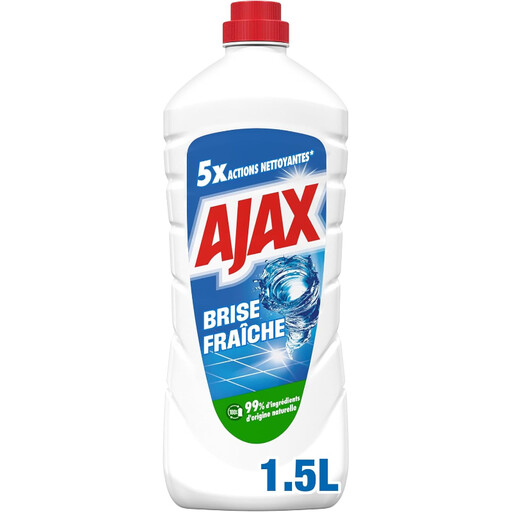
Why it suits this profile: a versatile solution for floors, kitchens, bathrooms and washable surfaces throughout a typical home.
Its 1.5-litre format avoids the need to accumulate several small bottles. The product information states that it can be used neat or diluted, depending on the task.
Suitable for use with cold water, with a recycled-plastic bottle and a formula listed as containing 99% ingredients of natural origin.

Why it suits this profile: this large volume is suitable for larger families, busy households and professional cleaning teams.
Bleach-free, the formula clearly separates disinfectant cleaning from whitening action. Dilution and contact time must follow the label instructions.
The product information cites EN 13697, EN 1650 and EN 14476 standards, as well as possible use on certain food-contact surfaces after rinsing.
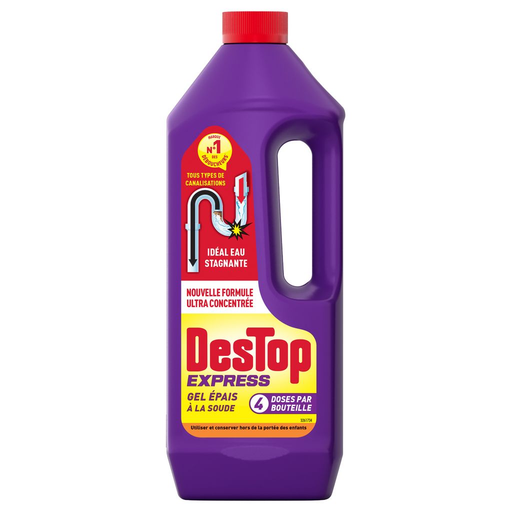
Why it suits this profile: its thick gel is designed for sinks, showers and toilets affected by common blockages.
The product information specifies the presence of caustic soda and incompatibility with aluminium. Always check the type of pipework before use.
The gel is designed to work through standing water and comes in a 950 ml bottle. The instructions recommend wearing gloves and eye protection, followed by thorough rinsing.
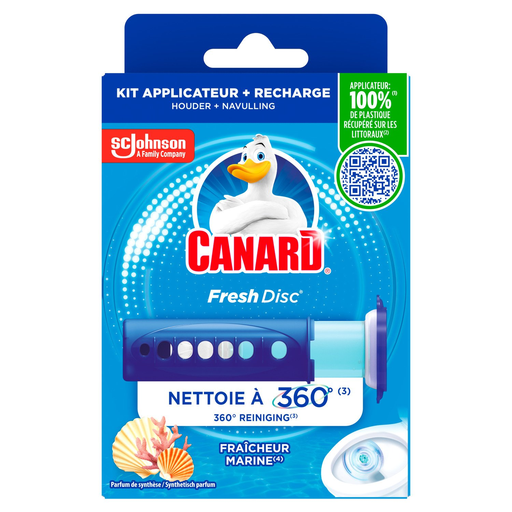
Why it suits this profile: the system is applied inside the bowl and dispenses gel with every flush, without requiring a hanging holder.
It does not replace manual cleaning: it provides continuous, fragranced maintenance. The refill must be positioned correctly.
The applicator is made from 100% recycled plastic, excluding the colouring agent. The packaging is recyclable cardboard, according to the product information.
A simple system is usually all you need:
If you have a septic tank, always check the compatibility stated by the manufacturer. Some toilet gels, such as the Harpic Fresh Mint product presented for this purpose, are specially formulated accordingly. The instructions printed on the packaging nevertheless remain the definitive reference.
We have put together an updated selection of products suited to different cleaning needs and the safety guidance applicable in France.
Choose a disinfectant cleaner whose label specifies the relevant surfaces, dilution and contact time. The SANYTOL product information for floors and surfaces cites EN 13697, EN 1650 and EN 14476 standards, among others. For food-contact surfaces, follow the stated rinsing instructions.
The expiry date and batch number appear on the packaging. Never transfer the product to another bottle. Keep it closed in a dry, well-ventilated place, out of the reach of children. If the label has become unreadable or the container is leaking, do not use the product.
No. Bleach must never be mixed with an acid, vinegar, ammonia or a drain opener. Even common household products can cause dangerous reactions when combined. Use one formula at a time and rinse the surface if instructed to do so.