
Livraison le jour même ou le lendemain

Qualité garantie

Débloquez vos offres de bienvenue: Livraison GRATUITE | Jusqu'à -80 % | 30 jours d'essai gratuits à JoyPlus
Téléchargez l'application
From limescale building up in the shower to greasy stains on clothes and surfaces that show marks at the slightest touch, buying household cleaning products is not simply about choosing a well-known brand. The result depends above all on the formula, the surface being cleaned and how the product is used.
A bathroom cleaner is not used in the same way as a fabric stain remover. Here are the main criteria to consider to avoid unsuitable purchases and choose products that match your home, budget and habits.
A multi-surface cleaner may be suitable for glass, furniture or worktops, but that does not mean it will remove firmly embedded limescale. Conversely, a limescale remover may contain acidic agents that are incompatible with certain natural stones, metal surfaces or sensitive materials.
Start by checking the surfaces listed as suitable on the label. A formula described as versatile does not mean it is suitable for every surface.
Claims such as “eliminates up to 99.9%” or “removes 100% of limescale” apply to specific conditions of use and the manufacturer’s testing protocols. They do not guarantee the same results on every stain, fabric or level of dirt.
For a more practical comparison, look instead at:
Bleach and some everyday cleaning products can cause irritation or burns. It must never be mixed with a limescale remover, vinegar, ammonia or another cleaning product. Such mixtures can release dangerous fumes.
Even a daily-use spray may require you to ventilate the room, wear gloves or protect your eyes. Keep bottles and powders in their original packaging, out of reach of children.
For the bathroom, choose a formula designed for limescale, water marks and soap residue. Thanks to its nozzle, a gel stays on a vertical surface for longer, while a spray allows you to cover a larger area quickly.
For laundry, identify the stain first:
A 700 to 800 ml bottle is generally suitable for the regular cleaning of a few bathroom areas. A 1 to 2.7 kg powder will be more appropriate for a household that treats laundry regularly. A concentrated format can take up less space, provided you follow the recommended dosage precisely.
Compare the price per use, not just the price of the bottle. A product sold in a smaller container may prove more economical if it requires a smaller dose.
Always check which surfaces are excluded before applying any product. Many stain removers advise against use on wool, silk, leather or textiles requiring dry cleaning. Limescale removers are not always compatible with marble, certain stones, painted surfaces or sensitive metals.
Test the product first on a small, inconspicuous area. For clothes, follow the care label and do not allow the product to dry on the fabric if the instructions specify a limited contact time.
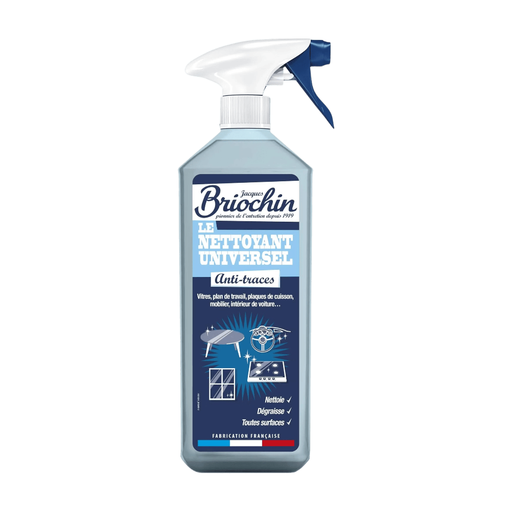
Why this choice suits this profile: Its 750 ml spray format is enough for everyday cleaning of furniture, windows, mirrors, worktops and other household surfaces. A practical solution for avoiding a cupboard full of different bottles.
The product information specifies the compatible surfaces and states that rinsing with clean water is required on surfaces that come into contact with food. For a screen, spray the product onto the cloth, never directly onto the device.
A 750 ml format, no-rinse application on many surfaces and a formula advertised as containing no artificial colouring.
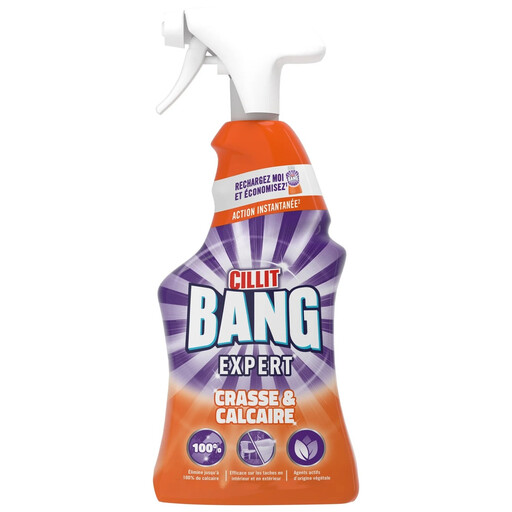
Why this choice suits this profile: This spray combines a foaming application, a formula advertised as helping to prevent re-deposits and a refillable bottle compatible with certain brand refills.
The refill system means you do not need to replace the bottle every time. However, the instructions still highlight the necessary precautions, including wearing gloves where required and using the product in a well-ventilated room.
A 750 ml volume, foam suited to vertical surfaces and the option of using a refill in a compatible container.
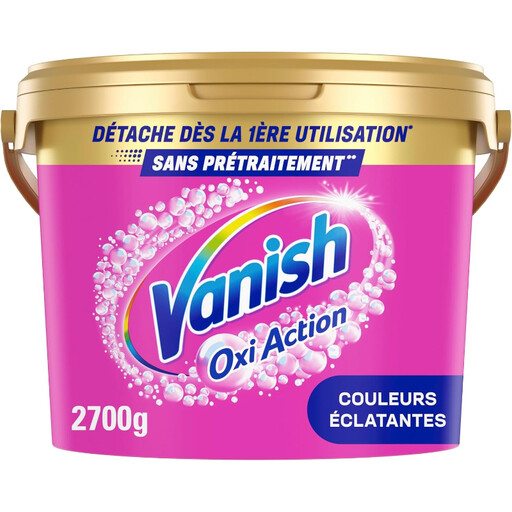
Why this choice suits this profile: At 2.7 kg, this large format is aimed at families and users who regularly treat laundry in the washing machine, by soaking or as a pre-treatment.
The instructions explain several ways to use the product and recommend checking colourfastness beforehand. They specifically exclude wool, silk and leather, helping to reduce the risk of applying it to unsuitable fabrics.
A 2.7 kg capacity, use from 20 °C and a formula advertised as containing no chlorine-based bleaching agent.
We have put together a complete, real-time updated list of products that meet these selection criteria and the requirements of European safety regulations.
Scouring sponges can complement these products, but you should check how abrasive they are. A sponge marketed as non-scratch is not necessarily suitable for a non-stick hob, a delicate surface or a glossy finish. For example, the Spontex product information recommends carrying out a preliminary test and advises against using the abrasive side on fragile surfaces.
For visible deposits, choose a limescale remover or a bathroom cleaner whose label mentions water marks and soap. A gel will be better suited to localised deposits, while a spray is more convenient for regular cleaning. Always check that it is compatible with the tiles, taps and grouting.
No. Stain-removing powders, gels and sprays may not be suitable for wool, silk, leather, carpets or textiles requiring dry cleaning. Check the garment’s care label, follow the contact time and test the product on a small, inconspicuous area.
Compare the recommended dosage, pack size and stated number of uses. Large formats can be worthwhile for intensive use, while a 750 or 800 ml spray is often more convenient for everyday cleaning. Using more product does not necessarily improve the result: it increases costs and the amount of residue that needs rinsing.