
Same-day & Next-day Delivery

Quality Guaranteed

Unlock Your Welcome Offers: FREE Delivery | Up to 80% OFF | Free 30-day JoyPlus trial
Download the APP
With promises of disinfection, long-lasting fragrances and value-for-money large formats, buying household cleaning products can quickly become a headache. A multi-purpose cleaner is not necessarily suitable for every surface, a toilet block does not replace cleaning the bowl, and a concentrated product used at the wrong dilution can increase costs rather than reduce them.
Here are the most common pitfalls, the criteria to consider and a selection of products suited to different needs in France.
A product may remove visible dirt without being a biocide. This is particularly true of some cleaners containing bleach: they may clean, whiten or remove stains without being intended for disinfection. The product information for LA CROIX Multi-Purpose Bleach Cleaner Liquid 1.5L states that this is not one of its functions.
Conversely, a toilet disinfectant gel must be used according to its label and only on the intended area. A toilet air freshener or toilet block is mainly designed to maintain a fresh feeling between cleanings.
A pleasant fragrance says nothing, in itself, about a product’s cleaning performance. Similarly, a claim such as “ 99.9 % ” must be considered in the context specified by the manufacturer: the type of micro-organisms targeted, conditions of use, contact time and surface concerned. It is better to check the product information and label than to treat a marketing claim as a universal guarantee.
Fragrances may also contain sensitising substances such as linalool, citronellol or limonene. If you have sensitivities, it is therefore worth checking the ingredients before buying.
A 5-litre container can be a practical choice for a large family, business or public organisation. However, you will need enough space to store it and must follow the recommended dosages carefully. Using too much of a concentrated product increases consumption and may leave residue.
When comparing offers, focus instead on the price per use, the amount actually required and how often you clean.
To keep your cleaning cupboard well organised, clearly distinguish between uses:
Read the restrictions before pouring a product or scrubbing a surface. Chlorine-based products must never be mixed with acids, vinegar or ammonia, as dangerous gases may form. A caustic soda- or bleach-based drain unblocker must be handled with gloves, eye protection and good ventilation.
For fabrics, check the care label. Laundry disinfectants are not necessarily suitable for wool or silk. Concentrated fabric softener should be poured into the designated compartment, following the recommended dosage.
Cloths that can be washed hundreds of times can reduce repeat purchases, provided they are cared for properly. With microfibres, avoid fabric softener, which can clog the fibres and reduce their effectiveness.
Sponges should be rinsed after every use and then air-dried. Replace them when they become less effective or show signs of wear.
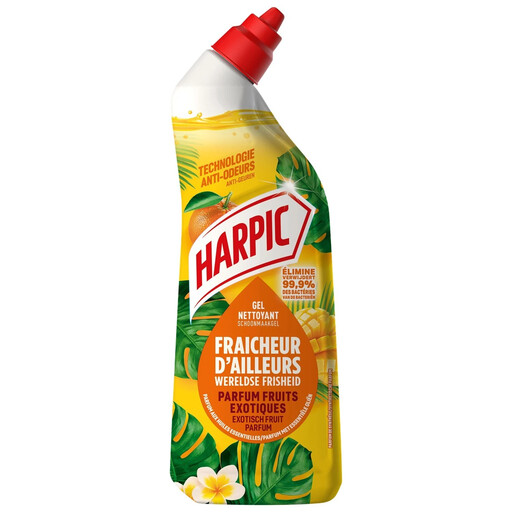
Why this choice suits this profile : its 750 ml bottle is suitable for regular toilet bowl maintenance, without requiring you to buy a large pack from the outset.
It is used to clean the toilet bowl, rather than simply release fragrance. The product information recommends applying it beneath the rim, leaving it to work and then brushing.
A toilet gel fragranced with exotic fruits, supplied in a 750 ml bottle and designed for use beneath the toilet rim.
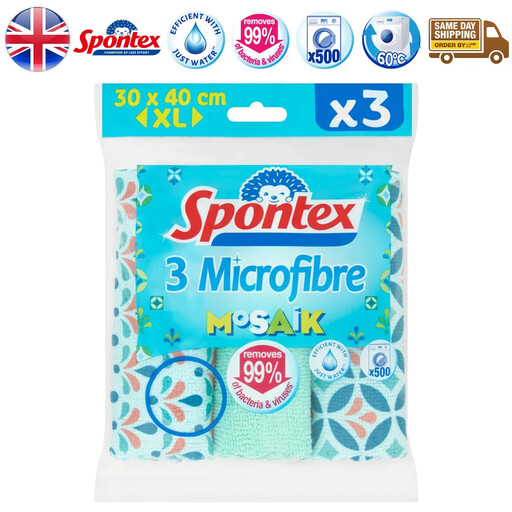
Why this choice suits this profile : these washable cloths are ideal for households that prioritise durable equipment for dusting and wiping every day.
The stated number of washes makes it possible to estimate the cost per use, rather than relying on a vague promise of durability.
A pack of 3 cloths measuring 30 × 40 cm, washable up to 500 times according to the product information and suitable for use dry or with water.
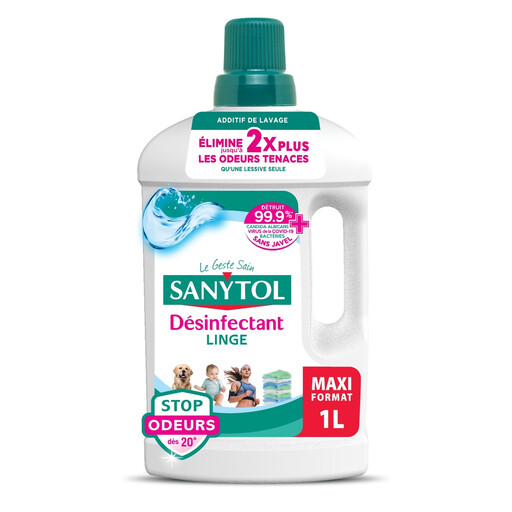
Why this choice suits this profile : its 1-litre format is suitable for households that run frequent wash cycles or want to treat laundry at low temperatures.
The recommended dose is intended for the fabric softener compartment, and use should be limited to laundry. Do not pour it directly onto dry clothes.
Suitable for use from 20 °C and supplied in a 1-litre format. Always check the care label before use.
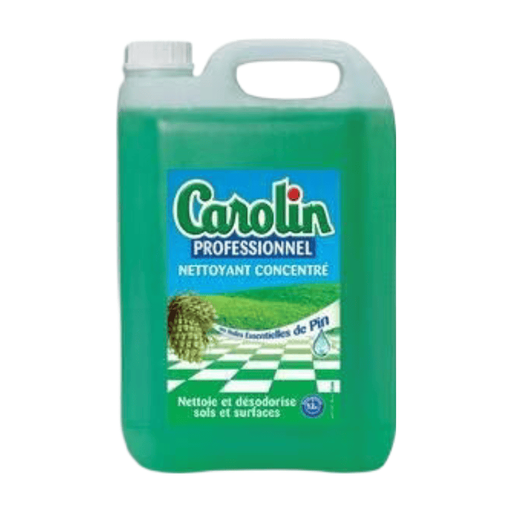
Why this choice suits this profile : the 5-litre container is suitable for spaces that require frequent cleaning, provided you have a suitable storage area.
Its concentrated format is a reminder to adjust the dilution to the level of dirt and follow the instructions on the packaging.
An economical 5-litre format, a pine fragrance and dilution options depending on the cleaning tasks to be carried out.
To complete your cleaning equipment, also compare toilet paper according to the number of sheets, thickness and storage conditions. A large pack should be kept dry to prevent the paper from deteriorating.
A toilet cleaner in gel form can be applied beneath the rim and then brushed after the stated contact time. A toilet block or toilet air freshener can complement cleaning between washes, but does not replace this step.
It depends on the product label, the type of fabric and the actual need. Check compatibility with the fibres and follow the recommended dosage. For delicate items, always follow the manufacturer’s washing instructions first.
They can reduce repeat purchases if their stated lifespan is respected. However, the true cost depends on washing, drying and replacing them when the fibres or abrasive surface become worn.