
当日/次日达

品质保障

开启新人专享福利: 全场免邮 | 低至 2 折 | 免费试用 30 天 JoyPlus 会员
下载 Joybuy
Buying household cleaning products seems simple… until you find yourself with a shelf full of unused bottles, an overpowering fragrance or a formula that is unsuitable for the surface you need to clean. Between promises of fast action, long-lasting scents and « disinfectant » claims, certain pitfalls can increase your bill without making cleaning any more effective.
Whether you are an individual, a family, a small business or have a septic tank, making the right choice mainly comes down to three things: the intended use, the product’s ingredients and the precautions you need to follow.
A toilet cleaner removes marks, limescale and residue. A biocidal product, on the other hand, claims to disinfect in accordance with the instructions on its label. A fragranced toilet rim block is mainly designed to maintain a fresh feel between cleans. These uses are not interchangeable.
The « 99.9% » claim also needs to be taken in context: it is a manufacturer’s claim, generally valid under specific conditions and against certain micro-organisms. It does not mean that every surface in your home will remain disinfected over time.
Bleach, acidic gels and drain unblockers are not suitable for every surface. A chlorine-based formula can whiten certain areas, but it may also damage some materials or release dangerous gases if mixed with an acidic or ammonia-containing product.
The magic eraser, meanwhile, works through the mildly abrasive action of melamine foam. It can remove certain marks, but may also dull glossy surfaces, treated wood, stainless steel or non-stick coatings.
A large container is not necessarily more economical: if the recommended dosage is high or the product loses effectiveness after opening, the calculation can quickly change. With a concentrated fabric softener, compare the recommended dose per wash rather than looking only at the volume of the bottle. For a glass cleaner, the type of spray nozzle and drying time may matter more than the fragrance.
Start by defining the main task:
Surfactants help dirt detach from surfaces. Acids are generally used to remove limescale, while sodium hypochlorite is characteristic of chlorine-based formulas. A corrosive product requires protective gloves, as well as eye protection and good ventilation where necessary.
Fragrances may contain allergens such as limonene, linalool or citronellol. Sensitive people may therefore prefer a fragrance-free formula, particularly for certain bleach-free laundry disinfectants. In all cases, the label and product information remain the authoritative sources.
A more concentrated product is not necessarily more convenient to use. Always check:
A drain unblocker based on caustic soda or chlorine-based agents must, for example, be used on its own, in a well-ventilated room and with suitable protective equipment. Never pour several products down a drain to speed up the result.
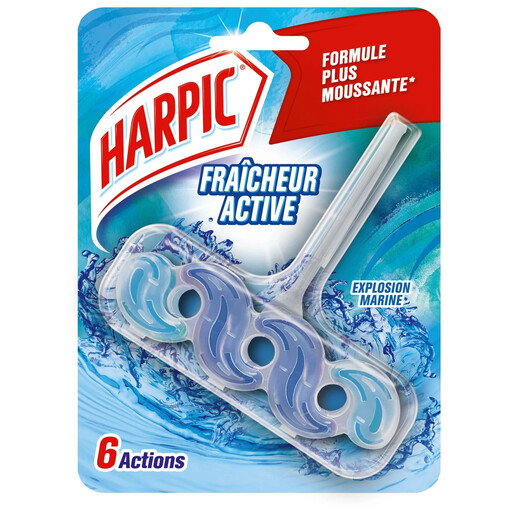
Why this choice suits this profile : This block attaches directly to the toilet bowl and releases its fragrance with every flush, without requiring daily dosing.
It complements manual cleaning rather than replacing it. The manufacturer states that it can last for up to around four weeks, depending on use.
35 g format, simple installation and a formula advertised as offering six actions. Handle with care.
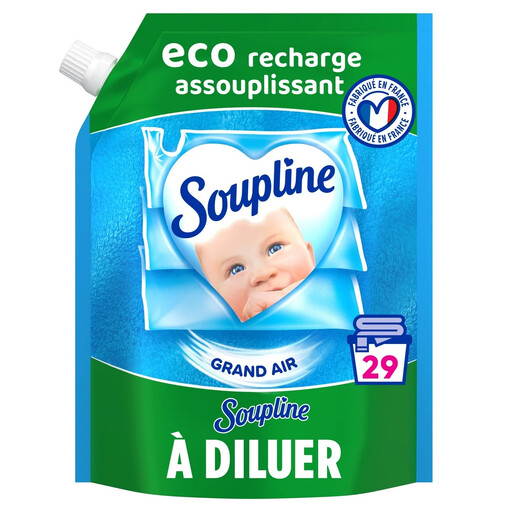
Why this choice suits this profile : The eco-refill format is aimed at households that want to reuse their bottle while keeping their laundry delicately fragranced.
The recommended dose lets you compare the cost per wash instead of relying solely on the volume of the container. Use the designated compartment and follow the stated dosage.
600 ml refill, effectiveness advertised from 25 °C and a formula stated to contain 92% ingredients of natural origin.
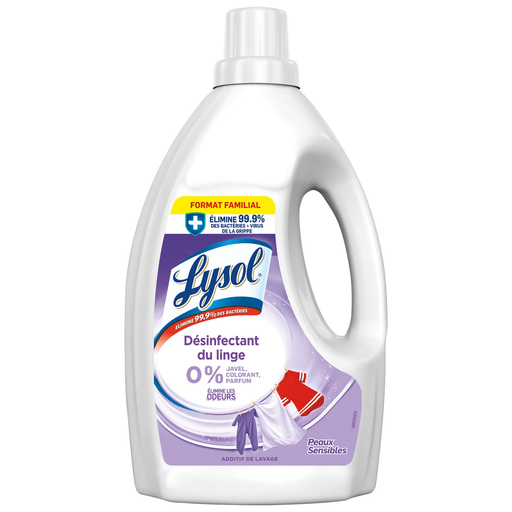
Why this choice suits this profile : Its bleach- and fragrance-free formula is presented as suitable for white and coloured laundry, including sportswear, household linens and delicate fabrics.
The absence of bleach means you do not automatically have to choose a whitening formula when looking for a chlorine-free laundry disinfectant.
1.5 l capacity, use advertised from 20 °C and a dye- and fragrance-free formula, according to the product information.
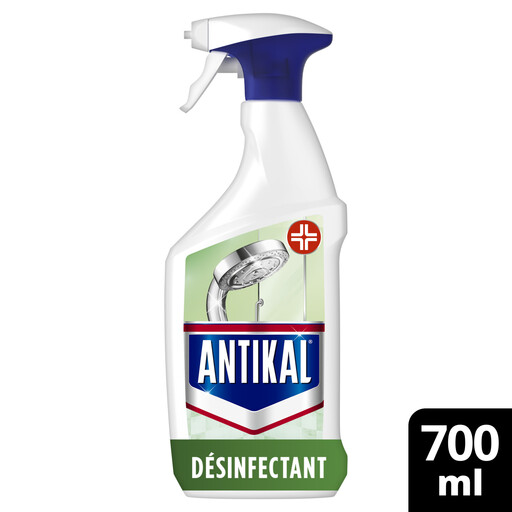
Why this choice suits this profile : Its spray format is ideal for regular cleaning of tiles, sinks, baths, shower screens and taps.
It combines limescale cleaning with the removal of soap marks in a single bottle. However, check its compatibility on a small, inconspicuous area before using it across the entire surface.
700 ml format, practical spray nozzle and action advertised against limescale, soap deposits and water marks.
We have put together a comprehensive, real-time updated selection of products that meet these exacting criteria, as well as European safety requirements.
A sensible basic selection includes an all-purpose cleaner, a kitchen product, a bathroom limescale remover, a toilet cleaner, a glass cleaner and a laundry solution suited to your needs. Only buy a drain unblocker when necessary, rather than storing one without taking proper precautions.
No. Depending on its formulation, bleach may clean or whiten certain surfaces, but it is not suitable for every material. It must never be mixed with an acidic or ammonia-containing product. Also check whether the product is genuinely intended for disinfection: some bleach-based products are designed solely for cleaning.
Check the date, batch number and instructions shown on the packaging. Heat, direct sunlight and a poorly closed cap can affect the formula. For biocides, use the product in accordance with its label and replace it if the packaging is damaged or the information has become illegible.