
当日/次日达

品质保障

开启新人专享福利: 全场免邮 | 低至 2 折 | 免费试用 30 天 JoyPlus 会员
下载 Joybuy
With promises of express results, large formats and claims such as “multi-purpose”, choosing the right household cleaning products for your home or business is not always straightforward. A bathroom cleaner does not meet the same needs as a kitchen degreaser, toilet gel or floor cleaner.
To avoid unsuitable or poor-value purchases, first check compatibility with the surfaces, the instructions for use and the level of dirt. This approach is just as useful for households as it is for professional cleaners, hotels, restaurants and public-facing establishments.
A multi-surface cleaner may be suitable for several washable materials, but that does not mean it is suitable for untreated wood, marble, sensitive metals or painted surfaces. A scouring cream tackles stubborn marks, while a limescale remover is designed mainly for mineral deposits.
Before paying, check the list of approved surfaces on the label. If you are unsure about a delicate material, always test the product on a small, inconspicuous area first.
Claims such as “99.9%” or “100%” need to be considered in context: the protocol used, the organisation that carried out the test, the contact time, dilution and type of micro-organism concerned. For a household disinfectant, the product information sheet and biocidal product label remain the reference documents.
When a product claims effectiveness in accordance with EN 13697, EN 1650 or EN 14476, check the associated conditions of use. These references do not remove the need to follow the dosage or leave the product to work for the recommended time.
A 5-litre container may seem more expensive to buy than a 750 ml bottle, while proving more economical for a business or household that cleans frequently. Conversely, a large container becomes impractical if the product deteriorates after opening or is only used a few times a year.
Compare the price per litre, recommended dosage, whether a measuring cap is included and whether rinsing may be required.
Match the formula to the problem you need to tackle:
A ready-to-use product should not be used in the same way as a concentrated formula. In a professional setting, dilution has a direct impact on cleaning performance and consistency. Follow the quantity stated on the packaging: using more does not necessarily make the product more effective and may leave a film or damage certain materials.
Rinsing also plays an essential role, particularly on surfaces that come into contact with food. After using a product containing bleach or disinfectant, follow the manufacturer’s instructions carefully.
Never mix a chlorine-based product with an acid, limescale remover or another cleaning product. The reaction may release dangerous gases. Keep containers closed and out of reach of children, in a ventilated area away from heat and direct sunlight.
Wearing gloves and protective goggles is recommended when the label indicates a risk of irritation, burns or an allergic reaction. For biocidal products, always read the label before use.
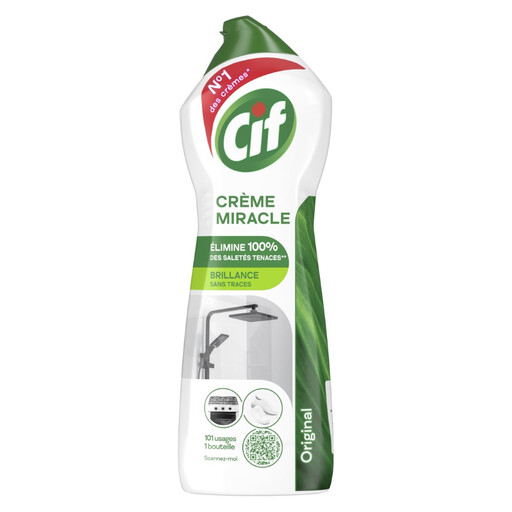
Why this choice suits this profile: At 750 ml, this size is ideal for everyday kitchen or bathroom cleaning, without requiring you to invest in a professional-sized container.
The product information states that the cleaner is suitable for several surfaces and recommends testing it first in an inconspicuous area. This helps reduce the risk of application errors.
Apply the cream to a damp sponge, then rinse or wipe with a damp cloth. The product information also mentions the Original fragrance and that it is made in France.
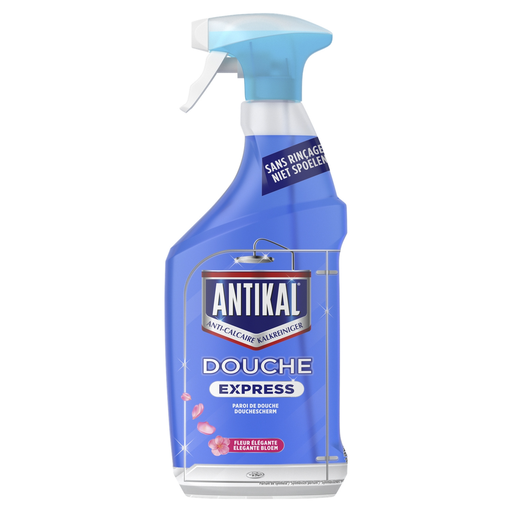
Why this choice suits this profile: This spray fits easily into regular cleaning routines for showers, screens, chrome and tiles.
The stated method is simply to spray and wipe. There is no need to manage a complicated dilution for everyday cleaning.
According to the product information, it is a no-rinse formula with advertised anti-splash technology and a floral fragrance.
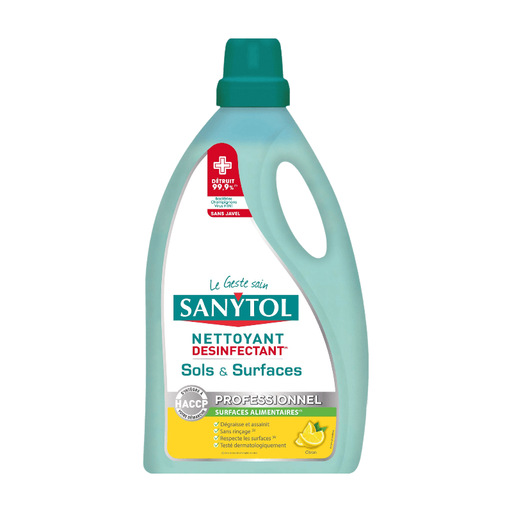
Why this choice suits this profile: At 5 litres, this size is suitable for frequent cleaning in a large house, shop or professional environment.
The product information specifies that you must follow the dilution and contact time stated on the label, rather than using the concentrated product at random.
A bleach-free disinfectant cleaner according to the description, intended for floors and surfaces, with advertised references to EN 13697, EN 1650 and EN 14476.
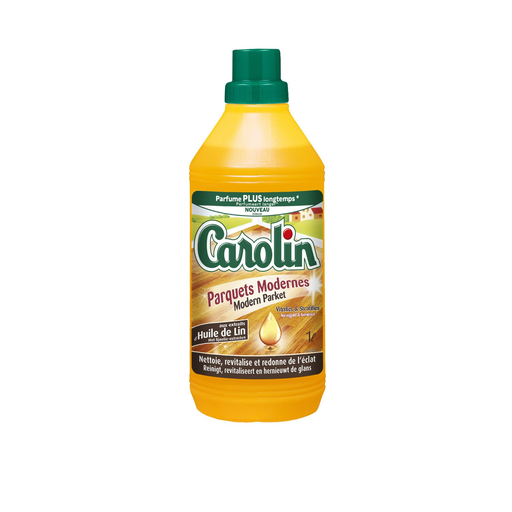
Why this choice suits this profile: Its stated intended use covers modern parquet and washable wooden surfaces, two applications that require a dedicated formula.
It helps you avoid cleaning parquet with a generic floor cleaner without first checking whether it is compatible with wood.
The product information mentions linseed oil extracts, possible dilution and no rinsing required according to the instructions for use.
We have brought together a complete, real-time updated selection of products that meet these demanding criteria and European safety requirements.
A limescale remover is suitable for water and soap marks on shower screens, tiles and taps, provided these materials are compatible. For grout affected by mould, use a dedicated formula and ventilate the room thoroughly. A bathroom cleaner should never be mixed with a chlorine-based or acidic product.
The shelf life depends on the formula, packaging and manufacturer’s recommendations. Check the date or information shown on the packaging, then store the product closed in a cool place away from light. If the smell, colour or texture has changed, check the product before using it.
Yes, some professional-sized formats may be useful for a household that does a lot of cleaning. However, they require precise dilution and more careful storage. For occasional use, a ready-to-use bottle can often help reduce waste. Before choosing, always compare the volume, dosage, rinsing requirements and safety warnings.