
当日/次日达

品质保障

开启新人专享福利: 全场免邮 | 低至 2 折 | 免费试用 30 天 JoyPlus 会员
下载 Joybuy
With promises of rapid action, « all-in-one » formulas and large formats, choosing the right household cleaning products can quickly become a headache. A multi-purpose cleaner will not necessarily tackle limescale effectively, a surface disinfectant will not always replace a kitchen degreaser, and a pleasant scent is no guarantee that a surface is perfectly clean.
Here are the criteria to consider before buying, along with a selection of products suited to different uses.
A floor cleaner or multi-purpose cleaner primarily removes visible dirt. A surface disinfectant, on the other hand, is formulated to provide a claimed biocidal effect under specific conditions: dosage, contact time and the type of microorganism targeted.
A household deodoriser masks or neutralises odours without necessarily tackling their source. It is therefore better to choose your product according to your actual needs rather than relying on an all-purpose promise.
A formula containing bleach, acidic agents or alkaline substances may be suitable for some surfaces but not recommended for marble, metals, untreated wood or electronic devices. Always check the label and test the product on an inconspicuous area.
Surfaces that come into contact with food generally require rinsing with drinking water, even when the manufacturer states that the product can be used there.
A 5 L container may be a sensible choice for a restaurant, hotel, office or large family. In a small home, however, it could take up a lot of space and tie up money unnecessarily. Before choosing a professional household cleaning product, compare the volume, recommended dosage and how often you intend to use it.
A ready-to-use spray makes targeted cleaning easier. A concentrated formula can reduce the cost per use, provided you follow the dilution instructions carefully. Refills also mean you do not have to buy a new bottle every time, while absorber sachets can easily be placed in a wardrobe or shoe cabinet.
For biocides, check the usage instructions and standards mentioned by the manufacturer, such as EN 13697, EN 1650 or EN 14476. These references correspond to different protocols: bactericidal, fungicidal or virucidal. They do not mean that the product is suitable for every situation.
Never mix bleach, vinegar, limescale remover or ammonia. Dangerous gases could be released. Wear gloves when recommended on the label, ventilate the room and store products out of the reach of children and animals.
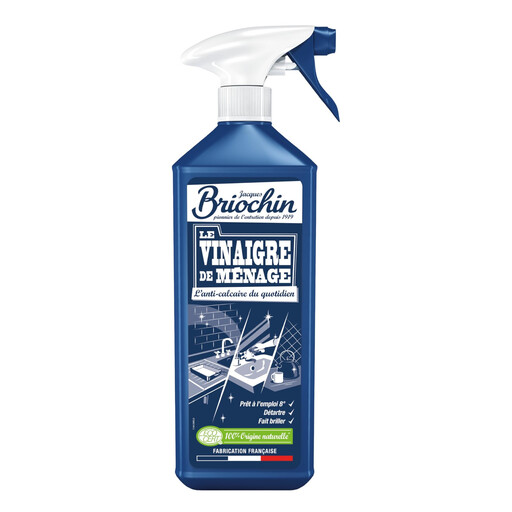
Why this choice suits this profile : Its ready-to-use spray is ideal for everyday cleaning in the kitchen and bathroom, with no complicated measuring.
The product details clearly explain its uses: descaling, polishing and cleaning. It is therefore not presented as a universal disinfectant.
Ready-to-use vinegar, a 750 ml bottle and manufacture in France as stated.
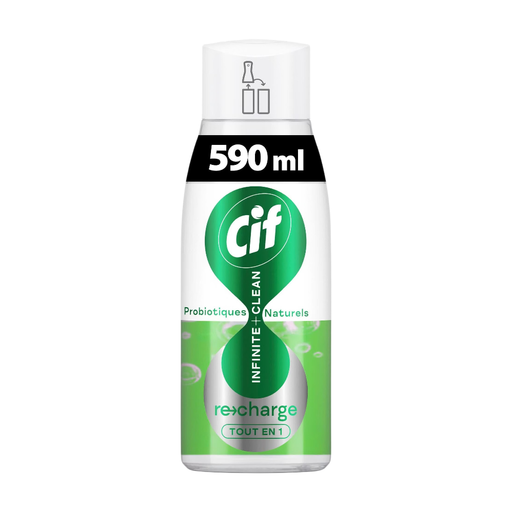
Why this choice suits this profile : This refill is aimed at households looking for a multi-surface solution, a smart format and a simpler cleaning routine.
The refill format reduces the need to buy new spray bottles. However, the product details specify that you must use the appropriate trigger and test the product on delicate surfaces.
590 ml refill, multi-surface use and the option to freshen certain textiles, provided the stated precautions are followed.

Why this choice suits this profile : Its 5 L container may be suitable for professional use or for a household that regularly cleans large areas.
The product details clearly distinguish cleaning from disinfection and refer you to the label for dilution instructions and contact time.
Bleach-free formula, 5 L volume and EN 13697, EN 1650 and EN 14476 standards mentioned in the product details.
We have put together a complete, real-time updated selection of products that meet these strict criteria and European safety regulations.
A multi-purpose cleaner is suitable for everyday surfaces, but it cannot replace a limescale remover in the bathroom or a kitchen degreaser for ingrained grease. To limit the number of products you buy, choose a formula that is genuinely compatible with the surfaces you clean most often.
Shelf life depends on the formula, packaging and the manufacturer’s instructions. Keep products in their original packaging, tightly closed and away from heat and sunlight. To find the expiry date or batch number, check the label directly.
Compare the price per litre or per dose, rather than looking only at the bottle price. Concentrated formulas, large formats intended for frequent use and refills can offer good value, provided you follow the recommended dosage. To tackle humidity, a moisture absorber is mainly suitable for a small enclosed space; inadequate ventilation calls for a more comprehensive solution.