
当日/次日达

品质保障

开启新人专享福利: 全场免邮 | 低至 2 折 | 免费试用 30 天 JoyPlus 会员
下载 Joybuy
Between promises of ‘effortless’ cleaning, lingering fragrances and accessories that claim to do everything, choosing your household cleaning products can quickly become a headache. A product designed for floors will not necessarily be suitable for windows, delicate surfaces or kitchen equipment. To avoid unnecessary purchases, it is better to start with your actual needs, the nature of the materials and the practicalities of cleaning and maintenance.
Dry wipes effectively pick up dust, hair and pet hair from hard floors. However, they cannot replace wet cleaning when you need to tackle grease marks, shoe marks or splashes.
Conversely, an overly wet mop can leave excessive water on certain floor coverings. Unsealed parquet, oiled wood and porous surfaces require particular care. Always check the manufacturer’s recommendations before using a cleaner or a mop and bucket.
Phrases such as ‘anti-grease’, ‘powerful limescale remover’ or ‘long-lasting action’ mainly indicate the intended use. They do not guarantee the same results on every type of dirt. Contact time, temperature, quantity used and the nature of the surface can all significantly affect how well a product works.
A bathroom cleaner may be effective against limescale and soap residue, but it should not be used without checking first on marble, natural stone or certain grouts. Never mix different household products, especially when they contain different cleaning agents.
An inexpensive accessory may no longer offer good value if its refills are difficult to find or it needs replacing frequently. Disposable wipes save time, but their ongoing consumption should be factored into your budget. A washable microfibre head can reduce repeat purchases, provided it is thoroughly rinsed and dried after every use.
For floor cleaning, distinguish between sealed hard floors, tiles, vinyl, laminate and wood. A flat microfibre head distributes moisture more evenly and slides more easily beneath furniture. A wringing system also makes it possible to control the amount of water more precisely, reducing marks and speeding up drying.
On unsealed or unprotected surfaces, use only a small amount of moisture and refer to the flooring instructions. Preventing scratches also depends on how clean the head is: a grain of sand trapped in a fibre can mark certain surfaces.
Microfibre is effective at trapping dust and absorbing water, while an abrasive fibre is more suitable for heavy-duty scrubbing. Choose anti-grease sponges according to how delicate the surface is. A scouring side can scratch non-stick pans, glossy surfaces or certain sensitive materials.
Cleaning brushes are particularly useful for grouting, sinks, showers and washing-up. Check the stiffness of the bristles as well as how comfortable the brush is to hold. A compact brush makes precise movements easier, but applying too much pressure can damage a delicate surface.
A good accessory should remain easy to maintain. Rinse sponges after every use, wring out mops and leave them to air-dry. Washable refills should be cleaned at the temperature stated on their label. As for chemical products, keep them in their original packaging, out of the reach of children and pets, in a well-ventilated place away from food.
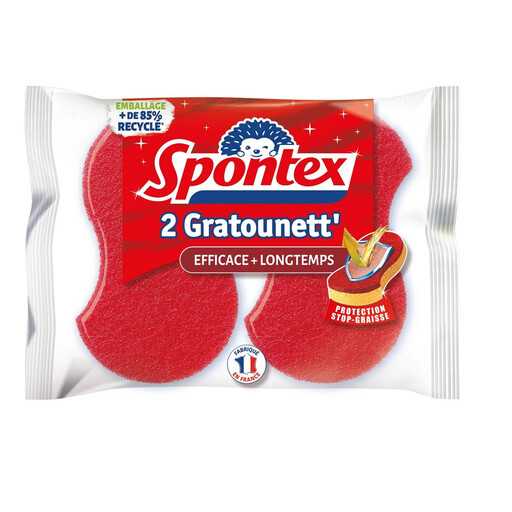
Why this choice suits this profile : This two-sponge pack is suitable for everyday kitchen tasks. Rinse the sponges after use to remove grease residue and dirt.
The Stop-Grease treatment is designed to make the fibres easier to rinse. It is still essential to rinse the sponge and replace it regularly.
Two sponges per pack, an absorbent format and manufacture stated as being in France. However, avoid using them on delicate or very hot surfaces.
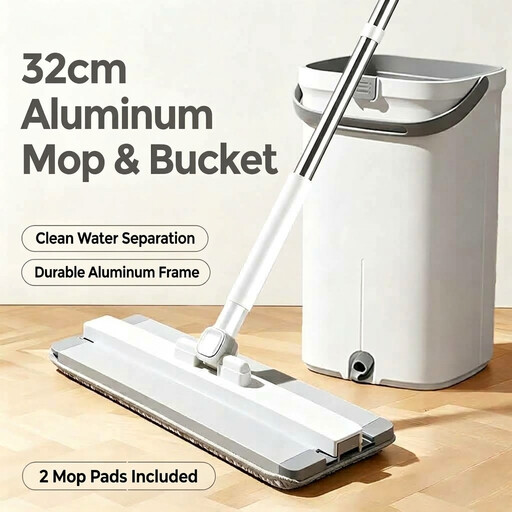
Why this choice suits this profile : Its flat design and two-compartment bucket are ideal for households that want to make floor cleaning more organised and reach the space beneath furniture.
The stated separation between clean and dirty water means the head does not go back into water that is already full of dirt.
32 cm microfibre head, aluminium panel, hands-free wringing and dry or wet use according to the product information.
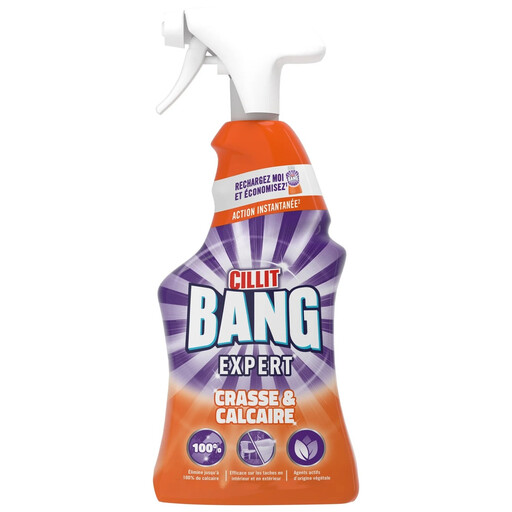
Why this choice suits this profile : This 750 ml spray targets limescale deposits, soap residue and some common types of bathroom dirt.
The label explains the precautions for use, including the possible need to wear gloves and avoiding contact with the eyes and skin. Follow these instructions and do not mix the product with another cleaner.
Foam that can be applied directly, a refillable bottle and use on several surfaces, in accordance with the manufacturer’s instructions.
To save time every day, group products according to how they are used:
Swiffer dry wipes are designed to capture dust and pet hair from hard floors. Swiffer wet wipes, such as the citrus-scented 24-pack, are disposable and should not be used on bare, oiled or waxed wood. This distinction makes it easier to choose a refill based on its actual use, rather than focusing on the fragrance or the number of wipes.
To remove dust and hair, a dry microfibre head or a wipe suitable for hard floors is generally enough. For stains and marks, use a slightly damp mop together with a product that is compatible with the flooring. On wood and unsealed surfaces, avoid soaking the floor.
There is no universal schedule: it all depends on how it is used. Replace the sponge when it starts to fray, develops an odour, remains greasy despite rinsing or changes in appearance. Between uses, rinse it thoroughly, wring it out and allow it to dry completely.
It depends on how often you clean and the price of the refills. Disposable wipes are convenient for occasional cleaning, while a washable refill can help limit repeat spending. To compare them, look at the cost per use and take the care instructions and washing costs into account.