
当日/次日达

品质保障

开启新人专享福利: 全场免邮 | 低至 2 折 | 免费试用 30 天 JoyPlus 会员
下载 Joybuy
Whether you are choosing a multi-surface cleaner, a degreaser or a disinfectant, the differences are not limited to the fragrance or bottle colour. A formula suited to the kitchen may be unsuitable for a screen, wooden floor or food-contact surface. To avoid unnecessary purchases, start by checking the intended use, safety precautions and format.
A product that removes dirt is not necessarily a biocide designed to disinfect. A kitchen cleaner may dissolve grease, while a surface disinfectant should specify its intended use, contact time and, where applicable, the standards it complies with.
Marketing claims such as “antibacterial” or “complete action” are no substitute for reading the label. In a public-access building, professional kitchen or office, check the application conditions and any ventilation recommendations.
A household product containing bleach can be useful for certain cleaning, whitening or deodorising tasks, but it requires additional precautions. It must never be mixed with an acidic product, ammonia or another cleaner, as this can release dangerous gases.
The presence of bleach does not automatically mean that a product is a disinfectant. For example, the product information for the LA CROIX Multi-Purpose Bleach Cleaner Liquid 1.5L specifies that it is not intended for disinfection. For everyday cleaning, a bleach-free formula may be easier to use on washable surfaces.
A 5 L container can reduce the cost per use in a hotel, restaurant or large home. However, it requires sufficient storage space and, in some cases, precise dilution. By contrast, a 500 to 800 ml spray bottle is convenient for a specific task, but less suitable for regularly cleaning large surfaces.
Compare the price per litre, dosage, whether rinsing is required and how often you will use the product, rather than looking only at the displayed price.
For hobs, extractor fans, ovens and barbecues, look for a degreasing cleaner that can adhere sufficiently to the surface. A gel texture, such as that of the LA CROIX Ultra-Degreasing Gel Household Cleaner with Bleach 1.0 L, can be practical for baked-on grease. Food-contact surfaces must be rinsed with drinking water when specified on the label.
For mirrors, screens, varnished furniture or delicate surfaces, choose a formula designed to minimise streaks. Always test it on an inconspicuous area first, particularly on natural stone, porous materials and painted surfaces.
If disinfection is genuinely necessary, check the product’s regulatory information: intended-use category, active substance, contact time and any European standards mentioned on the packaging. The CIF Pro Formula Surface Disinfectant Spray notably claims bactericidal, fungicidal and virucidal uses, as well as an 80 % content of denatured ethanol. It is also flammable and must be used away from sources of heat.
The product information for SANYTOL Antibacterial Disinfectant Cleaner for Floors & Surfaces, No Bleach, Lemon, 5 L refers to the EN 13697, EN 1650 and EN 14476 standards. Check these claims on the label when buying the product, then follow the stated contact time.
A ready-to-use spray bottle reduces dosage errors on small surfaces. A concentrated liquid may be more cost-effective for floors and large areas, provided you follow the manufacturer’s recommended dilution carefully.
Rinsing is often overlooked. It may be compulsory after cleaning a worktop or any surface that comes directly into contact with food. You should also take account of wearing gloves, ventilating the room and storing products out of children’s reach.
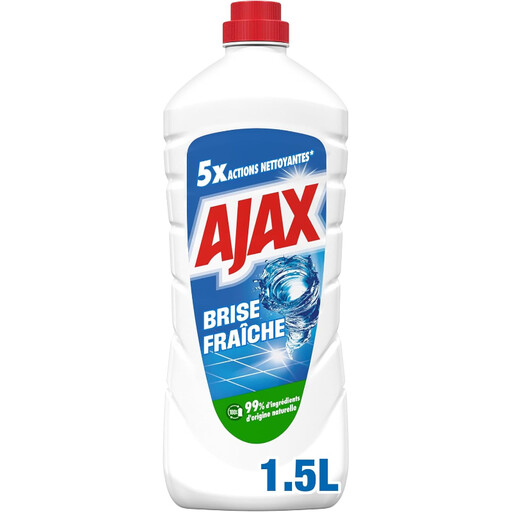
Why this choice suits this profile : Its 1.5 L format is suitable for regularly cleaning floors, kitchens and bathrooms, without needing several different bottles.
The product information states that it can be used with cold water, either directly or after dilution. This means the dosage can be adjusted to suit the level of dirt.
A fresh-scented multi-surface cleaner supplied in a recycled and recyclable plastic bottle, according to the information provided.
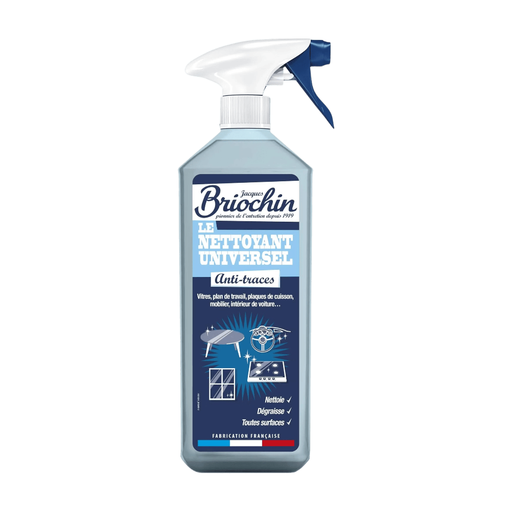
Why this choice suits this profile : Its multi-surface design will appeal to households looking to clean furniture, windows, mirrors, worktops and delicate surfaces with a single spray bottle.
The product information recommends spraying the product onto the cloth first when cleaning screens, and testing it on sensitive surfaces. This helps minimise application mistakes.
A 750 ml spray, a formula advertised as free from artificial colourings and no-rinse use on many surfaces, except those that come into contact with food.

Why this choice suits this profile : Its large 5 L format meets the needs of restaurants, offices, hotels and households that regularly clean large surfaces.
Its bleach-free formula means you do not have to rely on a chlorinated product for floors and surfaces as a matter of course. However, the dilution and contact time must be followed in accordance with the label.
The product information mentions use on floors and surfaces, references to the EN 13697, EN 1650 and EN 14476 standards, and compatibility with HACCP procedures.
We have brought together a complete, real-time selection of products that meet these strict selection criteria and European safety regulations.
A multi-surface cleaner may be suitable for hard, washable surfaces, but it will not always replace a degreaser in the kitchen or a scouring cream for baked-on stains. Check which materials it is compatible with and whether rinsing is required.
It depends on how you intend to use it. A bleach-containing formula requires extra precautions and must never be mixed with other products. A bleach-free cleaner will often be more convenient for everyday cleaning, particularly when chlorine-based disinfection is not necessary.
It can be worthwhile if you regularly clean large surfaces and have suitable storage space. Compare the price per litre, dilution rate and actual period of use. In a small home or for occasional use, a 750 ml to 1.5 L bottle will generally be easier to store and handle.