
当日/次日达

品质保障

开启新人专享福利: 全场免邮 | 低至 2 折 | 免费试用 30 天 JoyPlus 会员
下载 Joybuy
Buying household cleaning products seems simple… until you have to choose between a kitchen cleaner, limescale remover, toilet gel or fabric stain remover. An unsuitable product can leave marks, dull a surface or force you to stockpile bottles.
Marketing claims also deserve a little scrutiny. A formula described as “universal” may not necessarily be suitable for wood, natural stone, aluminium or delicate fabrics. The same applies to products containing bleach and acidic cleaners: they must never be mixed with other products.
A multi-surface cleaner can be used on many washable surfaces, but that does not mean it is suitable for every material. Always check the uses listed on the label and test the product on an inconspicuous area, especially when using a cleaning cream or mildly abrasive paste.
Claims such as “eliminates up to 99.9%” or “works in one minute” refer to tests carried out under specific conditions. They do not guarantee the same result on every type of dirt. Temperature, contact time, quantity used and rinsing can all significantly affect the product’s effectiveness.
A toilet gel containing hydrochloric acid and a product containing bleach must never be used together. Mixing a chlorine-based product with an acid can release toxic gases. Keep bottles in their original packaging, out of the reach of children, and follow the hazard symbols shown on the label.
A spray is suitable for small surfaces and targeted stains. A cleaning cream is applied with a damp sponge and is practical for tackling ingrained dirt. Larger formats, particularly professional cleaning products, become worthwhile when your needs are frequent, provided you have suitable storage space.
With a concentrated floor cleaner, dilution helps reduce consumption and streaks. However, follow the dosage specified by the manufacturer: using more product does not necessarily make cleaning more effective.
Read the instructions carefully regarding contact with the eyes and skin, ventilation and contact with food. After using a kitchen cleaner on a worktop, rinse with drinking water if the surface comes into direct contact with food, even when the product claims to leave no residue under the stated conditions of use.
Wear gloves when using irritating or corrosive products. Chlorine-based products must be kept away from acids, ammonia and other household cleaners.
The products below meet different needs. Their features are based on information available on the product pages and packaging: always check the label of the product you receive before use.
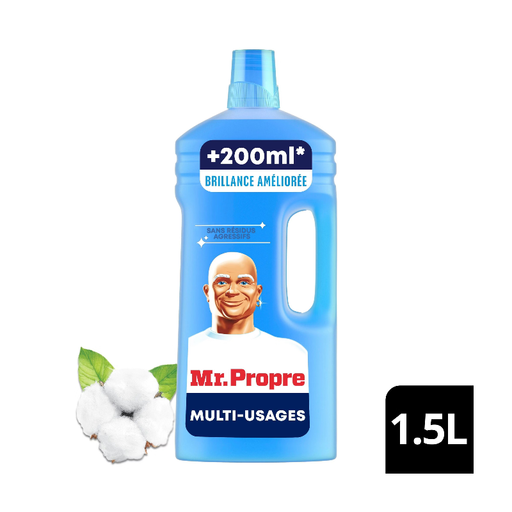
Why this product suits this profile : Its 1.5 L format and dilutable formula are suitable for regularly cleaning floors, sinks and hard surfaces in a family home.
Dilution lets you adjust the quantity to suit everyday cleaning, rather than routinely using a concentrated product neat.
Family-sized format, ready-to-use or diluted, cotton blossom fragrance and suitability for washable hard surfaces.
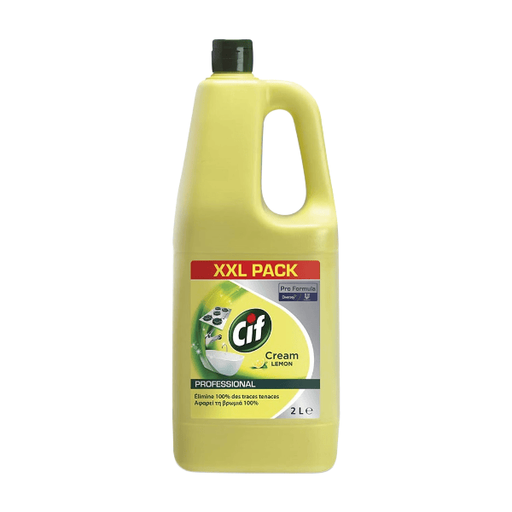
Why this product suits this profile : This large format is designed for demanding households and people who regularly clean kitchens, bathrooms and washable surfaces.
The product page states that the formula is designed to clean without scratching. However, testing it first is still recommended on sensitive materials.
Multi-surface cream, rinsing recommended, lemon fragrance and a 2 L container for repeated cleaning.
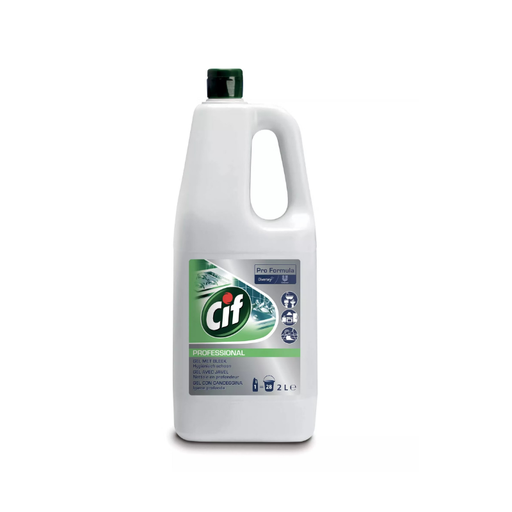
Why this product suits this profile : Its gel texture and large format meet the needs of frequent cleaning in bathrooms, kitchens and other water-resistant areas.
The instructions distinguish between using it neat and diluting it for floors and walls. They also remind you never to use it with acids.
Gel that clings to vertical surfaces, 2 L format, neat or diluted use, with strict protective measures.
In the kitchen, a spray such as Mr. Proper Kitchen Cleaner Spray Lemon 800 ml targets grease on compatible surfaces. On a worktop that comes into contact with food, rinsing with drinking water is still essential.
In the bathroom, a Mr. Propre Limescale Remover 800 ml or a Cillit Bang product can tackle soap scum and limescale, provided it is compatible with the material.
For toilets, Harpic Power Plus gels contain hydrochloric acid, according to their product page. They require gloves, good ventilation and an absolute ban on mixing them with other products.
For fabrics, the GENIE Professional Textile Stain Remover 500 ml spray is designed for targeted stains. Delicate fabrics should always be tested on a concealed area before treatment.
No. Start by checking the list of approved surfaces. Porous materials, untreated wood, some natural stone and painted surfaces may react unpredictably. Follow the label instructions and rinse areas that come into contact with food.
They can reduce the cost per use when the product is suitable for frequent use or can be diluted. However, compare the volume, recommended dosage, whether rinsing is required and the storage conditions. A large bottle left unused in the cupboard is not necessarily a bargain.
Check the date or instructions on the packaging. Close the bottle carefully, store it away from heat and light, and never decant its contents into a food or drink bottle. For chlorine-based or particularly active products, it is essential to follow the storage conditions recommended by the manufacturer.