
当日/次日达

品质保障

开启新人专享福利: 全场免邮 | 低至 2 折 | 免费试用 30 天 JoyPlus 会员
下载 Joybuy
With promises of deep cleaning, long-lasting fragrances and formulas presented as suitable for all kinds of tasks, finding the right household cleaning products can quickly become a headache. A multi-purpose cleaner is not necessarily suitable for a delicate surface, and a surface disinfectant cannot always replace a standard cleaner.
To avoid unnecessary purchases, focus on the intended use, ingredients, format and precautions stated on the label.
A surface cleaner removes visible dirt. A kitchen degreaser is designed mainly to tackle grease. Disinfectants, meanwhile, must be applied for a specific contact time and according to precise instructions. Some bleach-based products clean and whiten, without officially being marketed as disinfectants.
So start by identifying your main requirement:
A 750 or 800 ml spray bottle is easy to use and store, but it will run out quickly in a large household or in a professional cleaning environment. Conversely, a 5-litre container takes up more space and requires suitable dosing.
Compare the price per litre, rather than just the displayed price. With a concentrated product, also check the recommended dilution on the packaging: this is the best way to estimate the actual cost of each use.
Even when sold as a multi-surface product, a cleaner may not be recommended for untreated wood, marble, aluminium, waxed surfaces or certain non-stick coatings. A scouring cream can also dull a glossy finish if used with too much pressure.
Always test the product on an inconspicuous area and follow the manufacturer’s recommendations.
For everyday cleaning, a ready-to-use multi-purpose cleaner allows you to quickly clean sinks, worktops, washable fronts and compatible floors. A concentrated formula will often be more cost-effective for large areas or frequent use.
For ingrained grease, choose a product explicitly described as a kitchen degreaser. A gel texture stays in place more easily on a vertical surface, while a spray is better suited to small areas.
Household vinegar and household bicarbonate of soda can complement your cleaning routine. However, they must never be mixed with bleach or strongly alkaline products. Bicarbonate can be used as a paste or solution, provided you first check that the surface can withstand it.
The different formats are suited to different needs:
A measuring cap or clear dilution instructions helps to minimise waste. When cleaning a floor, there is no need to use too much if the label already states how much to dilute in several litres of water.
Read the hazard pictograms before placing your order. Products containing caustic soda, chlorine or a high concentration of alcohol require particular care.
For a surface disinfectant, check its biocidal status, the required contact time and the intended uses. Professional products may refer to European standards such as EN 1276, EN 13697 or EN 14476. This information should be considered alongside the product’s instructions and does not constitute medical advice.
Wear gloves where indicated, ventilate the room and always keep bottles out of the reach of children. Never mix bleach with a limescale remover, vinegar, ammonia or any other cleaner.
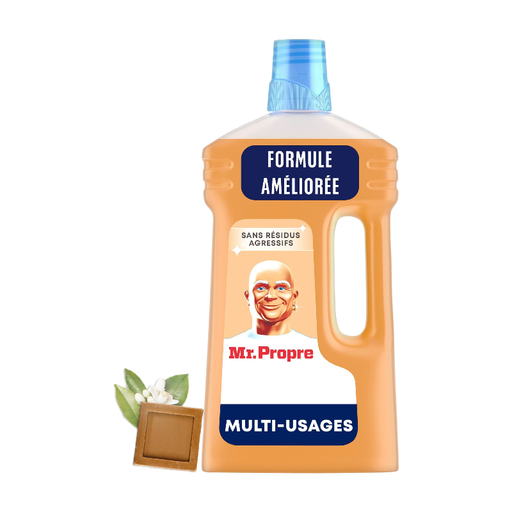
Why this choice suits this profile : Its formula can be used directly on stains or diluted for everyday cleaning of floors and hard surfaces.
With its one-litre format and dilution option, it avoids the need for multiple bottles for everyday tasks.
Black soap and orange blossom, with plant-based surfactants mentioned on the product page, for direct or diluted use.
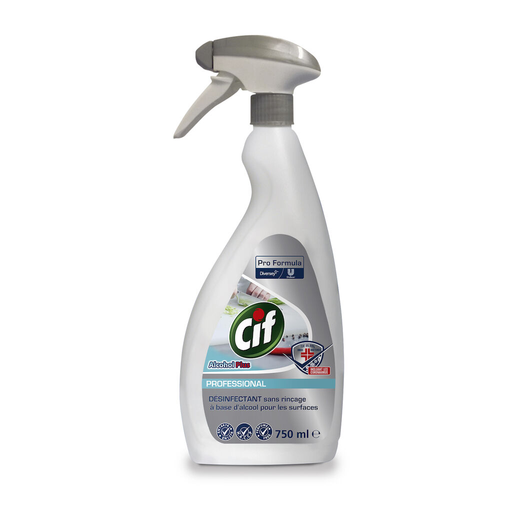
Why this choice suits this profile : This ready-to-use spray is suitable for anyone looking for a disinfectant for small surfaces, particularly in the kitchen.
The product page states that it is a no-rinse product and specifies the required contact time, helping you avoid guesswork.
The product page mentions 80 % denatured ethanol, along with bactericidal, fungicidal and virucidal uses governed by the label.
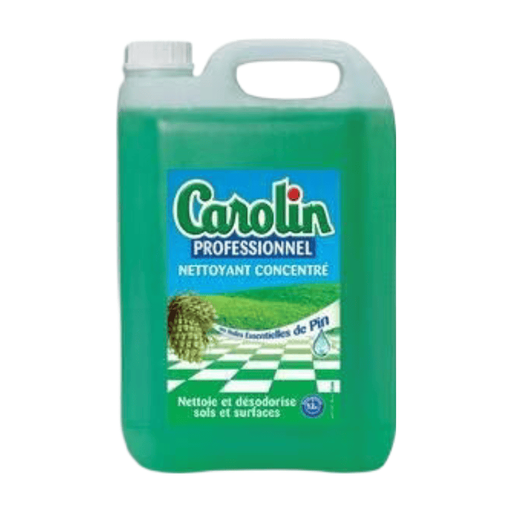
Why this choice suits this profile : Its 5-litre container is aimed at households that clean frequently and establishments looking for an economical format to dilute.
The concentrated format lets you adjust the amount used instead of accumulating small ready-to-use bottles.
A 5-litre capacity, pine fragrance and dilution suitable for repeated cleaning tasks.
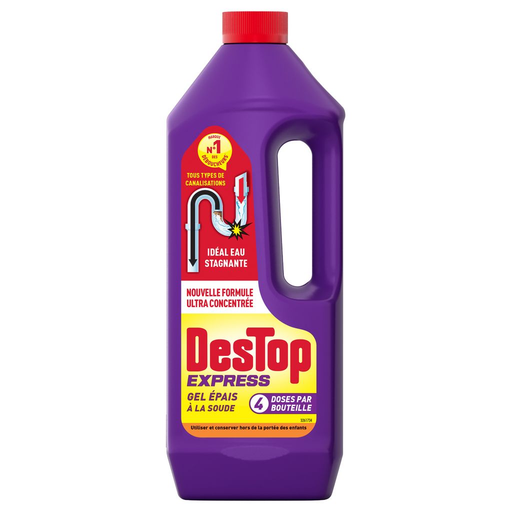
Why this choice suits this profile : This drain unblocker meets a specific need for sinks, showers or toilets when water is draining slowly.
Its thick texture is designed to pass through standing water, but the label excludes aluminium in particular and prohibits mixing.
A fast-acting gel suitable for several types of drains, with caustic soda listed in the ingredients.
A multi-purpose cleaner is generally suitable for hard, washable surfaces, subject to the manufacturer’s recommendations. For stubborn grease, a kitchen degreaser will be more effective. For floors, check compatibility with the flooring and follow the stated dilution.
It depends on what you need it for. A surface disinfectant will normally have instructions for use, a contact time and specific biocidal claims. Bleach can clean or whiten certain materials, but it must be handled carefully and should never be mixed with an acid, vinegar or ammonia.
It can be worthwhile if the product is concentrated, you clean frequently and you have enough space to store it. Compare the price per litre and the amount actually required after dilution. For occasional use, a smaller format avoids clutter and storage for many months.