Hoteliers comparing declared sugar content
If reducing sugar is guiding your choice, check the ‘of which sugars’ line per 100 g and the ingredients in each recipe. A lower figure alone does not tell you whether the product contains polyols.


For a hotel buffet, choose based on the declared sugar content and ingredients, rather than relying solely on the words ‘no added sugars’. This claim does not rule out naturally occurring sugars, while some recipes designed to reduce sugar use polyols. Compare spreads intended for the same use per 100 g, then check the allergens, pack size and storage instructions after opening. A classic recipe is still an option if reducing sugar is not your priority.
If reducing sugar is guiding your choice, check the ‘of which sugars’ line per 100 g and the ingredients in each recipe. A lower figure alone does not tell you whether the product contains polyols.
If you want a recipe with no added sugars and no declared sweetener, read the ingredients list for the exact product. This claim does not mean ‘sugar-free’ and does not remove the need to check allergens.
You need to communicate allergen information to guests and choose a pack size suited to how quickly the buffet turns over. Also check for any ‘may contain’ warnings and storage instructions after opening.
When choosing a spread for a hotel breakfast, check the nutrition declaration and ingredients first, then choose a pack size that suits how much the buffet is likely to use.
| Consideration | What to check | Consumers concerned |
|---|---|---|
| Sugar content | Compare the ‘of which sugars’ figures per 100 g for spreads intended for the same use, and distinguish a quantified reduction from a ‘no added sugars’ claim. | If my main aim is to reduce the sugar on offer at the buffet, I want to be able to compare recipes on the same basis; around 50% of consumers would prioritise this need. |
| Ingredients and allergens | Read the ingredients to identify polyols, then check the allergens and ‘may contain’ warnings on the pack delivered. | To inform guests without presenting a recipe as suitable for everyone, I need to know its ingredients and allergens; this would be the main concern for around 30% of consumers. |
| Buffet service | Choose the pack size based on expected use and check the instructions for the exact product after opening. | When a jar stays open across several services, its size and storage instructions matter to how I organise things; around 20% of consumers would put this need first. |
The Directorate-General for Competition Policy, Consumer Affairs and Fraud Control (DGCCRF) describes Nutri-Score as a voluntary label. For most prepacked foods, it is the nutrition declaration that is mandatory.
Use Nutri-Score if it appears on the product, but do not let it replace checking the nutrition information per 100 g and the ingredients list.
This claim does not rule out naturally occurring sugars. Auchan’s product pages for the Karéléa, Gerblé and Lucien Georgelin recipes cited here list 8.1 g, 8.2 g and 8.5 g of sugars per 100 g respectively.
Compare the ‘of which sugars’ line for the exact product with that of other spreads intended for the same use, rather than inferring its sugar content from the claim on the front of the pack.
Auchan’s product pages for the Karéléa and Gerblé recipes list maltitol. The Karéléa page warns that excessive consumption may have a laxative effect, which is worth considering for a self-service buffet.
Check the ingredients for sweeteners before choosing a recipe, especially if you are weighing up a formula with polyols against one with no declared sweetener.
The recipes shown may contain hazelnuts and milk; Gerblé’s Auchan product page also mentions a facility that handles other allergens. Ingredients and warnings vary by product.
Share allergen information based on the pack of the product actually being served, and provide a separate option if you need to cater for guests avoiding nuts or milk.
A roasted hazelnut recipe with no added sugars to consider if declared sugar content is your top priority.
A French hazelnut and cocoa recipe with no added sugars to consider if you are looking for an ingredients list with no declared sweetener.
A hazelnut and cocoa recipe with no added sugars, listed in a 200 g jar on Auchan’s product page.
An organic recipe with no added sugars, made with hazelnut purée and date powder, for buffets that also consider the type of ingredients used.
A classic spread to consider if reducing sugar is not the buffet’s main priority.
This peanut paste is for buffets considering this category rather than a hazelnut recipe. If you are aiming to reduce sugar, check its nutrition declaration and do not present it as a spread labelled ‘reduced sugar’.
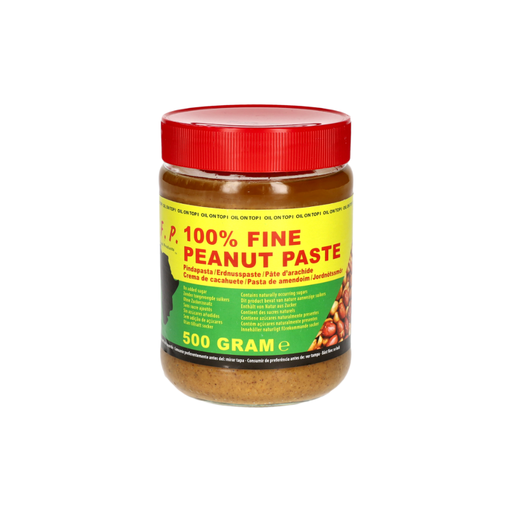 Image unavailable
If your buffet offers peanut paste, check that it suits the way you manage the peanut allergen. The pack size is 500 g; check the packaging for the sugar content per 100 g and instructions after opening before planning how quickly the product will be used.
No. According to the DGCCRF, Nutri-Score is voluntary; the nutrition declaration, on the other hand, is mandatory for most prepacked foods. When comparing spreads, pay particular attention to the ‘of which sugars’ line per 100 g.
No. A recipe with no added sugars may still contain naturally occurring sugars, and the claim alone does not tell you how its sugar content compares with another recipe. Compare the sugars per 100 g and read the ingredients to identify any sweeteners.
Start with the label on the product actually being served: the DGCCRF reminds businesses that allergenic ingredients must be highlighted on prepacked foods. Keep the product information up to date for service and also check for any ‘may contain’ warnings.
No. Buffet turnover should also take account of the instructions for the exact product after opening. For its 280 g French hazelnut and cocoa recipe, Auchan advises storing it at room temperature and consuming it within 30 days of opening; check the specific instructions for any other product.