People who want to control added sugar
You want to compare the sugar information on the packaging and decide for yourself what to add to your drink. Sweetened cocoa powder and unsweetened cocoa need different preparation.


When shopping for Easter, choose a sweetened cocoa powder if you want a ready-made recipe that’s easy to mix, or unsweetened cocoa if you’d like to measure the ingredients for your drink yourself. Compare sugar levels on a like-for-like basis, as well as the ingredients, allergens and preparation instructions for each product. Nutri-Score labelling is voluntary, according to Santé publique France, and doesn’t replace reading the label.
You want to compare the sugar information on the packaging and decide for yourself what to add to your drink. Sweetened cocoa powder and unsweetened cocoa need different preparation.
You’re looking for a ready-made recipe to mix with milk. The flavour your household enjoys and the recommended amount of powder matter just as much as the size of the tin.
Before choosing a flavour, check the ingredients and allergen information for the product you’re buying. Recipes may contain cereals, soya or milk, for example.
Choose this if: you want a ready-made recipe to mix with milk.
Bear in mind: the cocoa content alone doesn’t tell you how much sugar is in the recipe.
Choose this if: you prefer a ready-made powder but want to compare the sugar content per mug.
Bear in mind: this claim is based on a comparison defined by the brand; it doesn’t mean the powder is unsweetened.
Choose this if: you want to measure the cocoa and other ingredients for your drink separately.
Bear in mind: you’ll need to make the drink yourself and add sugar to taste, if you like.
| What to compare | What to check | Who is it for? |
|---|---|---|
| Sugar and ingredients | Compare sugar per 100 g of powder or per equivalent prepared portion, without mixing up the two. Check the ingredients list too. | I want to control what I add to my mug rather than choose a recipe that’s already sweetened. Around 33% of consumers would prioritise this control. |
| Cocoa flavour | Check the cocoa content and flavourings for the specific variety, then read its preparation instructions. | To serve a drink with a flavour my household enjoys, I look at the recipe before the pack size. Around 27% of consumers would put this first. |
| Ingredients to avoid | Read the ingredients, stated allergens and any ‘may contain’ warnings on the pack you’re buying. | If there are ingredients I need to avoid at home, I should rule out any unsuitable recipe before comparing flavours. Around 20% of consumers would put this check first. |
| Pack size and availability | Check the net weight and whether the product is available at your chosen store or for your preferred collection option. | I’m planning my Easter shopping and would rather choose a pack size my household will use and that I can buy locally. Around 20% of consumers would prioritise this convenience. |
The claim compares a recipe with a defined reference product; on its own, it doesn’t tell you how much sugar is in the prepared drink.
Check the sugar per portion, the amount of powder used and the comparison basis stated by the brand.
The stated cocoa content doesn’t tell you what else is in the powder, including sugar. Different varieties from the same brand may have different recipes.
Compare the cocoa percentage and nutrition information for the exact variety, using the same basis of measurement.
The Banania recipe described by Carrefour contains wheat, barley and malted wheat, among other ingredients. Other powders may list soya or traces of milk.
If you need to avoid an ingredient, check the label on the pack you’re buying, including any ‘may contain’ warnings, before choosing a product.
Cocoa powders to prepare with milk, with ingredients that vary by product.
A range of cocoa powders that includes a classic recipe and a variety labelled ‘Less Sugar’.
A chocolate drink recipe with cereals, banana and honey for anyone looking for this particular flavour profile.
An unsweetened cocoa powder to use as a base when making your own drink.
An instant chocolate drink powder available in a large pack.
These products include ready-made chocolate powders and cocoa that you can measure yourself to make a hot drink. Compare their varieties and labels rather than assuming that the same percentage always refers to the cocoa content.
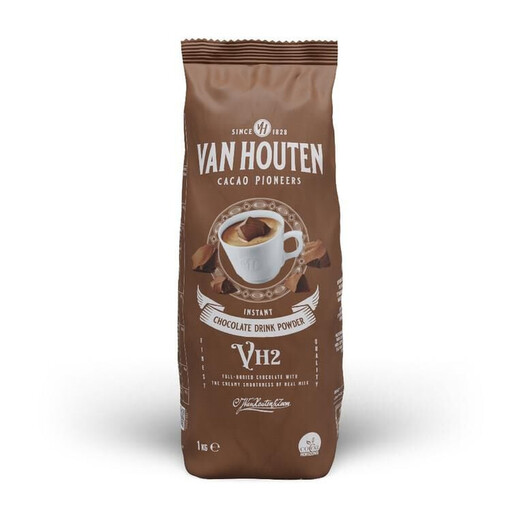 Image unavailable
Worth considering if you’re looking for a powder to prepare with hot milk. Check what the ‘34%’ refers to before comparing its cocoa content with another recipe. If you need to avoid milk or nuts, check the ingredients and any ‘may contain’ warnings on the pack.
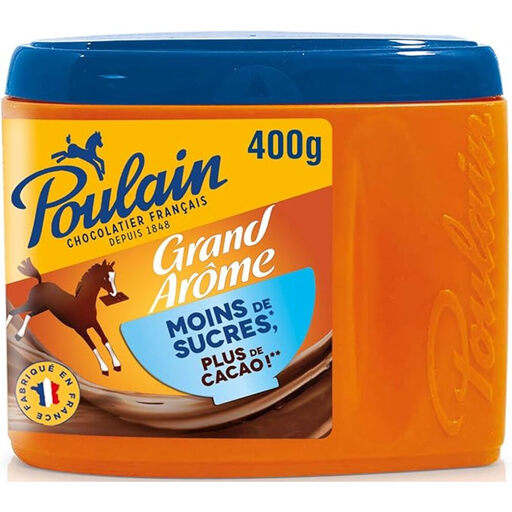 Image unavailable
An option for making hot chocolate with a ready-made recipe. Check the ingredients and sugar content for this variety on the packaging. Also check the recommended amount and allergen information before buying.
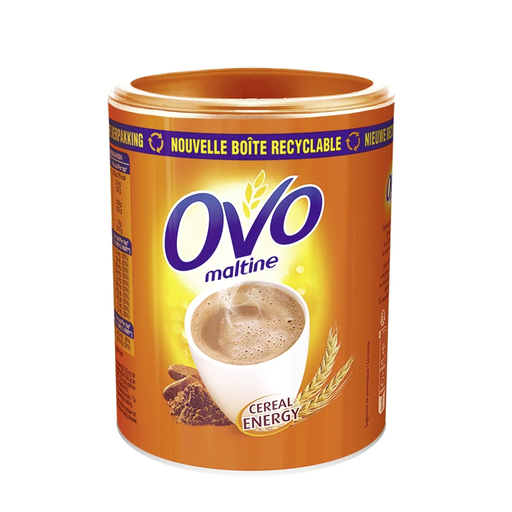 Image unavailable
Worth a look if you’re after a chocolate drink with a malty flavour. The recipe described contains barley and dairy ingredients. Check the label if you avoid these ingredients, and read the preparation instructions too.
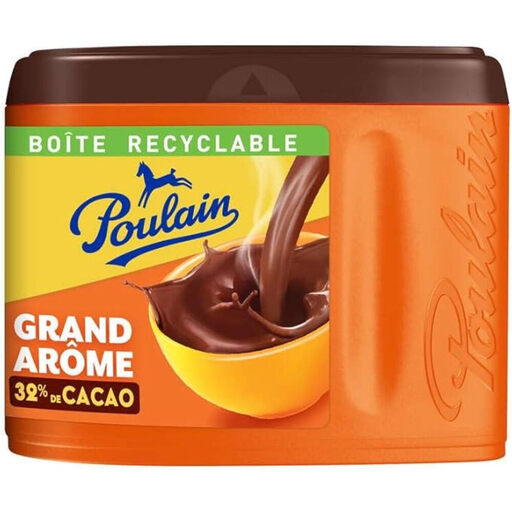 Image unavailable
This pack size is worth considering if you’re looking for a ready-made hot chocolate powder. Check the sugar and ingredients for this specific variety rather than relying on information for another pack size. Check the recommended amount and allergen information on the packaging too.
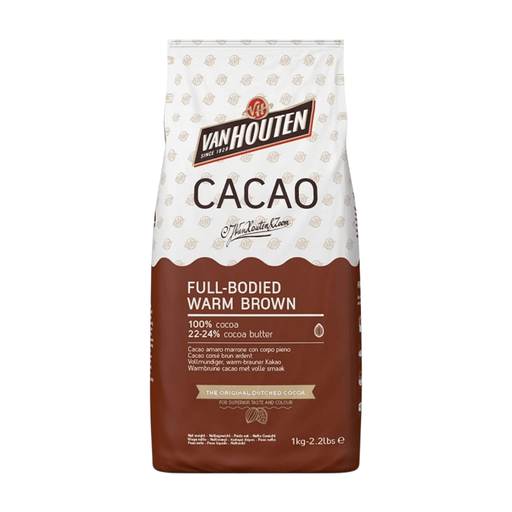 Image unavailable
Worth considering if you want to measure out the ingredients for a cocoa drink yourself. Check what ‘14.7%’ means on the packaging before comparing it with another cocoa percentage. Also check the preparation instructions.
No, its use is voluntary, according to Santé publique France. If it appears on a product, use it as an additional guide and check the ingredients, sugar content and allergen information too.
No. The Banania recipe described by Carrefour contains wheat and barley, among other ingredients, while Nesquik recipes reviewed list soya lecithin. Check the ingredients and any ‘may contain’ warnings on the pack you’re planning to buy. Don’t assume what it contains from the words ‘hot chocolate’ alone.