Parents who want a measured serving
If you want to make a mug without guessing how much powder to pour in, a sachet gives you a repeatable starting amount. You’ll also need to take into account the volume of milk recommended for preparation.


Choose sachets if you want a consistent serving of powder without measuring it: the Nesquik product reviewed recommends one 13.5 g sachet for 200 ml of milk. If the listed sugar content matters more to you than convenience, compare the powders per 100 g, then check how much you’ll actually use per mug. A small sachet doesn’t necessarily mean a less sugary recipe. For a tin that you measure out yourself, check the ingredients and allergens for the specific recipe too.
If you want to make a mug without guessing how much powder to pour in, a sachet gives you a repeatable starting amount. You’ll also need to take into account the volume of milk recommended for preparation.
The packaging alone won’t tell you which of two recipes is the better choice. Check the ‘of which sugars’ figure per 100 g of powder, then consider how much you plan to use.
The ingredients to check will vary between a cocoa-based powder and a recipe containing cereals. The label on the product you buy is what matters when checking allergens and possible traces.
For a sweet breakfast, first decide whether you’d rather have a pre-measured sachet or a tin that you measure out yourself. Then compare the sugar content and ingredients for the exact recipe, without confusing the values for the powder with those for a prepared mug.
Worth considering: if a measured serving means you don’t have to measure the powder every morning; Auchan recommends one 13.5 g sachet for 200 ml of milk for the Nesquik product reviewed.
Bear in mind: the sachet fixes the amount of powder, not the sugar content of the drink once you’ve added milk.
Worth considering: if the listed sugar content matters more to you than a pre-measured serving; Auchan lists 52 g of sugars per 100 g for the Poulain ‘less sugar’ product reviewed.
Bear in mind: you’ll need to decide how much to pour, and this figure doesn’t apply to every Poulain recipe.
Worth considering: if several people use the same powder and want to adjust their own serving; Banania Original is available in 250 g, 400 g and 1 kg formats.
Bear in mind: Banania Original contains wheat and barley, so this recipe isn’t suitable if you need to avoid gluten.
| Criteria | What to check | Who is it for? |
|---|---|---|
| Serving and preparation | The sachet weight and the volume of liquid specified for the product you’ve chosen. | If you want your mug ready without measuring the powder, a pre-portioned serving is the main consideration; around 40% of consumers prioritise having a defined portion. |
| Sugar content of the recipe | The ‘of which sugars’ figure per 100 g of powder and the amount you pour into your mug. | If you want to compare two recipes by their listed sugar content, the format alone won’t help; for around 30% of consumers, this is the priority. |
| Ingredients and allergens | The ingredients list and allergen information on the packaging you buy. | In a household where certain ingredients need to be avoided, the ingredients matter more than the packaging format; around 30% of consumers prioritise suitability or finding the recipe they want. |
A sachet determines how much powder is in each pack, but it doesn’t change the recipe’s composition.
Compare the ‘of which sugars’ figure per 100 g for the specific products you’re interested in, then check the amount used for each mug.
The values for a mug made with milk include the milk, so they aren’t directly comparable with the figures for 100 g of dry powder.
Start by comparing the powders on the same basis. To compare two mugs, use the same volume and type of milk, as well as a measured amount of powder.
The DGCCRF states that displaying the Nutri-Score is voluntary in France, while a nutrition declaration is mandatory for the relevant prepacked foods.
If two products in the same aisle display the Nutri-Score, you can consider it alongside their nutrition information, ingredients and allergens.
Nestlé Professional France’s product information for the Nesquik sachet mentions soya and a possible presence of milk. Banania lists wheat and barley in its Original recipe.
If you have an allergy or need to avoid an ingredient, check the packaging for the specific product you’re going to use.
The sachet product featured by Auchan contains 12 servings of 13.5 g, with preparation instructions for 200 ml of milk.
Two different products let you compare listed sugar content without assuming the results apply to the whole brand.
Banania offers its Original chocolate powder in 250 g, 400 g and 1 kg formats.
Carrefour’s hot chocolate range includes an 800 g Classic' tin.
This selection includes two individual-portion formats and a tin of granulated powder. When choosing between them for breakfast, distinguish pre-portioned servings from the nutrition information and ingredients for each recipe.
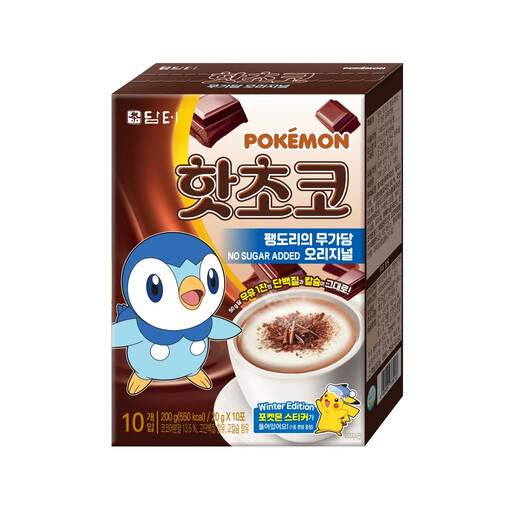 Image unavailable
This format is a good fit if you want to prepare an individual serving without measuring powder from a tin.
The product title lists 10 sachets of 20 g. Don’t infer its nutritional composition from the words ‘Sugar Free’ alone: check the nutrition information and ingredients for the product you buy.
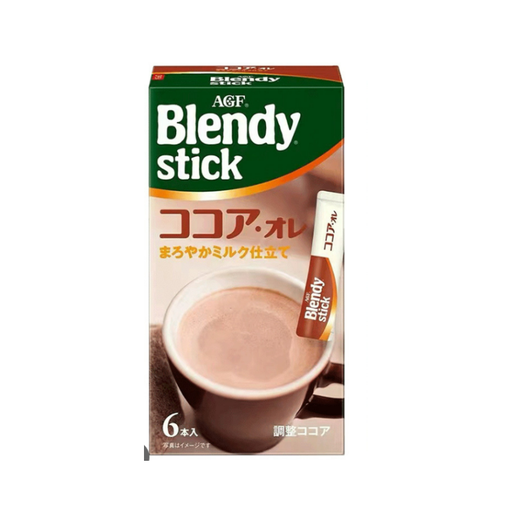 Image unavailable
Sachets are a handy option if you want your powder pre-portioned into individual servings.
The product title lists 6 sticks weighing 66 g in total. If sugar content or allergens guide your choice, check this product’s nutrition information and ingredients before comparing it with another recipe.
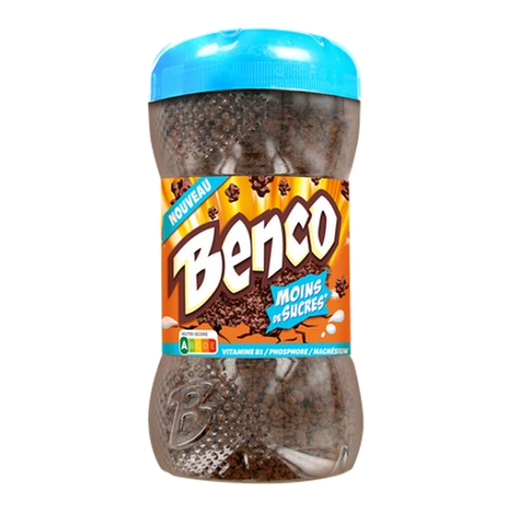 Image unavailable
This tin is for anyone who prefers to choose how much powder to use per mug rather than using a sachet.
The product title lists a 400 g granulated format. To assess the ‘Less Sugar’ claim, compare the ‘of which sugars’ figure per 100 g with that of another specific recipe, and take the amount you pour into account.
No. A sachet fixes the amount of powder, not the recipe’s sugar content. Compare the ‘of which sugars’ figure per 100 g for the products you’ve chosen, then check how much you use in each mug.
No. The DGCCRF states that displaying the Nutri-Score is voluntary in France, while a nutrition declaration is mandatory for the relevant prepacked foods. If it appears on the pack, read it alongside the nutrition information and ingredients.
No, you shouldn’t automatically apply this classification to a dry powder. The French Ministry of the Economy describes the so-called ‘soda tax’ as applying to sugary drinks; that description alone doesn’t establish that dry hot chocolate powder is subject to it.
Check the packaging for allergens and possible traces for the product you’ve chosen. Nestlé Professional France lists soya and a possible presence of milk for the Nesquik sachet reviewed; Banania lists wheat and barley in its Original recipe.