Households that often make hot chocolate
They want a pack size that suits how often they drink it, without confusing the weight of a powder with the volume of a ready-to-serve drink.


For regular shopping, a large pack of powder may be a good fit if your household gets through it often enough and can store it somewhere dry. However, a 1 kg tin is not the same as a 2-litre bottle: if you need a ready-to-serve drink, check the capacity before buying. In either case, compare the sugars, serving instructions and ingredients for the specific product.
They want a pack size that suits how often they drink it, without confusing the weight of a powder with the volume of a ready-to-serve drink.
When buying regularly, they compare the nutritional information for different recipes and check the Nutri-Score when it appears on the product.
They check the ingredients list and allergen information for each product, as details about soya, milk and cereals in particular can vary between recipes.
If you need a ready-to-serve bottle, start by checking its capacity. If powder will do, compare the serving instructions, recipe and how much your household will realistically use.
| Criterion | What to check | Who is it for? |
|---|---|---|
| Sugars and labelling | Compare the sugars per 100 g and, where provided, the amount per prepared drink, taking the serving instructions into account. Check the Nutri-Score only if it is displayed. | When I buy this powder regularly, I want to know how much sugar is in my usual serving. Around 39% of consumers would make checking sugar and labelling their priority. |
| Pack size and buying frequency | Check the net weight, serving instructions and storage guidance. For a bottle, check its capacity in litres. | If I make it often, I want to buy it less frequently without keeping a tin for too long after opening. Pack size would be the main concern for around 38% of consumers. |
| Ingredients and allergens | Read the ingredients list and allergen information for the exact variant, and check that its preparation suits your usual routine. | To choose a recipe that suits my household, I need to know what it contains before I buy it. This would be the first thing to check for around 23% of consumers. |
According to Santé publique France, manufacturers display the Nutri-Score voluntarily. Its absence alone does not tell you what a powder contains.
Compare the nutritional information and ingredients, and use the Nutri-Score as an additional guide when it is shown.
Kilograms measure the powder, while litres measure volume. The amount of drink you can make depends on the serving instructions and the liquid you add.
If you want a bottle, check its exact capacity. For powder, use the stated serving instructions and your usual consumption as a guide.
A large tin also needs suitable storage space, and you should be able to use it within the conditions stated on the packaging.
A comparative claim does not, by itself, tell you how much sugar is in the prepared drink or which allergens the recipe contains.
Check the sugars per 100 g, the serving size you use and the ingredients list for the specific product.
The range includes several pack sizes of powder, including a 1 kg tin listed by Carrefour France.
The range includes Super Poulain in a 1 kg tin and Grand Arôme Moins de Sucres.
Banania offers its Original chocolate powder in 250 g, 400 g and 1 kg packs.
The Carrefour France catalogue includes KaoMix chocolate powder in a 1 kg tin.
These products are powders or mixes to prepare a chocolate drink, not 2-litre bottles. Pack sizes range from 1 kg tins to individual sachets, so choose according to how often you make the drink and the instructions for each recipe.
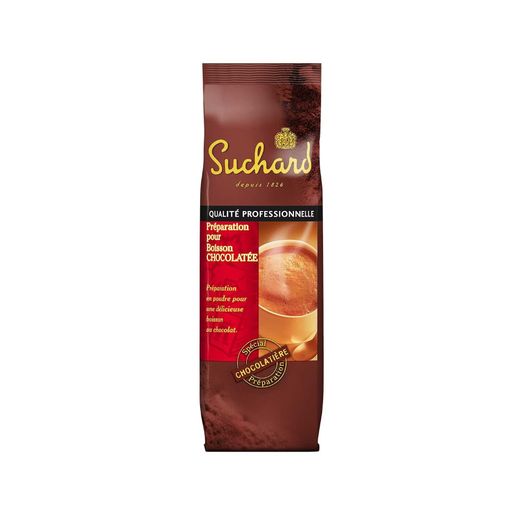 Image unavailable
A pack size to consider if you make hot chocolate regularly and can store the powder somewhere dry.
The product name specifies 20% cocoa and a 1 kg tin. Check the serving instructions and nutritional information for the product you buy.
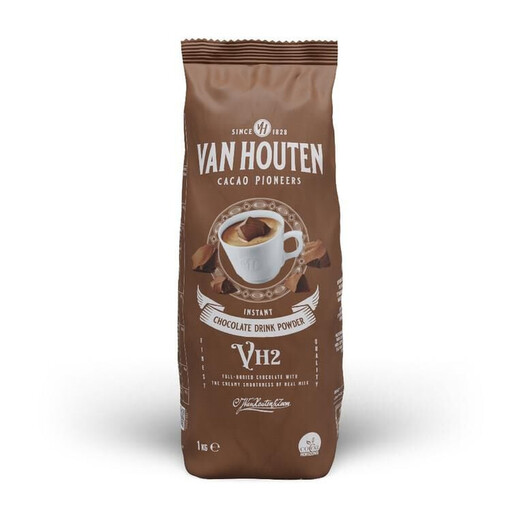 Image unavailable
This 1 kg tin may suit regular use, provided you can store it correctly.
The product name specifies 34% cocoa. To compare the drinks you can make, check the serving instructions and sugar content on the packaging.
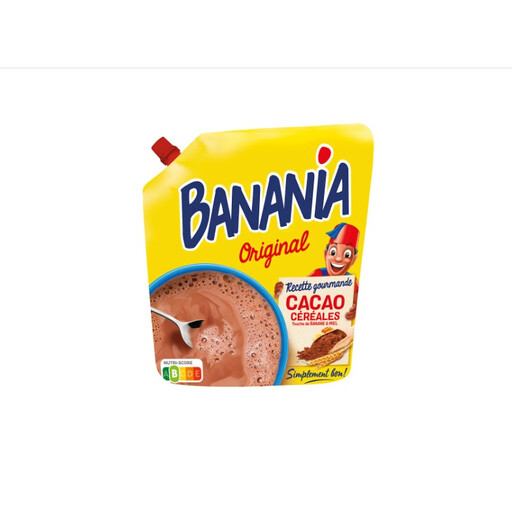 Image unavailable
This pack of powder is suited to a household that makes it often enough to use a 1 kg tin.
Check the sugar content and ingredients for this product before buying. Bananina is not the same as the Banania brand mentioned above.
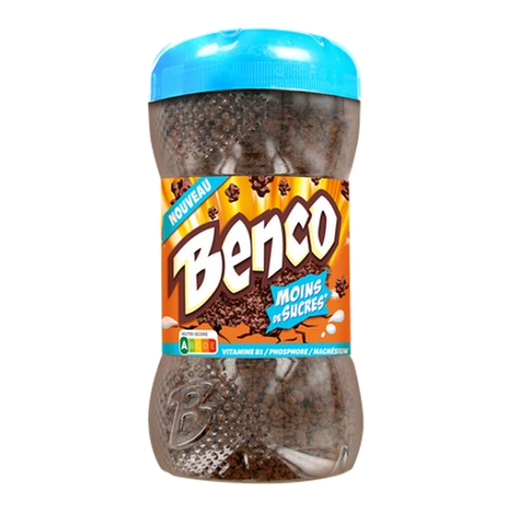 Image unavailable
The 400 g pack may suit you if you would rather not buy a 1 kg tin.
“Less Sugar” is part of the name of this variant. Compare its sugar content with other products rather than assuming how much lower it is from the name alone.
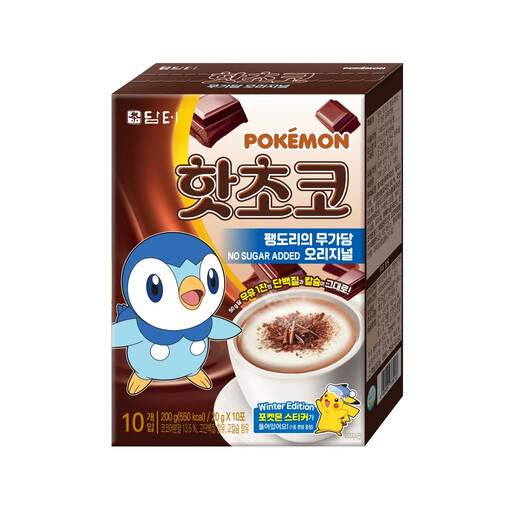 Image unavailable
Individual sachets are a handy portioned option if you are not looking for a large pack.
The pack contains 10 sachets of 20 g. Check the ingredients list and nutritional information on the packaging before relying on any claims about sugar.
No. Santé publique France explains that manufacturers display the Nutri-Score voluntarily. If it is not shown, check the nutritional information and ingredients list for the product you are considering.
No. 1 kg is the weight of the powder, not the volume of a ready-to-serve drink. The number of drinks you can make depends on the serving instructions and how much milk or water you add. If you need 2 litres, check the capacity of a bottle before buying.
Check the ingredients list and allergen information on the packaging for the exact variant. Details differ: Joybuy lists soya for Nesquik Original 300 g, Carrefour France warns that traces of milk and soya may be present in Poulain Grand Arôme Moins de Sucres, and Banania lists wheat and barley in its Original recipe.