Hotel breakfast managers
You need to prepare several cups to a recipe that’s easy to repeat. Clear measuring instructions help you organise service; Nestlé Professional France provides them for its 1 kg Nesquik product.


To serve consistent cups quickly in a hotel, choose an instant powder whose recommended measure and preparation liquid suit your service. If you want to control the sugar separately, start with unsweetened cocoa instead, but be prepared to set a standard recipe for the team. In either case, compare the ingredients, allergens and nutritional information.
You need to prepare several cups to a recipe that’s easy to repeat. Clear measuring instructions help you organise service; Nestlé Professional France provides them for its 1 kg Nesquik product.
You want to compare the stated cocoa proportions without overlooking the sugar, milk and amount of powder used per cup. Poulain Grand Arôme 680 g and Auchan’s intense chocolate powder offer two different recipes to consider.
You’d rather decide how much sugar to add to the drink yourself. Unsweetened cocoa gives you that control, but you’ll need to set the recipe you serve and check the allergens in all its ingredients.
For a hotel café, first decide how the drink will be prepared at each service, then compare the ingredients and pack size with the number of cups you expect to serve.
| Factor | What to check | Who it matters to |
|---|---|---|
| Speed and consistency | Check the amount per cup and the liquid specified in the recipe: milk or water, depending on the product. | At the buffet, I want every cup to be made the same way, even when several people are serving; around 31 % of consumers would make consistency their top priority. |
| Cocoa flavour | Read the stated cocoa percentage and the ingredients, then compare recipes prepared with the milk you actually serve. | To make our drink stand out, I’m looking for a recipe with a higher proportion of cocoa, without relying on that percentage alone to predict the result; this would be the top criterion for around 31 % of consumers. |
| Sugar in the recipe | Compare the sugars per 100 g of powder and, where listed, the values per prepared serving. Take any additions at the point of service into account. | I want to decide how much sugar to add rather than start with an already sweetened recipe; around 23 % of consumers would put this control first. |
| Pack size and storage | Consider the pack weight alongside the amount used per cup, expected demand and storage instructions after opening. | If customer numbers vary, I want a pack the team can use without leaving it open for too long; nearly 15 % of consumers would make this their main priority. |
The ingredients list deserves a closer look, separate from the nutritional information. For a sweetened powder, the cocoa percentage alone doesn’t tell you how much sugar the powder or prepared drink contains. With unsweetened cocoa, any milk, sugar or toppings you add are part of the recipe to consider before service.
The DGCCRF states that displaying the Nutri-Score is voluntary in France. If a score is shown, it doesn’t replace checking the sugars, ingredients and recommended measure for the drink you serve.
Use it as an additional guide when it appears on the packaging, then compare nutritional information on a like-for-like basis, particularly per 100 g.
The French levy described by Légifrance applies to drinks and liquid preparations for drinks under certain conditions. The sugar content of a dry powder isn’t enough on its own to determine how it is classified.
Before mentioning this levy in relation to a product, check its exact form and the conditions that apply.
A 1 kg pack won’t necessarily suit a service where customer numbers vary. For example, Banania offers its Original powder in 250 g, 400 g and 1 kg packs.
Estimate consumption using the product’s recommended measure, then choose a pack size that suits your stock turnover and its storage instructions.
Ingredients and allergens vary between chocolate recipes. Milk and toppings added at the point of service can also change the information you need to provide about the finished drink.
Check the label of the product you’re using and keep a record of the recipe you actually serve, rather than applying information from another brand or pack size.
These products illustrate different recipes and pack sizes; the details apply to the products mentioned, not to every product from each brand.
Nestlé Professional France offers a 1 kg tin of instant Nesquik powder designed to be prepared with milk.
Grand Arôme 680 g is an instant chocolate powder to consider if the cocoa proportion is an important factor in your choice of recipe.
Banania Original chocolate powder combines cocoa, cereal, banana and honey.
The two products reviewed suit different ways of preparing the drink: a sweetened chocolate powder and unsweetened cocoa.
Carrefour offers several chocolate powders and cocoa powders, including Classic’ and Bio recipes.
E.Leclerc’s range includes, among other products, a 1 kg P’TIT DELI instant chocolate drink and a 250 g pack of unsweetened Equador pure cocoa.
These chocolate powders are worth comparing if you’re preparing several cups in a hotel café. Check the pack size and information on each product against the recipe you want to serve; these options don’t cover every way of making hot chocolate.
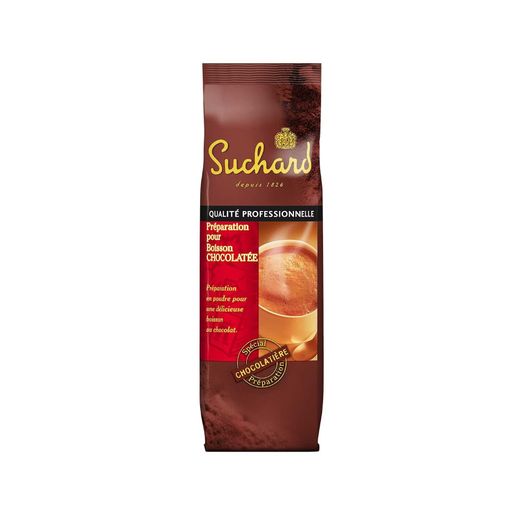 Image unavailable
Worth considering if you’re looking for a large pack of instant powder for repeated servings.
The product name states that it contains 20 % cocoa and comes in a 1 kg pack. Check the recommended measure and allergens on the pack you use before finalising your recipe.
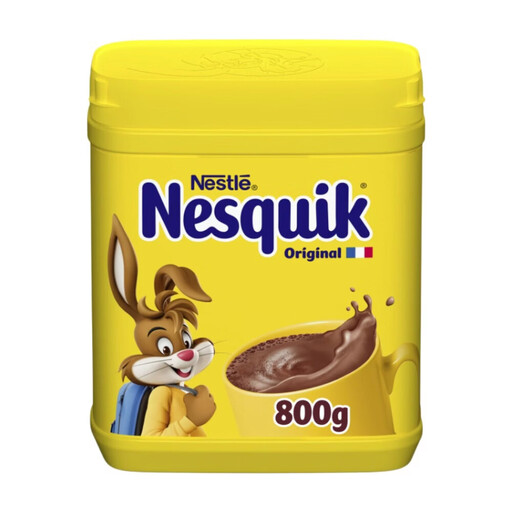 Image unavailable
Consider this for a service using instant powder, once you’ve agreed a standard recipe with the team.
This product comes in an 800 g pack. Don’t assume it uses the same recommended measure as the 1 kg Nesquik professional product without checking first.
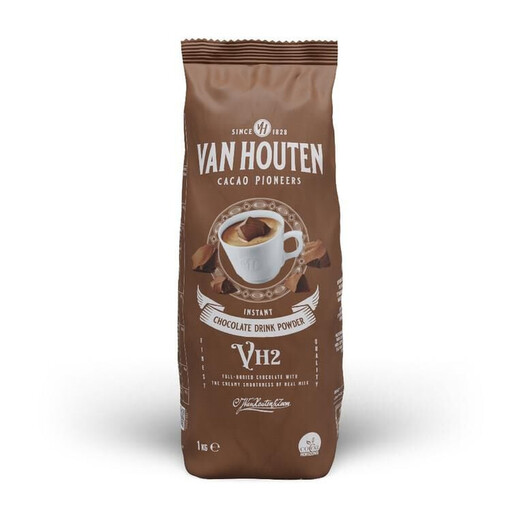 Image unavailable
Compare this if the stated cocoa percentage is one of your criteria for the drink you serve at your hotel.
The VH2 variant is labelled 34 % and comes in a 1 kg pack. Decide how much to use per cup before estimating how many servings you can make.
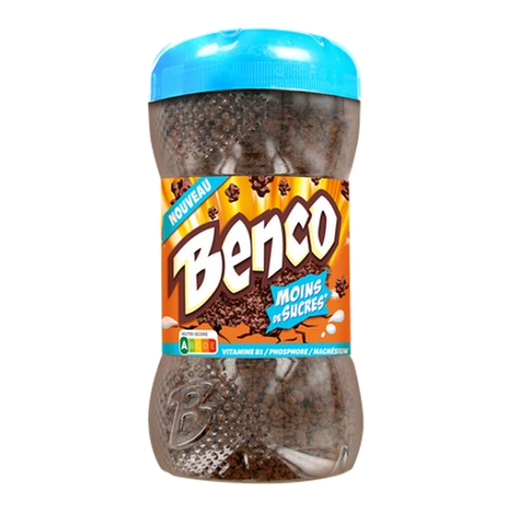 Image unavailable
Worth considering if you’re comparing different ingredients before choosing a powder for your hotel café.
This granule variant comes in a 400 g pack. The Less Sugar label alone doesn’t tell you how its sugar content compares with other products: check the nutritional information and the amount used in a prepared cup.
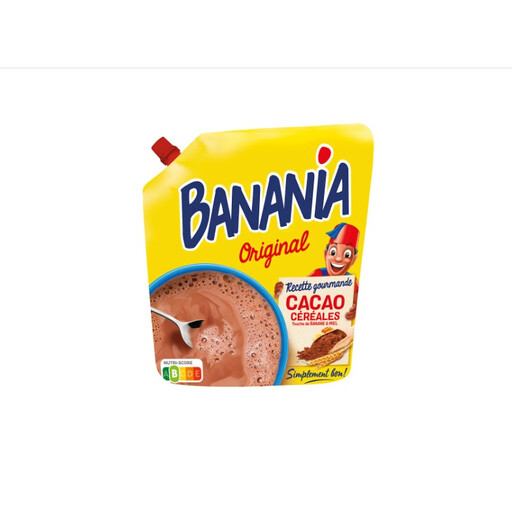 Image unavailable
Consider this if a 1 kg pack suits the rate at which your service uses the powder.
Check the amount to use per cup, as well as the ingredients and allergens for this specific product. Don’t mistake it for a Banania powder based on the similar names alone.
No, displaying it is voluntary in France, as the DGCCRF explains. When comparing pre-packed powders, check the nutrition declaration where required, subject to any applicable exemptions, as well as the ingredients list.
No, the presence of sugar alone doesn’t establish this. The French legislation set out by Légifrance applies to drinks and liquid preparations for drinks under certain conditions. Check how the specific product is classified before applying this levy.
Keep the information for the product you actually use and a record of the recipe you serve. The DGCCRF highlights the importance of labelling for pre-packed food; in particular, the team should be able to find the ingredients, allergens, amount to use and relevant nutritional information.
No. Check the information for the product you choose and for any ingredients added to the cup. A drink made with milk or toppings can’t be described based on the powder’s ingredients alone.