
Livraison le jour même ou le lendemain

Qualité garantie

Débloquez vos offres de bienvenue: Livraison GRATUITE | Jusqu'à -80 % | 30 jours d'essai gratuits à JoyPlus
Téléchargez l'application
Choosing a hot chocolate seems simple enough… until you start comparing the ingredients. Between chocolate powder, unsweetened cocoa and instant hot chocolate mix, the differences in taste, preparation and price can be significant.
At home, you're often looking for a drink that mixes quickly with milk. Professionals, on the other hand, tend to favour a professional hot chocolate format that's easy to measure and suited to heavy use. To avoid any nasty surprises, it's worth keeping three common pitfalls in mind.
A high cocoa percentage doesn't necessarily mean the recipe is low in sugar. In an instant mix, sugar can still be the main ingredient. So you need to look separately at the cocoa content and the "of which sugars" line on the nutrition table.
By way of comparison, some chocolate powders contain over 70 g of sugar per 100 g of product, while versions marketed as lower in sugar tend to be around 50 to 52 g. These values refer to the powder before dilution, not the final drink.
Unsweetened cocoa powder, such as Van Houten Cocoa Powder 255 g, is particularly suited to baking, desserts and made-to-measure drinks. However, you'll need to add your own sugar or sweetener. If you pour it straight into hot liquid, it can also form lumps.
A hot chocolate mix usually already contains sugar, emulsifiers or milk powder. It's designed to mix quickly with milk or water, according to the instructions on the packet.
Before you buy, check for the possible presence of milk, soya, gluten or cereals. A chocolate powder made with malt or cereals won't meet the same needs as a product that declares no allergens.
The packaging also deserves your attention. A 300 g or 400 g sachet is enough for occasional or moderate family use. A 1 kg chocolate powder will be more suitable for regular use, catering, hotels or a vending machine, provided you can store it in an airtight container.
The term "cocoa" can refer to a heavily defatted powder, a powder richer in fat, or an ingredient within a chocolate mix. To get a more intense flavour, compare the stated percentage, but also look at where cocoa appears in the ingredients list.
Van Houten VH1F Cocoa Powder 14.7% 1 kg is presented as a 100% cocoa powder, containing around 22 to 24% cocoa butter. Versatile, it's suitable for baking, desserts and cocoa for drinking, with the amount of sugar adjusted to your taste.
The "of which sugars" value is more reliable than claims like "intense taste" or "rich flavour". To compare two products properly, use the same preparation base and take the added milk into account.
Benco Less Sugar 400 g shows 50 g of sugar per 100 g of powder, while Poulain Cocoa with Rich Flavor 400 g states 52 g. These figures don't mean the drinks are sugar-free, but they provide an objective basis for comparing different lower-sugar chocolate powder recipes.
Check whether the product should be mixed with hot milk, hot water, or both. Some instant mixes are formulated to dissolve in water, which can be handy in a hotel or with a dispensing machine. Others give a creamier texture when made with milk.
Also follow the recommended temperature. Many products advise using hot, but not boiling, water to help it dissolve without affecting the drink's texture.
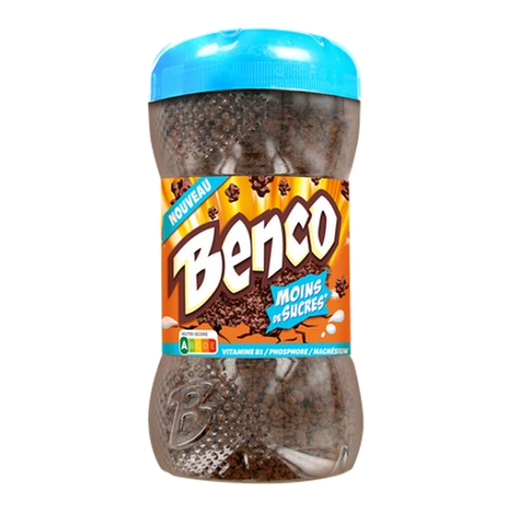
Why this suits this profile: At 400 g, this product is ideal for regular family use without committing to a large pack straight away. The granules are easy to measure, whether in hot or cold milk.
Its composition shows 50 g of sugar and 13 g of fibre per 100 g, making it easy to compare with sweeter recipes.
21% heavily defatted cocoa, no declared allergens and contains vitamin B1 according to the product sheet.
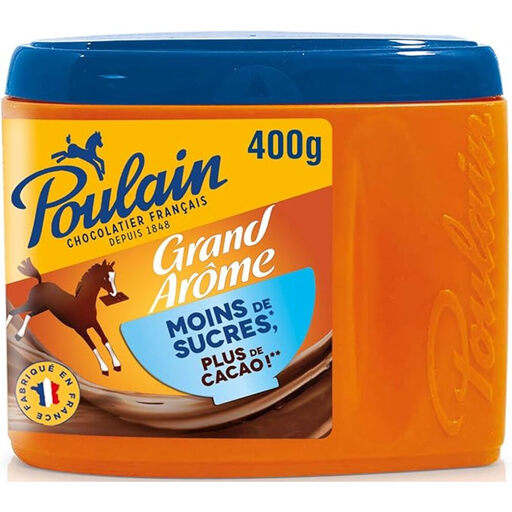
Why this suits this profile: This powder is aimed at those who enjoy a more pronounced cocoa flavour, without sacrificing the convenience of an instant mix with milk.
The stated minimum 47% cocoa content and the nutrition table showing 52 g of sugar per 100 g provide concrete benchmarks.
The recipe combines sugar, lean cocoa and natural flavouring, with no added vegetable oils, preservatives or thickeners.
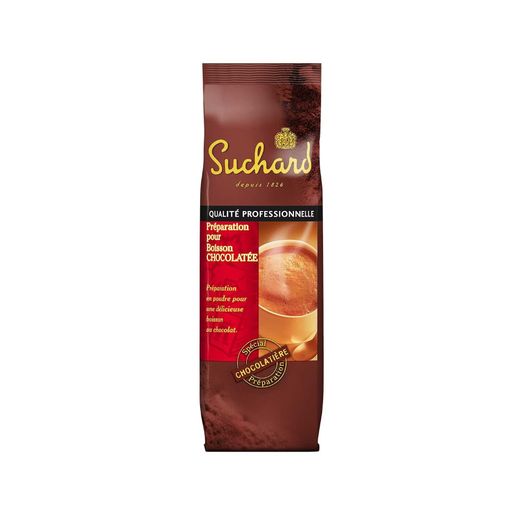
Why this suits this profile: Its 1 kg format is ideal for frequent consumption, a catering setting or a vending machine.
The recommended dosage of 20 to 25 g per glass of hot water helps standardise portions and control the cost of each drink.
20% cocoa stated, can be prepared with water or milk, and a 1 kg format suitable for both home and professional use.
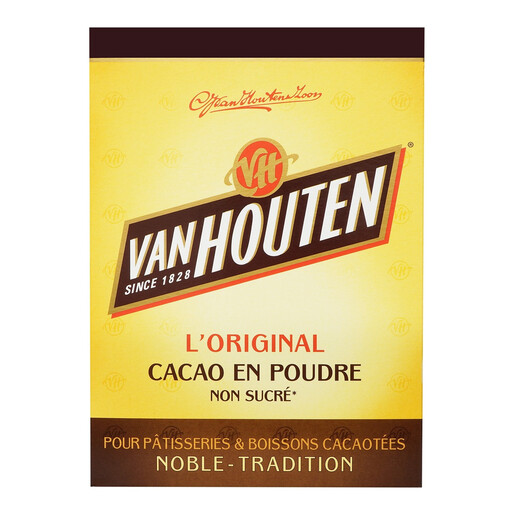
Why this suits this profile: This unsweetened cocoa lets you control the amount of sugar yourself, whether in a drink, cake batter or dessert.
The absence of added sugar prevents you from mistaking a sweetened chocolate mix for pure cocoa.
An unsweetened powder with no declared allergens, suitable for hot cocoa, baking and decoration.
We've compiled a comprehensive, real-time selection of products that meet these exacting criteria and comply with European safety regulations.
Chocolate powder is generally a mix made from sugar and cocoa, sometimes enriched with milk powder, vitamins or flavourings. Unsweetened cocoa powder mainly contains cocoa and lets you adjust the recipe yourself. The former is all about convenience, while the latter gives you more control over the taste and amount of sugar.
Start by mixing the powder with a small amount of cold or lukewarm milk until you have a smooth paste. Then add the rest of the liquid while stirring. For products designed to be mixed with hot water, follow the stated dosage and avoid boiling water if the packet advises against it.
Store the powder in a cool, dry place away from heat and moisture. Seal the packet carefully or transfer the contents to an airtight container. The best-before date remains the one on the packaging. Before each use, also check the appearance, smell and flow of the powder.