Hikers who love an intense cocoa flavour
If you’re looking for a pronounced cocoa flavour, compare the stated cocoa content of specific products rather than relying on the product name alone.


For a pronounced cocoa flavour, choose between pure cocoa with no added sugar, which lets you control how you prepare it, and a sweetened chocolate powder with a high cocoa content. When hiking, powder is best suited to a drink you make during a break, using water and a container. If you want something to eat while walking, a ready-to-eat snack is more practical. Check the ingredients and allergens for the exact product.
If you’re looking for a pronounced cocoa flavour, compare the stated cocoa content of specific products rather than relying on the product name alone.
If you want to control how much sugar goes into your drink, distinguish cocoa labelled “no added sugar” from powder marketed as “less sugar”. The ingredients list can help you decide.
Powder is a good option if you’re bringing water and a container, and have time to mix it. It’s less suitable if you want a snack you can eat on the go without any preparation.
First decide whether you want to make a drink during a break or bring a ready-to-eat snack. If you’re choosing a drink, compare the cocoa and sugar content of the recipe you’re considering.
| What matters to you | What to check | Who is it for? |
|---|---|---|
| Pronounced cocoa flavour | The stated cocoa content for the specific product and pack size you’re buying, along with its ingredients list. | When I stop for a break, I mainly want a drink with a strong cocoa flavour, even if it’s less sweet. Around 42% of consumers are said to prioritise this intensity. |
| Sugar in the recipe | The exact “less sugar” or “no added sugar” claim, followed by the ingredients and nutritional information per 100 g of powder. | I’d rather control how much sugar I add to my drink than choose an already sweetened recipe. Around 33% of consumers are said to prioritise this control. |
| Preparing it while hiking | Whether you can bring water, a container and something to mix the powder with when you plan to have it. | If I want to eat without stopping to make a drink, I’m better off with a ready-to-eat snack. Nearly 25% of consumers are said to prioritise this convenience. |
The name alone doesn’t tell you how much cocoa the powder contains. According to Carrefour’s product information, its Classic’ Intense chocolate powder contains at least 32% cocoa, with sugar as the first ingredient. Carrefour Original, on the other hand, is a cocoa powder labelled as having no added sugar.
Check the cocoa percentage and ingredients for the exact product before you choose.
A claim that a product contains less sugar requires a point of comparison and doesn’t mean the product contains no sugar. “No added sugar” doesn’t mean the same thing as “less sugar”, either.
Check the comparison stated on the packaging, the ingredients and the nutritional information per 100 g.
Powder that needs mixing isn’t as convenient to consume as a ready-to-eat snack. It’s better suited to a break when you can make yourself a drink.
Pack a suitable portion, and bring water and a container. If you plan to eat while walking, choose a ready-to-eat snack instead.
A container, something to mix with and, if you want a hot drink, a way to prepare it all take extra kit and time.
The cocoa content doesn’t tell you about other ingredients or any stated traces. Carrefour’s product information for Poulain 1848 mentions possible traces of milk and soya, while its information for Banania Cacao Intense lists wheat and barley, among other ingredients.
Check the label on the pack you’re actually buying, especially if anyone who’ll be consuming it has an allergy.
The differences below relate to the specific recipes mentioned, not to every product made by each brand.
Carrefour’s product information covers both pure cocoa and a Classic’ Intense chocolate powder.
Poulain 1848 and Grand Arôme Moins de Sucres give you two chocolate powders with stated cocoa contents to compare.
The two Nesquik recipes reviewed don’t have the same cocoa content.
The Banania Cacao Intense recipe described by Carrefour combines cocoa, sugar and cereals.
This Joybuy selection features a chocolate powder to make into a drink during a hiking break. It’s for anyone looking for a high stated cocoa content who’s happy with a recipe that contains sugar.
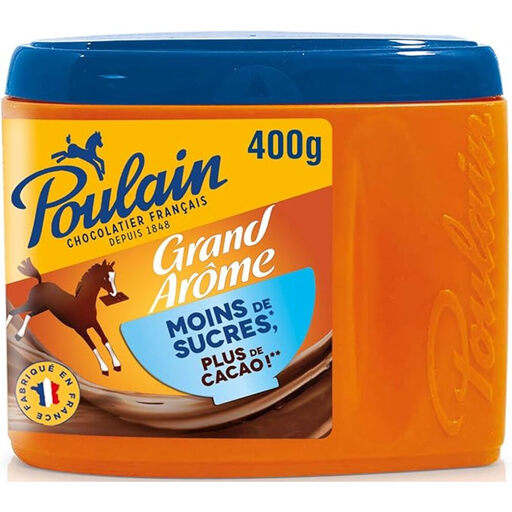 Image unavailable
A good option for making a chocolate drink during a break, with water and a container. According to the Joybuy product information for this 400 g pack, it contains at least 47% cocoa; the recipe also contains sugar. If allergens are a concern for you, check the packaging before you buy.
Pure cocoa is a good choice if you want a recipe with no added sugar and prefer to control how you make your drink. Carrefour’s product information describes Carrefour Original as a cocoa powder with no added sugar, and Carrefour Bio as being made from 100% organic low-fat cocoa. If you prefer a powder that’s already sweetened, compare the cocoa content and ingredients of each recipe instead.
Powder that needs preparing is better suited to a drink during a break than to a snack you can eat as you walk. The Fédération Française de la Randonnée Pédestre recommends taking small snacks to have during physical activity. If you bring powder, remember to pack water and a container, and allow time to prepare it.
No. Santé publique France explains that displaying Nutri-Score is voluntary, while nutrition information is mandatory. If the logo isn’t shown, check the ingredients and nutrition information to compare the products you’re interested in.
No. The fact that a dry powder contains sugar isn’t enough to establish that the contribution applies to it. The text published on Légifrance covers drinks and liquid preparations that meet specific conditions, including packaging requirements. A ready-to-drink product must be assessed on its own characteristics.
Check the ingredients and any trace warnings for the exact product. Carrefour’s product information for Poulain 1848 mentions possible traces of milk and soya, while its information for Banania Cacao Intense lists wheat and barley. Always check the packaging of the product you buy, as these details may not reflect the current label.