For a pre-measured portion to pop into a lunch bag, choose sticks or individual sachets, provided you can make the drink when you get there: a portion of powder isn’t ready to drink. If choosing the recipe and controlling the amount matter more, a tub of powder or pure cocoa gives you another way to prepare each serving, but you’ll need to carry or measure out the amount you want. To compare sugar content, use figures based on the same serving size and preparation method.
Which format is right for you?
People packing an individual lunch
A separate portion means you don’t have to carry an opened tub or measure out powder at lunchtime. The 13.5 g Nesquik sticks featured by Nestlé Professional France meet this need for portion control, but you’ll still need a way to prepare the drink.
People who want to control the sugar in their drink
A recipe marketed as lower in sugar and pure cocoa that you measure out meet different needs. The former is a set recipe from the manufacturer, while the latter lets you decide what to add. In both cases, the serving size and the milk you use matter when checking the nutritional information.
People who prioritise the stated cocoa content
Chocolat Poulain states that Poulain 1848 contains 50% cocoa, while Auchan says Chocolat Intense contains at least 32%. These figures can help you choose a recipe to measure out, but they don’t tell you the sugar content of the prepared drink or how easy it is to take with you.
What should you look for before buying?
For a packed lunch, first check how you’ll prepare the drink, then compare the format and recipe according to what matters most to you. The percentages below refer to consumers who would rank each need as their top priority.
| Criterion |
What to check |
Consumers concerned |
| Portion to take with you |
Check the number and weight of the portions, then find out what you need to add to prepare the drink. Carrefour, for example, lists a box of 12 Nesquik sticks, each weighing 13.5 g. |
For a packed lunch, I prefer a separate portion to a tub of powder I have to measure out, as long as I have what I need to mix the drink. Around 46% of consumers might prioritise this need for portion control. |
| Sugar and labelling |
Compare sugar content on a like-for-like basis: per 100 g of powder, or per prepared drink made with a specified serving size and type of milk. Check the ingredients list too. |
If I want to control the sugar in my drink, I need to know what the stated figure includes before comparing two recipes. This would be the main concern for around 36% of consumers. |
| Cocoa recipe |
Check the stated cocoa content and ingredients, but don’t use them to infer the sugar content. Chocolat Poulain states that Poulain 1848 contains 50% cocoa; Auchan says Chocolat Intense contains at least 32%. |
I’m happy to measure out the powder myself if the recipe matters more to me than having an individual sachet. Around 18% of consumers might make this their top priority. |
Mistakes to avoid
-
Assuming a stick of powder is a ready-to-drink beverage
A stick makes it easier to measure out a portion, but you still need to prepare the drink. For a packed lunch, this format may not be practical if you don’t have milk or suitable water and a container.
Before choosing a multipack, check the instructions for the specific product and whether you can prepare it where you’ll be eating. If you can’t prepare a drink there, look for a ready-to-drink option in another category.
-
Comparing sugar figures based on different serving sizes or preparation methods
A figure per 100 g of powder isn’t directly comparable with one for a mug made with milk. Banania, for example, states that a mug made with 15 g of Banania Original and 200 ml of semi-skimmed milk contains 20 g of sugars.
Compare the amount of powder and the prepared drink under equivalent conditions, using the same volume and type of milk in particular.
-
Treating the absence of a Nutri-Score as a verdict on the product
In France, Santé publique France describes Nutri-Score as a voluntary, supplementary label. Other labelling requirements apply to the nutritional declaration for the relevant prepacked foods.
If the logo appears on the packaging, consider it alongside the nutritional information, ingredients list, serving size and preparation method. Its absence alone isn’t enough to judge the recipe.
-
Relying on a specific product without checking your chosen shop
A particular supermarket own-brand product or format might not be available at the shop where you do your food shopping. E.Leclerc recommends contacting the relevant store to check whether a product is available.
If your plans depend on having specific individual portions, check with your chosen shop or collection service before organising your meals.
Brands to compare
Nesquik
Nestlé Professional France offers a 13.5 g individual portion of powder; other Nesquik recipes are available in tubs.
- The stick saves you measuring out powder for each meal.
- You still need to prepare the drink. The Nesquik Less Sugar recipe sold in a 350 g tub doesn’t come in individual portions.
Banania
Banania Original is a powder you measure out, and the brand also gives nutritional figures for a prepared mug.
- Banania states that its reference serving combines 15 g of powder with 200 ml of semi-skimmed milk, giving 20 g of sugars in the prepared drink.
- If you use a different serving size or type of milk, this figure no longer precisely reflects the drink you’ve made.
Poulain
Poulain 1848 is a sweetened powder that Chocolat Poulain states contains 50% cocoa.
- The stated cocoa content helps you identify this recipe among powders you measure out yourself.
- It isn’t enough to establish the sugar content in a mug, and it doesn’t give you a pre-packed portion.
Carrefour Classic'
The Carrefour Classic' product featured here is a 400 g tub of chocolate powder.
- Carrefour lists sugar and 21% low-fat cocoa in the ingredients.
- You’ll need to measure out the powder if you want to prepare a separate portion for each meal.
E.Leclerc / P'tit Deli
The instant chocolate drink from P'tit Deli featured by E.Leclerc comes in a 1 kg pack.
- The product listing states that it contains 21% low-fat cocoa and displays a Nutri-Score B.
- This pack doesn’t separate the powder into portions for individual meals.
Auchan
Auchan offers, among other products, 100% pure unsweetened cocoa powder and a Chocolat Intense recipe labelled as containing at least 32% cocoa.
- These two products let you choose between cocoa you can prepare with your own additions and sweetened chocolate powder.
- Both need to be measured out, and the cocoa content doesn’t tell you the sugar content of the prepared drink.
Individual portions on Joybuy
These two sachet and stick options are designed for taking a separate portion with you for an individual meal. Check their preparation instructions and labels before choosing, based on what you’ll be able to use where you’re eating.
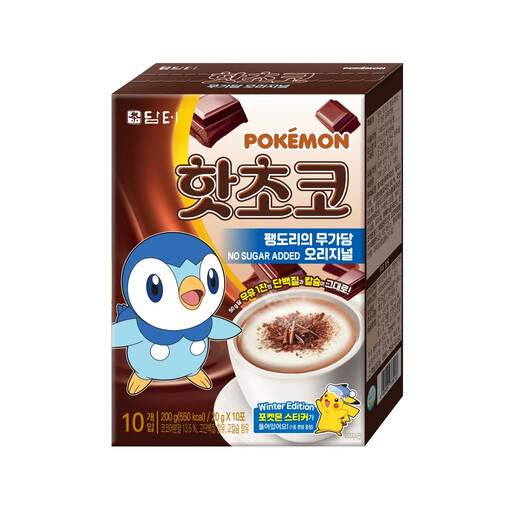 Image unavailable
DAMTUH Pokémon Sugar Free, 10 sachets of 20 g
Separate sachets are handy if you want to take a portion with you without carrying the whole box. Bring a container and check the preparation instructions on the packaging.
The ‘Sugar Free’ name alone doesn’t tell you the sugar content of the prepared drink. Check the ingredients and nutritional information for the product you buy.
View on Joybuy
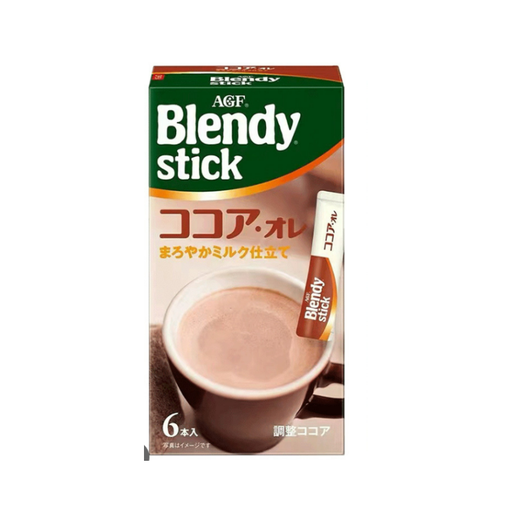 Image unavailable
AGF Blendy Stick Cocoa with Milk, 6 sticks, 66 g
Individual sticks are easy to take with you and use to make a mug at mealtime. If you plan to use hot water, check the instructions for this product and bring a suitable container.
To compare its sugar content with another drink mix, check the nutritional information on the packaging and use the same basis for comparison.
View on Joybuy
Frequently asked questions
Is Nutri-Score compulsory on hot chocolate powder in France?
No. Santé publique France describes Nutri-Score as a voluntary, supplementary label. It’s separate from the nutritional declaration required for the relevant prepacked foods. Check the ingredients and stated serving size too.
Is one stick of chocolate powder enough for a packed lunch?
A stick gives you a portion of powder, not a ready-to-drink beverage. Bring whatever the instructions for your chosen product require, as well as a container and a way to mix the drink when you get there.
How can you compare the sugar content of two chocolate powders?
Compare figures based on the same amount of powder or on drinks prepared in a similar way. A figure per 100 g of powder and one per mug made with milk use different bases. Check the serving size, volume and type of milk before drawing a conclusion.


