If you want to control how much sugar goes into your hot chocolate, consider unsweetened cocoa. If convenience matters more, compare powders you measure out with ready-to-drink options, taking into account the steps involved. Check the sugars in the prepared drink, along with its ingredients and allergens, rather than relying on the Nutri-Score alone, as its use is optional according to Public Health France. For a larger household, don’t confuse the weight of a tub of powder with a 3 L bottle: the Banania drink listed by Carrefour comes in a 1 L bottle.
Who is this choice for?
Older people and carers keeping an eye on sugar
You regularly prepare a chocolate drink and want to compare its sugar content, ingredients and the portion actually served. Nutri-Score can help you assess it if it appears on the packaging: Public Health France says its use is voluntary.
Older people with a poor appetite and their carers
An easy-to-prepare drink can be useful day to day, but unintentional weight loss or difficulty eating calls for medical advice. The French National Authority for Health lists unintentional weight loss among the factors to consider when diagnosing malnutrition in people aged 70 and over.
Carers serving several people
You’re looking for a pack size that suits the number of cups you serve and how often your household drinks it. Compare the number of servings stated for a powder with the volume of a ready-to-drink option: a 1 kg tub is not the same as a 3 L bottle.
What should you check before buying?
First decide between a drink you prepare and one that’s ready to serve, then compare products in the form they’ll actually be consumed. If someone is losing weight unintentionally or struggling to eat, seek medical advice rather than choosing hot chocolate as a solution.
Unsweetened cocoa
Worth considering: if you want to choose how much sugar to add to your cup.
Bear in mind: you’ll need to choose the liquid, measure out the ingredients and mix them together.
Chocolate drink powder
Worth considering: if you prepare each cup as needed using a ready-made blend.
Check: the sugar content depends on the powder, how much you use and the liquid you mix it with.
Ready-to-drink beverage
Worth considering: if avoiding measuring and mixing makes serving easier.
Check: the volume, ingredients and storage instructions after opening. The Banania bottle listed by Carrefour holds 1 L, not 3 L.
| Factor |
What to check |
Who is it for? |
| Sugars |
Compare the sugars per 100 g of powder or per 100 ml of drink, then check how much you use per cup. Don’t compare dry powder directly with a prepared drink. |
If I make this drink often, I want to be able to adjust the added sugar rather than rely on a claim on the front of the pack. Around 35% of consumers would make this their top priority. |
| When eating becomes difficult |
If someone is losing weight unintentionally or eating very little, seek medical advice. Also check what the drink contains once prepared. |
When someone close to me isn’t eating much, my priority is knowing who to ask for advice rather than relying on an everyday drink to meet their needs. This would be the main concern for around 30% of consumers. |
| Preparation and texture |
Look at the preparation steps, the container you’ll need to handle and the resulting texture. If swallowing is difficult, ask a professional for advice. |
If measuring, mixing or drinking becomes difficult, I’m looking for an option that suits the person’s abilities and the texture they need. Around 20% of consumers would put ease of use first. |
| Family-sized pack |
Distinguish the weight of the powder from the volume of the ready-to-serve drink. Check the amount to use per cup and storage instructions after opening. |
When serving several people, I want to buy less often without keeping an opened pack for longer than the instructions allow. This pack size would be the priority for around 15% of consumers. |
Common mix-ups to avoid
-
Judging a recipe by Nutri-Score alone
According to Public Health France, producers apply Nutri-Score voluntarily. Whether it appears on the pack or not, it doesn’t tell you everything about the ingredients or the portion consumed.
Read the nutritional information and ingredients list. Compare products in the same form, and take into account any milk or other liquid you add to a powder.
-
Relying on hot chocolate if you suspect malnutrition
An everyday chocolate drink is no substitute for an appropriate assessment. The French health insurance system says oral nutritional supplements may be essential, depending on the situation.
If someone is losing weight without intending to or eating very little, speak to a healthcare professional before changing their diet yourself.
-
Assuming a large tub is the same as a 3 L bottle
The weight of a powder doesn’t tell you directly how much drink it will make. Carrefour lists, among other products, an 800 g tub of Poulain powder and a 1 L bottle of Banania drink. These are different formats and should be compared accordingly.
Follow the stated serving instructions to estimate how many cups you can make, and check the storage instructions before choosing a larger pack.
-
Overlooking the ingredients in a chocolate drink
Recipes vary. Carrefour’s product information, for example, lists soya lecithin in a Nesquik powder and wheat- and barley-based cereals in a Banania powder.
If you have an allergy or dietary requirement, check the ingredients list and allergens on the product you actually buy, as well as those in the liquid you use.
Brands to know when comparing recipes
A brand may offer several recipes and pack sizes. The details below apply to the products mentioned, not to the brand’s entire range.
Nesquik
Among its chocolate drink powders, Carrefour lists a 350 g tin of its Moins de Sucres (Less Sugar) variety.
- Carrefour’s product information states that this variety contains 35% cocoa. This figure is different from the sugar content of the prepared drink.
- The recipe listed contains soya lecithin. Check the serving size and allergens on the pack you buy.
Poulain
The Grand Arôme variety listed by Carrefour is an 800 g tin of chocolate drink powder.
- Carrefour’s product information states that this recipe contains at least 32% cocoa.
- Sugar is included in the ingredients list. Check the nutritional values and serving size before comparing prepared cups.
Banania
Carrefour lists a cocoa powder with cereals, banana and honey, as well as a chocolate-flavoured milk drink in a 1 L bottle.
- These two options let you compare a powder you prepare with a drink that’s ready to serve.
- Sugar is the first ingredient in the powder, which also contains wheat- and barley-based cereals. The 1 L bottle isn’t the 3 L size you’re looking for.
E.Leclerc et ses marques distributeur
E.Leclerc’s selection includes Équador 250 g unsweetened pure cocoa, as well as other chocolate drink mixes.
- Unsweetened cocoa lets you choose separately which ingredients to add when preparing your drink.
- To compare this product with a chocolate drink mix, read each ingredients list and check the nutritional values of the drink you’ll serve.
Chocolate drink powders on Joybuy
These two products are powders that you prepare by the cup: one comes in individual sachets and the other in a tub. If you’re serving several people, check the amount to use and how many cups you can make. Neither is a ready-to-drink 3 L bottle.
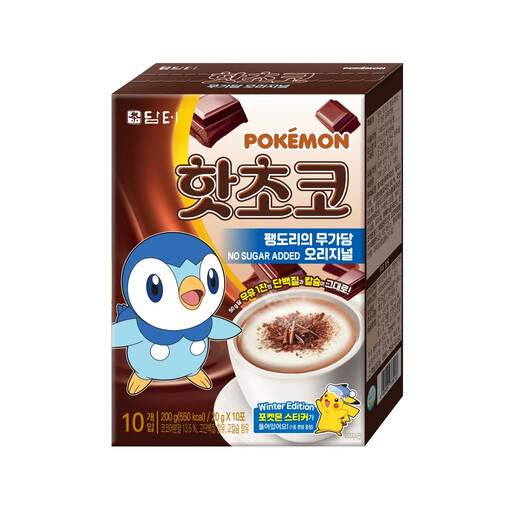 Image unavailable
DAMTUH Pokemon hot chocolate powder, 10 sachets of 20 g
Individual sachets are handy for making one cup at a time. If the “Sugar Free” wording in the original product name is important to you, check it against the ingredients list and nutritional information on the pack.
View on Joybuy
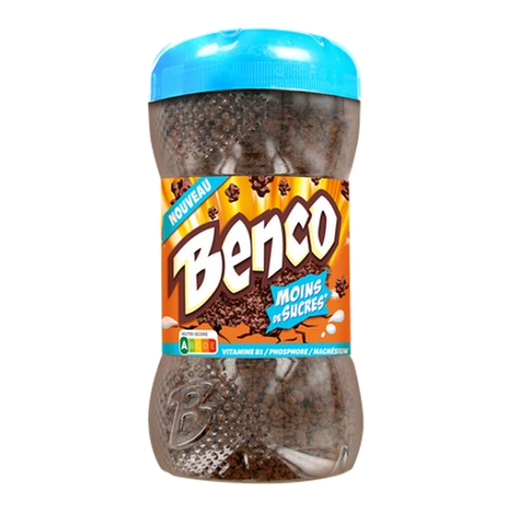 Image unavailable
BENCO Less Sugar chocolate drink granules, 400 g
The 400 g tub is suitable for making drinks as needed, measuring out a portion for each cup. The name “Less Sugar” isn’t enough to compare sugar content: check the nutritional information, the amount you use and the drink once prepared.
View on Joybuy
Frequently asked questions
Does hot chocolate sold in France have to display Nutri-Score?
No. Public Health France says producers can choose whether to display Nutri-Score. Whether or not it appears on the pack, check the ingredients list and nutritional information to compare products.
Is hot chocolate enough if an older person is losing weight unintentionally?
No. An everyday chocolate drink is no substitute for a medical assessment. The French National Authority for Health includes unintentional weight loss in its diagnosis of malnutrition in people aged 70 and over. The French health insurance system says oral nutritional supplements may be essential, depending on the situation.
Can the sugar listed on the label tell you whether a drink is subject to the “soda tax”?
No. Sugar content alone doesn’t determine whether a levy applies. For a specific drink, you need to check its regulatory category and the applicable conditions rather than draw a conclusion from its recipe or product name.


