Who is this choice for?

Parents looking for a pronounced cocoa flavour

If your child is gradually getting used to stronger flavours, cocoa content can help you compare recipes. Poulain, for example, offers powders with 32% and 70% cocoa, while Auchan sells unsweetened pure cocoa with 100% cocoa. These figures alone don’t predict how the drink will taste once prepared.

Households wanting to control added sugar

With unsweetened pure cocoa, you can decide whether to sweeten the drink and how much sugar to add. For a powder that’s already sweetened, compare the ingredients list and the “of which sugars” figure per 100 g, then factor in how much powder you use.

Parents mindful of allergens

Depending on the product, check for milk, soya, cereals containing gluten and any “may contain” warnings. The DGCCRF reminds shoppers that allergenic ingredients must be highlighted on the label. Check the milk or other drink you use to prepare the cup as well.

What should you look for?

To choose between a rich cup and a milder recipe that’s easier for your child to enjoy, start with the flavour they prefer. Then compare the sugar content and allergens in each product.

CriterionWhat to checkWho it matters to
Pronounced cocoa flavour Compare the stated cocoa content: the products reviewed contain 32%, 70% or, for unsweetened pure cocoa, 100% cocoa. I’d like a more cocoa-rich drink, but I don’t assume that the word “intense” tells me everything about the recipe. Around 37% of consumers put this intensity at the top of their list.
Added sugar Check the order of the ingredients and the sugars per 100 g, then take into account the amount of powder and liquid used. I’d rather decide for myself whether to sweeten my drink than buy a recipe that’s already sweetened. This level of control would be the priority for around 36% of consumers.
Whether your child likes the flavour Check the recipe and gradually adjust the amount if your child isn’t yet keen on pronounced cocoa flavours. If my child won’t drink anything too strong, I’m mainly looking for a recipe they’re willing to try. A milder flavour comes first for around 18% of consumers.
Allergens Check the ingredients, any “may contain” warnings and the liquid added to the cup. If allergies are a concern, I need to check the exact product and how it’s prepared before considering its flavour. For around 9% of consumers, this is the top priority.

Mistakes to avoid

  • Assuming “intense” means “low in sugar”

    A recipe’s name doesn’t tell you how much sugar it contains. The 32% cocoa products reviewed from Poulain and Auchan list 67 g and 68 g of sugars per 100 g of powder, respectively.

    Compare the cocoa content, where sugar appears in the ingredients list and the “of which sugars” figure per 100 g.

  • Jumping straight to a large amount of pure cocoa

    Unsweetened pure cocoa lets you choose whether to add sugar, but its flavour may not suit a child who’s used to a milder recipe.

    Start with a weaker mix and adjust the amount to suit your child’s reaction. Don’t assume they’ll like the new recipe.

  • Assuming that no milk in the ingredients means there’s no risk of allergens

    A powder may carry a warning that it could contain traces of milk or other allergens. The Auchan unsweetened pure cocoa reviewed, for example, warns that it may contain traces of milk, soya, eggs, nuts and cereals containing gluten.

    Read the warnings on the pack you buy, and check the liquid you use in the cup separately.

  • Relying on the Nutri-Score alone

    In France, Nutri-Score is optional. The nutritional information on pre-packed foods, as described by the DGCCRF, allows you to compare the stated values, subject to applicable exceptions.

    If the pack displays a Nutri-Score, read it alongside the ingredients list and nutritional values per 100 g. Don’t rely on it alone to decide whether a recipe is suitable for your child.

Brands to compare

Poulain

Poulain offers Grand Arôme with 32% cocoa and Grand Arôme Intense with 70%. Compare their ingredients before choosing a powder.

  • The cocoa content is stated for both products.
  • Grand Arôme lists 67 g of sugars per 100 g and may contain milk; Grand Arôme Intense contains sugar and may contain milk and soya.

Auchan

The products reviewed include a chocolate powder with 32% cocoa and unsweetened pure cocoa with 100% cocoa, intended for different recipes.

  • With unsweetened pure cocoa, you can control how much sugar you add to your cup.
  • The 32% cocoa powder lists 68 g of sugars per 100 g; for the pure cocoa, check for allergen warnings.

Banania

Banania Original combines cocoa and cereals, making it different from pure cocoa or a 70% cocoa powder.

  • The recipe contains 19% cocoa, making it easy to compare with the products featured here.
  • It lists 69 g of sugars per 100 g and contains wheat and barley, among other ingredients. Also check for warnings about traces of milk and soya.

Carrefour

The Carrefour range includes Classic' chocolate powders, an Intense product and cocoa powder.

  • These product names make it easy to spot several recipe types to compare.
  • For Carrefour Classic' Intense, check the cocoa content, sugars and allergens of the product you’ve chosen before comparing it with another powder.

E.Leclerc / Marque Repère

The products listed include Equador unsweetened pure cocoa and instant drinks, including Tablette d’Or.

  • The range of recipes makes it worth comparing products individually rather than assuming they all have the same ingredients.
  • The Tablette d’Or product reviewed contains 21% cocoa, lists sugar first in the ingredients and contains soya, with a warning about traces of milk.

Nesquik

The Carrefour catalogue lists Nesquik powders, including a product described as containing less sugar.

  • You can compare the different varieties individually to find the recipe you’re looking for.
  • Don’t assume the cocoa content, sugars or allergens in one variety are the same as another. Check the pack you’ve chosen.

Chocolate powders on Joybuy

These chocolate drink powders may be worth considering if you’re looking for a more pronounced cocoa flavour for your child. The product name is no substitute for checking the ingredients, sugars and allergens of each one.
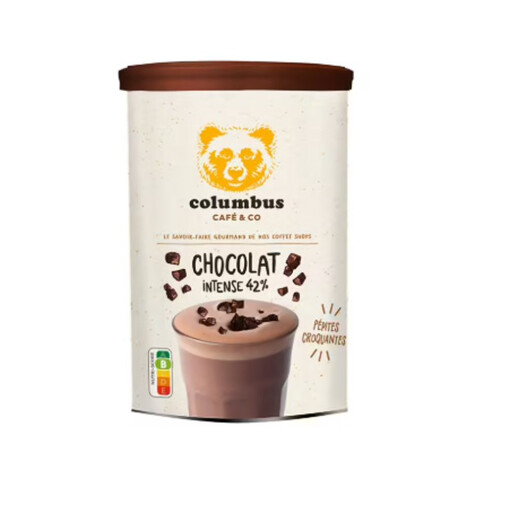
Columbus Intense hot chocolate powder, 320 g

Columbus Intense hot chocolate powder, 320 g

If you’re considering this powder for a fussy child, check its cocoa content, sugars and allergens on the pack.

Size: 320 g.

View on Joybuy
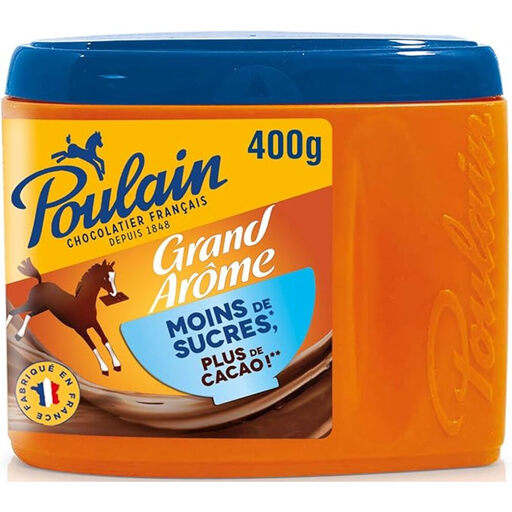
Poulain Cocoa with Rich Flavor chocolate drink powder, 400 g

Poulain Cocoa with Rich Flavor, 400 g

If you’re considering this recipe for your child, compare its ingredients and sugars with other powders, and check the allergens on the pack.

Size: 400 g.

View on Joybuy

Frequently asked questions

Is Nutri-Score compulsory on chocolate powder in France?

No, displaying Nutri-Score is voluntary in France. The DGCCRF says that pre-packed foods generally include nutritional information. Compare the values per 100 g and the ingredients, whether or not there’s a logo on the pack.

Does hot chocolate powder always contain milk?

No, milk isn’t an ingredient in every powder. However, a product may warn that it could contain traces of milk. Check the exact pack, and also check the liquid you add to prepare the drink.

How can you introduce pure cocoa to a child who prefers a milder drink?

Start with a weaker mix, then adjust the amount of cocoa to suit their taste. Unsweetened pure cocoa lets you decide separately whether to add sugar, but its ingredients don’t guarantee that your child will enjoy the drink.

Does the so-called “soda tax” automatically apply to chocolate powder?

No, you shouldn’t assume it applies to every dry powder. Article 1613 ter of the General Tax Code, published by Légifrance, covers drinks and liquid preparations for drinks under certain conditions. When choosing between two powders, compare their ingredients and sugars directly.