Office kitchen coordinators
If you’re serving several people and don’t want to measure powder for every cup, individual sticks provide a set portion. The 240-portion case presented by Nestlé Professional France needs milk for preparation.


For pre-measured portions at office breaks or in a large household, the 240-stick Nesquik case, with 13.5 g per stick, fits the bill. Nestlé Professional France recommends preparing each stick with 20 cl of milk. If you’d rather adjust the recipe or compare sugar levels before choosing, a powder you measure yourself or unsweetened cocoa may suit you better — but neither necessarily provides 240 equivalent portions.
If you’re serving several people and don’t want to measure powder for every cup, individual sticks provide a set portion. The 240-portion case presented by Nestlé Professional France needs milk for preparation.
A supply of individual portions can make regular afternoon treats easier to manage. Before choosing a case of 240 sticks, think about where you’ll store it and make sure you have enough milk for preparation.
If sugar, ingredients or allergens influence your choice, compare the exact product and the amount used per cup. A powder you measure yourself and unsweetened cocoa are prepared differently from a pre-measured stick.
For office breaks or treats in a larger household, first choose between a ready-measured portion and a recipe you prepare yourself. Then compare the ingredients and storage requirements.
Choose this: when several people need the same amount of powder in each cup.
Bear in mind: the portion size is fixed, you’ll need milk for preparation, and each stick has its own wrapper.
Choose this: if you want to decide how much powder to use each time you make a cup.
Bear in mind: you’ll need to measure it each time. A large pack on its own doesn’t equal 240 set portions.
Choose this: if you want to decide for yourself whether to add sugar, and how much.
Bear in mind: you’ll need to create and measure your own recipe, rather than use a pre-sweetened, pre-measured mix.
| What to consider | What to check | Who is it for? |
|---|---|---|
| Individual portions | Check the number and weight of the portions, then find out what liquid is needed. Nestlé Professional France states that each Nesquik stick contains 13.5 g of powder and is prepared with 20 cl of milk. | When several people are helping themselves during an afternoon break, I want to avoid measuring powder each time and keep portions consistent; around 42% of consumers prioritise this pre-measured format. |
| Sugar and ingredients | Compare the sugar per 100 g, the amount of powder per cup, and the ingredients and allergen lists. Consider any milk you add separately. | If I want to make an informed choice about my recipe, the ingredients matter more than the number of sachets; around 33% of consumers share this priority. |
| Storage and packaging | Check how much you’ll need to store and choose between individual portions and powder you measure yourself. A 250 g or 400 g pack doesn’t, on its own, tell you how many cups it will make. | For regular afternoon treats, I want to know where to store the powder and how to organise serving it; around 25% of consumers prioritise these practical considerations. |
In France, Article 1613 ter of the General Tax Code covers, subject to the conditions set out in the legislation, certain drinks and liquid preparations for drinks, including those under CN codes 2009 and 2202, that contain added sugar. The fact that a dry powder contains sugar is not, on its own, enough to establish that this tax applies.
When comparing products for an afternoon treat, check their nutrition labels. If their tax classification matters to your purchase, ask for confirmation of the classification of the specific product.
The DGCCRF states that Nutri-Score is voluntary, while nutrition declarations are generally required for pre-packed foods, subject to applicable exceptions.
Compare the nutrition information, especially sugar levels, as well as the ingredients and allergens for each product, whether or not it displays a Nutri-Score.
GEDAL states that its case of 240 Nesquik Plus sticks, each weighing 13.5 g, contains 75 g of sugar per 100 g of powder. This figure refers to the powder, not the drink once milk has been added.
Relate the nutrition value to the amount of powder you use, then consider the nutrition information for the milk you serve separately.
The 250 g unsweetened cocoa products shown by Auchan and E.Leclerc need to be measured during preparation. Their weight doesn’t guarantee 240 cups with the same ingredients.
If you need portions measured in advance, check the pack size and portion format. If you want to create your own recipe, first work out how much you’ll use per cup.
Nestlé Professional France presents a 13.5 g individual Nesquik portion to be prepared with 20 cl of milk. GEDAL offers a case of 240 Nesquik Plus sticks of the same weight.
Banania offers a 750 g pack of its “Moins de Sucres” chocolate powder, which you measure for each drink.
Auchan offers 250 g packs of unsweetened cocoa powder, for recipes where you choose the quantities as you prepare them.
E.Leclerc offers, among other products, a 1 kg pack of P’tit Déli instant chocolate drink and a 250 g pack of Équador pure unsweetened cocoa.
These two products are for making chocolate drinks to enjoy during an afternoon break: one comes in individual sachets, while the other is a powder you measure yourself. Neither comes in a case of 240 sticks.
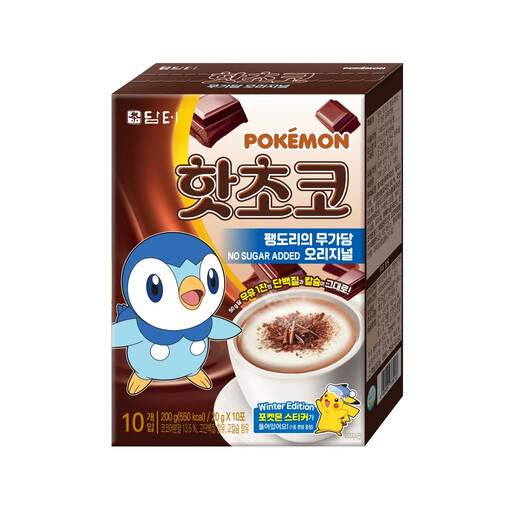 Image unavailable
For making drinks from individual sachets: this pack contains 10 sachets of 20 g, not 240 portions. Before relying on the claim in the product name, check the ingredients and nutrition information for the product you choose.
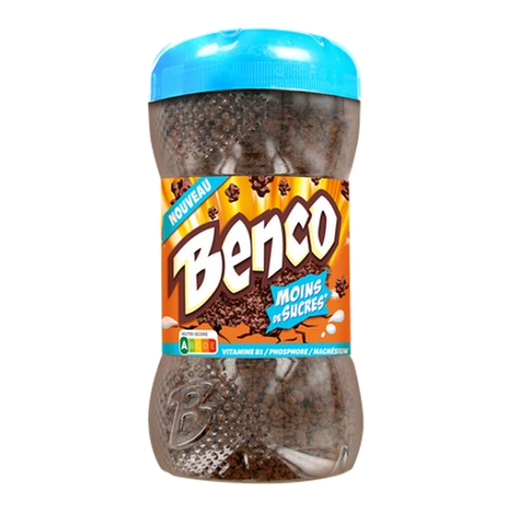 Image unavailable
For measuring out powder when preparing an afternoon treat: the pack contains 400 g and isn’t a set of 240 pre-measured portions. Check the recommended amount per cup and the nutrition information for this product to compare the drink you’ll prepare.
No. Dry powder shouldn’t automatically be considered subject to this tax. Article 1613 ter of the General Tax Code covers drinks and liquid preparations for drinks that meet the conditions set out in the legislation, including requirements relating to their classification and added sugar. If this affects your purchase, ask for confirmation of the product’s classification.
No. Nutri-Score is voluntary in France, as the DGCCRF explains. Nutrition declarations are generally required for pre-packed foods, subject to applicable exceptions. Use them to compare the information provided, especially sugar levels.
The preparation instructions from Nestlé Professional France call for 20 cl of milk per stick, or 48 litres for 240 cups made to those instructions. Also make sure you have suitable storage for the milk you’ll use.
Read the ingredients list and allergen information for the exact product and format you plan to serve. Information for a different recipe, even from the same brand, isn’t enough to confirm what’s in the case or pack you’ve chosen.