Those who prefer a stronger cocoa flavour
You want to compare powders for your break at work without relying on words such as “intense” or “mature”. The stated cocoa content is a useful starting point, but you should also check the ingredients list.


For a lunchtime break at work, start by choosing the kind of drink you’re looking for. If you want to compare cocoa-focused recipes, choose a powder that clearly states its cocoa content. Or pick a recipe that can be made with the milk available. Then check the sugars per 100 g of powder, how much you use per cup and the allergens. The cocoa percentage alone can’t tell you which taste you’ll prefer or give you the full nutritional picture.
You want to compare powders for your break at work without relying on words such as “intense” or “mature”. The stated cocoa content is a useful starting point, but you should also check the ingredients list.
You want to compare the value given per 100 g of powder with the amount you actually add to your drink.
You’re looking for a convenient recipe that works with the milk available at work, while also checking the ingredients and any possible traces listed on the pack you choose.
When choosing a chocolate powder to make at work, start with the flavour you’re after, then compare sugar content on the same basis and check how each one is prepared. Each of the needs below reflects a criterion that some consumers prioritise.
| Criterion | What to check | Who is it for? |
|---|---|---|
| Cocoa profile | The stated cocoa content and full ingredients list; the percentage alone won’t predict which flavour you’ll prefer. | If I’m looking for a flavour that focuses more on cocoa, I compare the recipes rather than their brand names. Around 33% of consumers prioritise this criterion. |
| Sugars and serving size | The sugars per 100 g of powder, followed by the amount of powder used; consider any added milk separately. | For my lunchtime cup, I want to know what the amount I pour in adds up to, without confusing the powder with the prepared drink. This is the priority for around 42% of consumers. |
| Preparation and allergens | The liquid and serving size specified for the recipe, along with the ingredients, allergens and traces listed on the exact pack. | If I’m making my drink at work or need to avoid certain ingredients, the specific recipe matters more than its brand name. Around 25% of consumers prioritise these points. |
These words are no substitute for a stated cocoa content, and they don’t tell you about the sugars or allergens.
Compare the cocoa percentage where it’s provided, then check all the ingredients and nutritional information.
In France, Nutri-Score is voluntary, as the DGCCRF points out. If it’s not shown, you should still read the nutritional information that is available.
In particular, compare the sugars per 100 g in the nutrition declarations for the products in question, then check the serving size you use.
Values per 100 g of powder aren’t the same as values per 100 ml of hot chocolate made with milk.
First, compare two powders on the same basis. To assess a cup, then take into account the amount of powder and the milk you choose.
Ingredients vary by product. Banania Original contains gluten-containing cereals, and its product information mentions possible traces of milk and soya; the Nesquik Original product information consulted lists soya.
If you need to avoid an ingredient or possible traces, check the information on the exact pack before consuming the product.
These products illustrate different chocolate powder recipes. The features mentioned apply to the named products, not to every recipe from each brand.
Compare two stated cocoa contents from the brand: according to Chocolat Poulain, Grand Arôme contains 32% cocoa, while Grand Arôme Intense contains 70%.
The Original product consulted can be made with hot or cold milk, giving you options depending on the equipment available at work.
Banania Original combines cocoa and cereals. According to Banania’s product information, the recipe contains 19% cocoa and flours made from wheat, barley and malted wheat.
These powders offer different ways to make hot chocolate during a break at work. The pack sizes and details in their names can help you spot the different options. Before comparing sugars per cup, check the serving size and nutritional information on each pack.
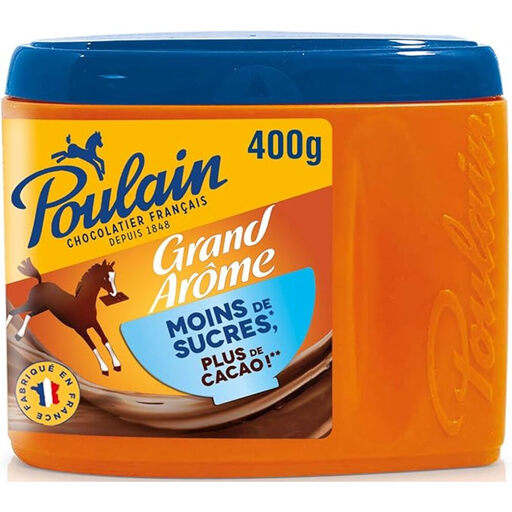 Image unavailable
Worth considering if you’re looking for a cocoa-based powder for your break at work. Check the serving size, sugars per 100 g and allergens on the pack before comparing it with another product.
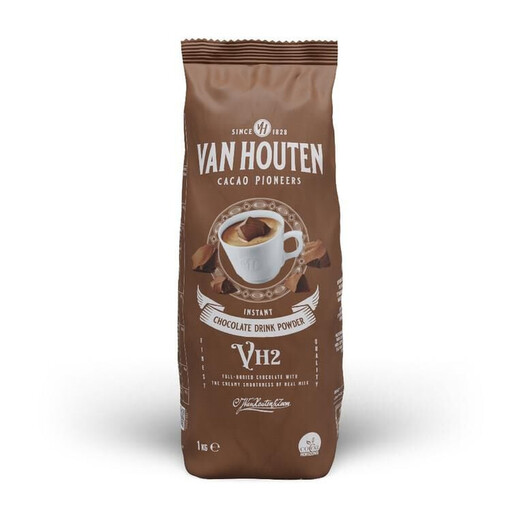 Image unavailable
Consider this if you want to compare a stated cocoa content with those of other powders for work. The name gives the cocoa content as 34% and the pack size as 1 kg. Check the preparation instructions and allergens on the pack.
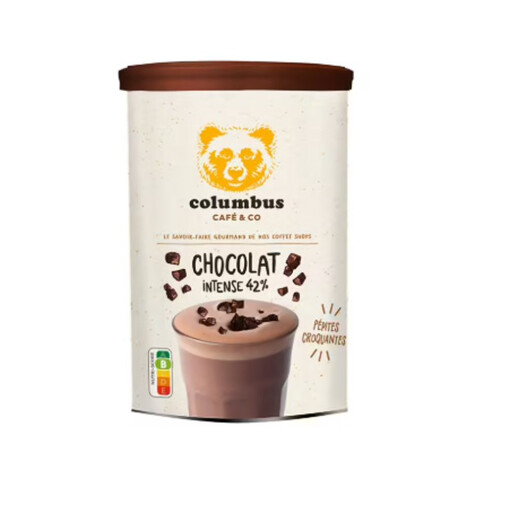 Image unavailable
This powder could be included in a comparison of recipes for a hot drink at work. The stated pack size is 320 g. Check the ingredients, sugars per 100 g and preparation instructions on the pack to see what your cup will contain.
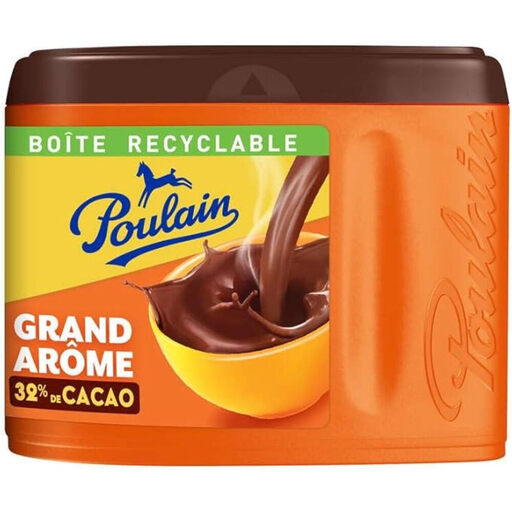 Image unavailable
This 450 g pack could be a handy option if you enjoy this type of drink during several breaks at work. Don’t assume the values are the same as for another Poulain pack size: check the ingredients, sugars and serving size on the pack for this product.
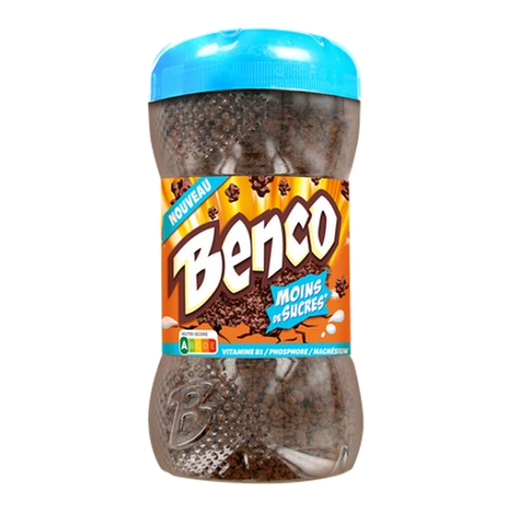 Image unavailable
Compare this if you prefer to make your drink at work with chocolate granules. The stated pack size is 400 g. The variant name alone doesn’t tell you how its sugar content compares with another powder, so check the values per 100 g and consider the amount you use.
No. Nutri-Score is voluntary in France, according to the DGCCRF. To compare prepacked foods that require a nutrition declaration, use the values given per 100 g or 100 ml, taking any applicable exemptions into account.
First compare the sugars per 100 g of powder, where both labels provide this value. For a cup, then take into account the amount of powder and the milk used. 100 g of powder and 100 ml of prepared drink aren’t equivalent comparison bases.
Check the ingredients, highlighted allergens and any possible traces on the exact pack. Banania Original lists gluten-containing cereals and possible traces of milk and soya; the Nesquik Original product information consulted lists soya. Don’t assume one variant has the same ingredients as another.