
Livraison le jour même ou le lendemain

Qualité garantie

Débloquez vos offres de bienvenue: Livraison GRATUITE | Jusqu'à -80 % | 30 jours d'essai gratuits à JoyPlus
Téléchargez l'application
Depending on the model, a hot air brush for hair can replace a hairdryer, a round brush and sometimes a straightening brush. It lets you dry, tame, straighten or add volume to your hair at home. But not all appliances are created equal: power, temperature, attachments and design all have a direct impact on the results and ease of use.
Before you buy, it’s worth getting to know the most common pitfalls.
Higher wattage can speed up drying, but it doesn’t guarantee more precise styling. A 300 W hot air brush can be perfectly suitable for short hair or quick touch-ups, while a 750 to 1,000 W appliance is better suited to long or thick hair. A 1,700 W hairdryer styler, meanwhile, is generally designed for fast drying, with attachments to match.
So, consider the power in relation to your hair’s length and thickness, as well as how much time you have in the morning.
An ionic hot air brush is designed to reduce static electricity using the technology promoted by the manufacturer. This feature can help tame flyaway strands, but the results also depend on the temperature you choose, your styling technique and the condition of your hair.
So, an ionic label doesn’t mean you can skip adjusting the heat or using the appliance on hair that’s been properly towel-dried.
A volumising brush with just one barrel size won’t meet the same needs as a hot air brush with attachments. A large head makes blow-drying long hair easier, a small brush is handy for styling a fringe or short hair, and a concentrator nozzle gives you a more precise airflow.
Remember to check the cord length, whether it has a swivel joint and how easy it is to change attachments. These details make a big difference when you use it.
For a versatile appliance, look for at least two speed and temperature settings. Three settings give you more flexibility, especially if you switch between fine, thick or hard-to-tame hair. The cool-air setting helps set your style and cool the appliance before you put it away.
A hot air brush designed to dry and add volume, such as a 750 or 1,000 W model, isn’t directly comparable to a heated brush used on dry hair. The latter heats to a set temperature, usually given in degrees Celsius, but doesn’t produce an airflow for drying.
A ceramic coating is often preferred for more even heat distribution. Some models also use a titanium-ceramic coating. However, these materials don’t mean you can keep the appliance in one place or apply heat to the same section for too long.
The brush barrel diameter also plays an important role:
A high temperature can be useful for some thick hair, but use it with care. An adjustable ceramic straightening brush lets you tailor the heat to your hair type, from 130 to 230 °C depending on the model. An automatic shut-off, swivel cord and comfortable grip are also features worth checking.
As with any hair styling appliance, keep it away from water, unplug it after each use and let it cool before removing an attachment or putting it away.
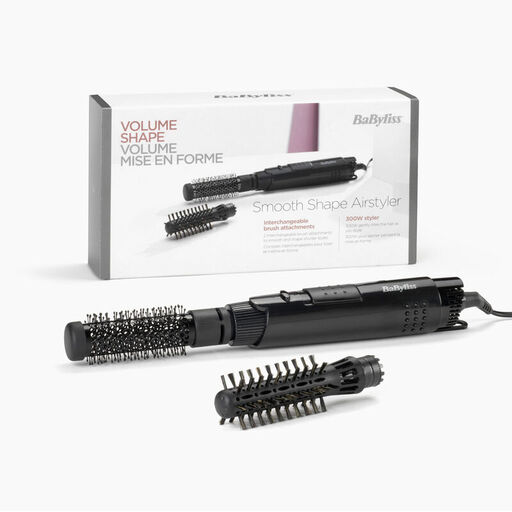
Why we think this model is a good fit: Its compact design and two brushes make it easy to get started, style short hair and do quick touch-ups.
The two barrel sizes mean the appliance isn’t limited to just one type of styling.
300 W, ceramic coating, two speeds, two temperature settings and a cool-air function.
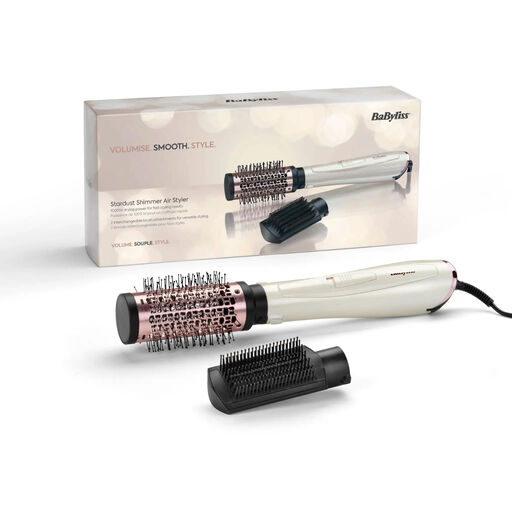
Why we think this model is a good fit: Its 50 mm round brush is designed to lift roots and create a blow-dry on medium to long hair.
The round and flat brushes let you switch up your styling, rather than being limited to just one look.
1,000 W, advertised ionic technology, titanium-ceramic coating, three temperature settings and three speeds.
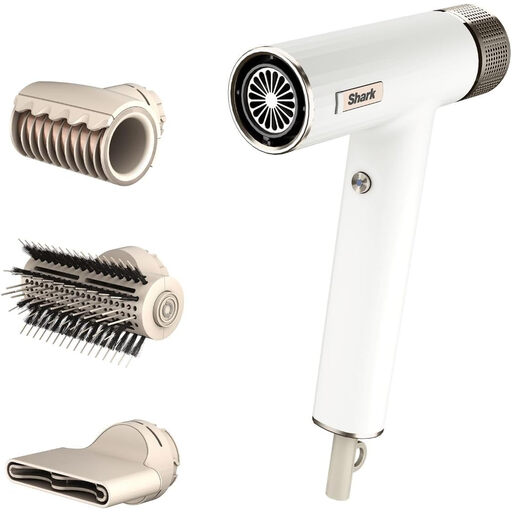
Why we think this model is a good fit: This ionic hairdryer comes with several attachments and is designed for anyone who switches between drying, straightening and finishing touches.
The three attachments clearly distinguish between targeted drying, straightening and finishing.
1,700 W, three attachments, cool-air function, advertised weight of 750 g and temperature control according to the product listing.
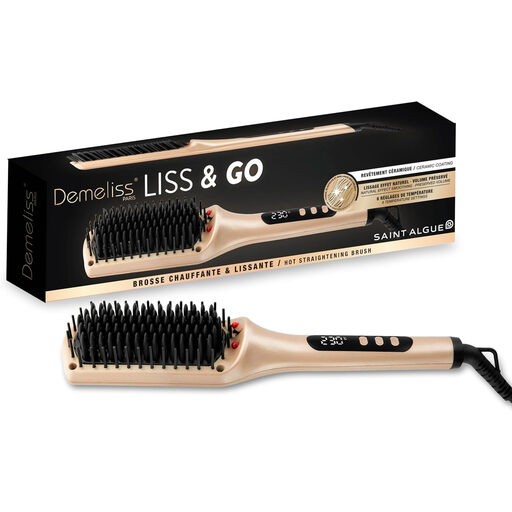
Why we think this model is a good fit: This heated brush is for anyone who wants to straighten dry hair without using an airflow.
Its six temperature settings mean you don’t have to use the same heat setting for every hair type.
Ceramic-coated bristles, settings from 130 to 230 °C, advertised ionic function and automatic shut-off after 60 minutes.
We’ve selected a complete range, updated in real time, of products that meet these exacting criteria and European safety standards.
Most hot air brushes are designed for towel-dried or partially dried hair, not soaking-wet hair. Start by removing excess water with a towel, gently detangle your hair, then choose a moderate temperature. Always check the instructions for your model.
A straightening hot air brush blows out hot air, so it can dry your hair as it styles it. A heated brush, on the other hand, works mainly through direct contact with heated elements and is generally used on dry hair. The former is better suited to blow-drying, while the latter is mainly used for straightening or touch-ups.
Energy use depends on the appliance’s power and how long you use it for. For the same running time, a 1,000 W model uses more energy than a 300 W appliance. To estimate the cost, multiply the power in kilowatts by the number of hours you use it, then by the price per kilowatt-hour shown on your bill. Regularly cleaning the air intake grille also helps keep the appliance working efficiently.