
Livraison le jour même ou le lendemain

Qualité garantie

Débloquez vos offres de bienvenue: Livraison GRATUITE | Jusqu'à -80 % | 30 jours d'essai gratuits à JoyPlus
Téléchargez l'application
Working on a vehicle's cooling, fuel, or braking system requires precision and the right tools. A set of hose pliers is essential for pinching a flexible hose to temporarily block fluid flow without causing damage. The only problem? The market is flooded with models making various promises, and a poor choice can quickly turn a simple job into a costly ordeal.
As the Head of Product Recommendations at Joybuy, my role is to help you see things more clearly. Together, let's break down the pitfalls to avoid and the criteria that truly matter when selecting a reliable and durable tool.
To make the right choice, focus on a few key points that determine the performance and lifespan of your hose plier set.
The choice of material is the most critical aspect. There are two main categories:
For pinch-off pliers, effectiveness hinges on jaw design. The jaws must be smooth with rounded edges. This geometry allows pressure to be distributed evenly across the hose, pinching it effectively without marking or shearing it. Avoid models with flat, angular jaws that risk creating a breaking point.
A good locking mechanism, often a ratchet or rack-and-pinion system, is a non-negotiable feature. It must hold the pliers in the closed position effortlessly, leaving your hands free for the repair. Ensure the system is easy to engage and release, even while wearing gloves.
Rather than an endless list, here are options tailored to specific needs, all chosen for their adherence to our quality and safety standards.
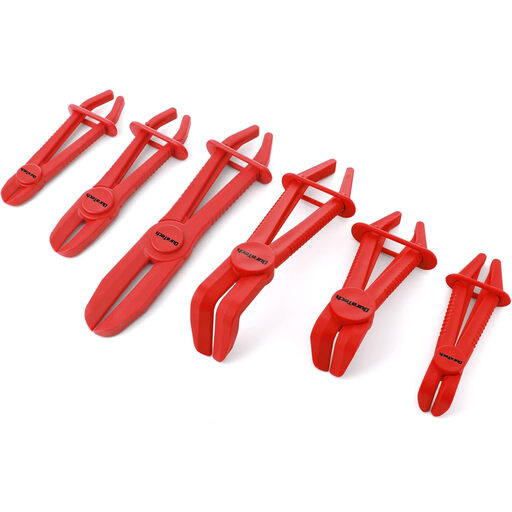
Why we chose it: This mechanic's plier set is the ideal solution for those who work on all types of vehicles. It covers a wide range of diameters (from 3 to 64 mm) and includes straight and angled pliers, offering maximum versatility for fuel, radiator, or brake hoses.
Made from reinforced nylon (PA6), it is both robust and non-conductive. Its rounded jaws protect hoses, and its locking ring ensures a reliable hold.
The set of 6 different sizes and angles provides a complete solution, saving you from buying multiple tools. The non-slip handle improves comfort and grip.
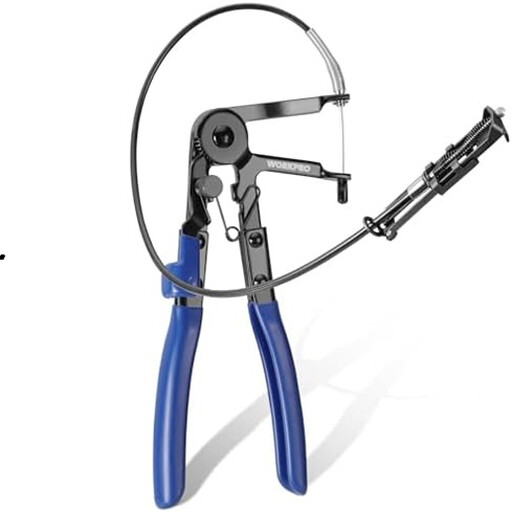
Why we chose it: This tool has a specific mission: to reach spring clamps located in the inaccessible corners of modern engine bays. It's ideal for pros or advanced DIYers working on newer vehicles.
Its high-quality carbon steel construction ensures excellent durability. The ratcheting lock mechanism is precise and reliable, holding the clamp in the open position to make your job easier.
The 67 cm flexible cable gets into places no standard pliers can reach. The locking feature allows for one-handed operation, a decisive advantage in confined spaces.
We have compiled a complete selection of products that meet our strictest quality and safety criteria.
Yes, it is possible to pinch a brake hose with suitable pliers when replacing a caliper or flexible line. The absolute requirement is to use a tool specifically designed not to damage the hose, featuring smooth, rounded jaws. The operation must be temporary and should never be performed on rigid metal lines.
It all depends on the material and frequency of use. A well-maintained carbon steel tool can last for years. A reinforced nylon set is also very durable, but it should be inspected regularly for any signs of cracking, especially after exposure to chemicals. Storing them in a clean, dry place is key to their preservation.
No, a truly universal plier is a myth. A pinch-off plier kit like the DURATECH model offers great versatility for different hose diameters. However, a flexible cable clamp plier like the WORKPRO model is a highly specialized tool. Your choice should always be guided by the nature of the job you need to perform.