Households that use honey every morning
If you use honey regularly, choosing a suitable size matters more than buying a small jar just now and then. Compare like-for-like honeys and make sure you’ll use the size you choose.


If you often spread honey on toast at breakfast, choose a creamy texture and a size that suits how much you use. If you want to drizzle it easily into yoghurt or a drink, check that it’s runny and comes in a squeezy bottle. If origin or organic status matters to you, check the country of harvest and the organic label separately: being packed in France or labelled organic does not prove that the honey was harvested in France.
If you use honey regularly, choosing a suitable size matters more than buying a small jar just now and then. Compare like-for-like honeys and make sure you’ll use the size you choose.
If you often pour honey straight from the bottle, a runny texture and a squeezy bottle can make serving easier. For spreading, you could also look at creamy honey in a jar.
Check the country where the honey was harvested and, if you’re looking for an organic product, its organic label. These are two separate criteria.
When choosing honey for breakfast, start with how you’ll use it most often. Then check the size, texture and origin information for the product you’re considering.
| Criterion | What to check | Who it matters to |
|---|---|---|
| Size | The net weight and type of honey, so you can choose a jar you’ll use regularly. | If I spread it on toast almost every morning, I want a quantity that suits this use without choosing an unnecessarily large jar; around 36% of consumers may rank size as their top concern. |
| Texture and packaging | Whether the honey is runny or creamy, and whether it actually comes in a squeezy bottle. | If I’m pouring honey into yoghurt or a drink, I want to be able to control the amount easily; convenience may be the top priority for around 21% of consumers. |
| Country of harvest | The country or countries of harvest shown on the label, without confusing these with the place where the honey was packed. | When origin matters to me, I want to know where the honey was harvested, including when it’s a blend; around 29% of consumers may prioritise this information. |
| Organic status | The organic label and, separately, the country or countries of harvest. | If I’m mainly looking for organic honey, I check its organic status without assuming it was harvested in France; this may be the priority for around 14% of consumers. |
A large jar won’t necessarily suit someone who rarely uses honey, although it may be right for a family that uses it regularly.
Estimate how much you’ll use and compare like-for-like products before choosing a size.
The place where honey is produced or put into jars isn’t necessarily the country where it was harvested. The DGCCRF distinguishes the country of harvest from other information on the packaging.
If you’re looking for honey harvested in France, check the country-of-origin information on the product you buy.
E.Leclerc’s product listing for Bio Village organic honey states that its origin may vary between Bulgaria, Hungary, Moldova and Romania depending on supply.
If you want both organic honey and honey harvested in France, check both details on the product you choose.
According to Anses, honey of any origin carries a risk of infant botulism for children under one year old.
Do not give honey to a child under one, including on a teat or your finger.
ALDI offers Tamara blossom honey in a 500 g jar.
E.Leclerc’s product listings include 1 kg jars of creamy blossom honey and 250 g squeezy bottles of runny blossom honey.
Auchan offers runny blossom honey in a 250 g squeezy bottle.
Carrefour’s product listing features 250 g of runny blossom honey.
Monoprix offers its “Soft and Floral Flavour” blossom honey in a 250 g jar.
These honeys suit different breakfast uses, including spreading on toast and adding to yoghurt or a drink. Compare their sizes and check the harvest details if origin matters to you.
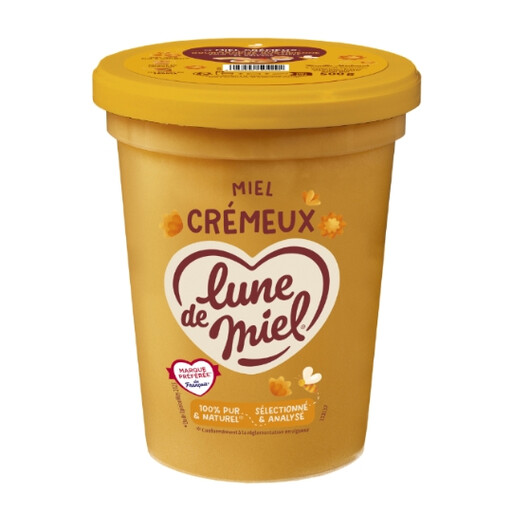 Image unavailable
Worth considering if you’re looking for a creamy texture to spread on toast at breakfast.
Blossom honey in a 500 g jar. Check the country of harvest shown on the product if origin matters to your choice.
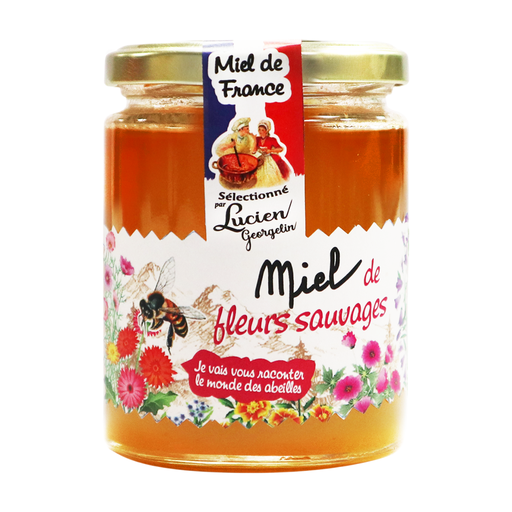 Image unavailable
A size to consider if you use honey on toast or in yoghurt.
375 g of wildflower honey. If you prefer a runny or creamy texture, check this detail before choosing.
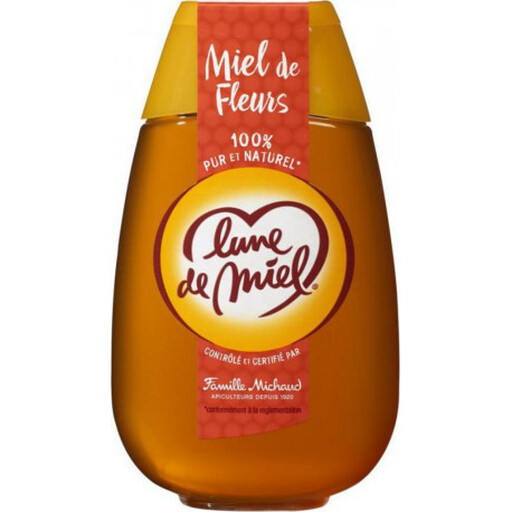 Image unavailable
Its runny texture may suit you if you add honey to a drink or yoghurt at breakfast.
500 g of runny blossom honey. If you want a squeezy bottle, check the packaging: a runny texture alone doesn’t tell you what the container is like.
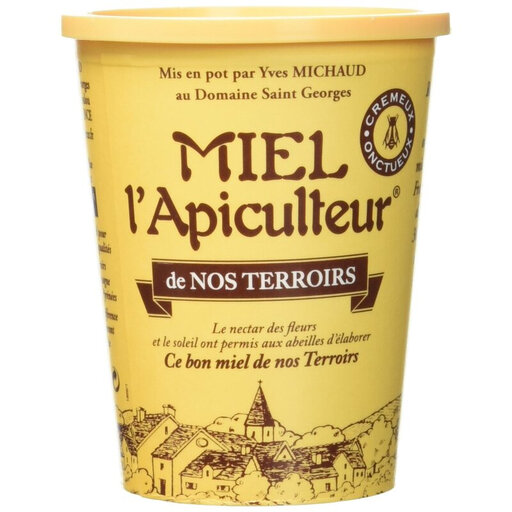 Image unavailable
Worth considering with toast if you prefer creamy honey.
500 g jar. The word “Terroir” doesn’t replace the country-of-harvest information, so check this if origin is important to you.
Check, in particular, the product name, the country where the honey was harvested and the best-before date. The DGCCRF also says that the label must identify the manufacturer or seller.
No. Packing and harvesting are two different things. To check the origin, read the country of origin of the honey on the label, as the DGCCRF explains.
No. Anses advises against giving honey to infants under one, whatever its origin, because of the risk of infant botulism.
Follow the storage instructions for the product you buy. Auchan’s runny blossom honey listing says this product should be kept at room temperature before and after opening.