Shoppers on a tight budget
You’re looking for blossom honey for toast or drinks and want to compare the price per kilo before choosing a jar size.


For your first budget-friendly honey purchase, compare the price per kilo of similar blossom honeys, then choose an amount that suits how much you’ll use. A larger jar may cost more upfront, while a smaller pack lets you try a texture before buying more. If the honey’s origin matters to you, check the country of harvest on the label rather than relying on how the jar is presented.
You’re looking for blossom honey for toast or drinks and want to compare the price per kilo before choosing a jar size.
You prefer the country of harvest to be clearly stated, especially if you’re looking for honey harvested in France. The way the container is presented isn’t enough to establish its origin.
You’d rather start with a modest amount or a squeezy bottle while you work out whether you prefer runny or creamed honey.
For your first shop, start with how much honey you think you’ll use, then compare the price per kilo of similar products. Check the origin separately if it matters to you: a smaller pack, a convenient container and a specific country of harvest each meet different needs.
| Criteria | What to check | Who is it for? |
|---|---|---|
| Price per kilo | Compare the price per kilo of similar blossom honeys, then check how much you’ll pay for the weight you choose. | If I eat honey regularly, I want to keep track of what I spend on the amount I buy, rather than judge it by the price of the jar alone; around 36% of shoppers prioritise the price per kilo. |
| Origin | Read the country or countries of harvest on the label, and don’t confuse them with the place where the honey was packed. | When I’m looking for honey harvested in a particular country, I want to be able to identify its origin before buying. This is the priority for around 29% of shoppers. |
| Pack size and use | Check the net weight, the stated texture and the type of container, such as a jar or squeezy bottle. | For a first try, I prefer a modest amount and a container that suits my everyday use; around 21% of shoppers put this need first. |
| Organic or a particular variety | Check the product for the claim or label you’re looking for, then compare it with products in the same pack size. | If I’m specifically looking for an organic product or a particular floral variety, I want to see that feature on the label. Around 14% of shoppers make this their main criterion. |
A smaller jar may cost less upfront without being cheaper for the same amount of honey.
Compare the price per kilo of similar blossom honeys, then choose a weight that suits how much you’ll use.
According to the DGCCRF, the statement “potted by the beekeeper” doesn’t guarantee that the honey comes exclusively from that beekeeper’s harvest.
If origin is a deciding factor, look for the country or countries of harvest on the label.
When buying honey for the first time, the quantity and whether it’s runny or creamed may matter more than the price per kilo alone.
A 250 g or 500 g pack lets you try the product before considering a 1 kg jar for regular use.
Anses warns of a risk of infant botulism from spores that may be present in honey, whatever its origin.
Do not give honey to a child under one year old.
This Carrefour own-brand range includes runny and creamed blossom honey in 250 g and 500 g jars.
This E.Leclerc Marque Repère range includes blossom honey in 500 g and 1 kg jars, as well as squeezy bottles.
ALDI sells 500 g blossom honey under this brand, as well as an organic version.
The brand includes runny blossom honey in a 500 g jar.
Carrefour and Auchan stock this brand’s runny and creamed blossom honey products.
These 250 g to 500 g pack sizes let you compare different textures and containers for your first purchase. Check the price per kilo and, if origin matters to you, the country of harvest on the label of the product you choose.
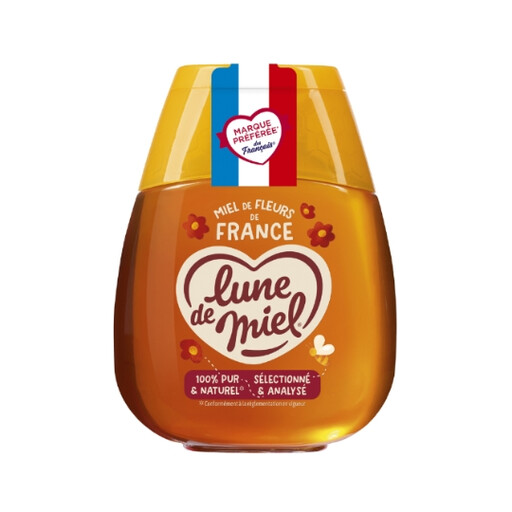 Image unavailable
The 250 g pack is a handy way to try runny honey without choosing a large jar.
The squeezy nozzle sets this container apart; if origin matters to you, check the country of harvest on the label.
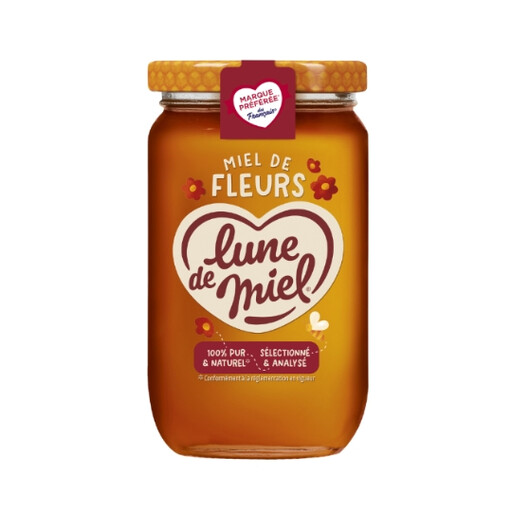 Image unavailable
The 375 g jar lets you try runny blossom honey in a moderate amount.
If you’re choosing based on origin, check the country of harvest stated on the jar.
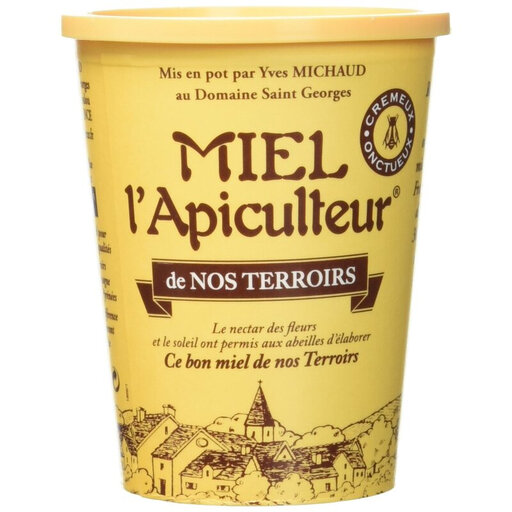 Image unavailable
This 500 g jar is for shoppers who want to try creamed honey.
The word “Terroir” doesn’t replace checking the country of harvest on the label.
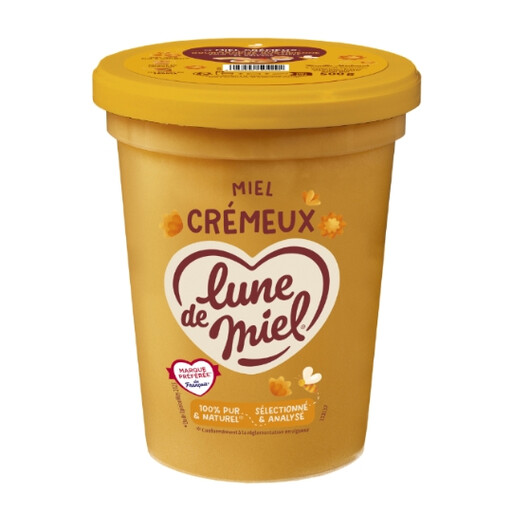 Image unavailable
This 500 g pack lets you try creamed blossom honey.
Compare its texture and weight with the other jars you’re considering; check the country of harvest if needed.
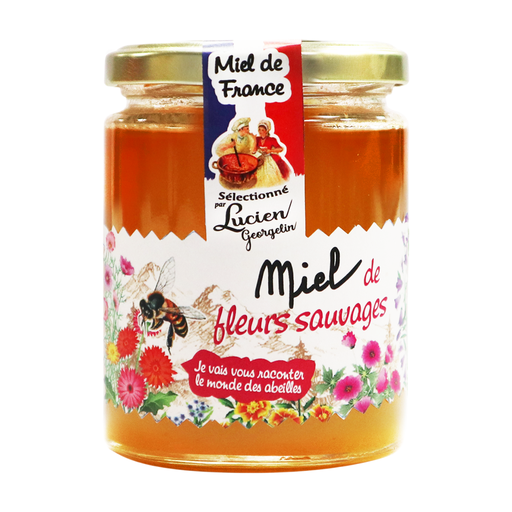 Image unavailable
The 375 g jar lets you try wildflower honey without buying a larger size.
If the stated origin is part of your decision, check the country of harvest on the label.
Check the name of the honey, its country of harvest and its best-before date. The DGCCRF also says that details about the manufacturer or seller are among the information to look for.
No. According to the DGCCRF, this statement alone doesn’t guarantee that the honey comes exclusively from that beekeeper’s harvest. If you’re choosing based on origin, check the country of harvest stated on the product.
No. Anses advises against giving honey to infants under one year old, whatever its origin, because of the risk of infant botulism.
Not necessarily: the store and the collection or delivery method may affect the price shown. Check the price per kilo and the final amount during the checkout process you plan to use.