Households that buy honey regularly
You want to choose a jar size based on how much honey you usually get through, rather than judging by the jar’s appearance alone.


For your weekly shop, choose a jar size that suits how much honey your household gets through, then check the product name and country of harvest on the label. Next, pick a texture to suit how you plan to use it: runny honey is easy to pour, while creamy honey is ideal for spreading on toast. The place where it was packed does not, on its own, tell you where it was harvested.
You want to choose a jar size based on how much honey you usually get through, rather than judging by the jar’s appearance alone.
You want to identify the country or countries where the honey was harvested, and distinguish this from where it was packed or the brand’s home country.
You’re looking for a texture that works well on toast, in drinks, with yoghurt or in baking. According to UFC-Que Choisir, the flowers bees forage on influence the honey’s flavour and how it crystallises.
Start with how much honey your household uses when planning your weekly shop. Then check the origin on the label and choose a texture that suits how you’ll use it.
| Criterion | What to check | Who is it for? |
|---|---|---|
| Size and quantity | Net weight and how much your household will actually use. | If my household eats honey every week, I want a jar size we can get through without buying more than we need. Around 50% of consumers make size their top priority. |
| Origin and labelling | Product name and country of harvest, which should be distinguished from the place where it was packed. | I want to know which country the honey was harvested in before choosing a jar. Origin is the priority for around 30% of consumers. |
| Texture and use | Runny or creamy texture and the variety stated, depending on how you plan to use it. | For toast or drinks, I want a texture that’s practical for everyday use. Texture is the top priority for around 20% of consumers. |
A label saying that honey was packed in France does not, on its own, tell you where it was harvested.
Look for the country or countries of harvest on the label. Don’t assume you know the origin from the brand’s address or a reference to the beekeeper.
Crystallisation can change the texture, but this alone does not mean there’s anything wrong with the product. UFC-Que Choisir notes that how honey granulates depends, among other things, on the flowers bees forage on.
Choose a texture that suits how you plan to use the honey, and follow the storage instructions on the jar.
Anses warns of a risk of infant botulism from honey, regardless of its origin.
Do not give honey to a child under one year old, including in a bottle or on a teat.
The Marque Repère range lets you compare different sizes and textures of blossom honey.
Auchan’s range includes runny blossom honey in a 500 g jar.
The supermarket’s own-brand range includes a 500 g jar of runny blossom honey.
Lidl describes a creamy blossom honey as “100% French” in its communications about pollinators.
These jars give you a choice of sizes and varieties for your weekly shop. For each one, check the packaging for the country of harvest and the texture you’re looking for.
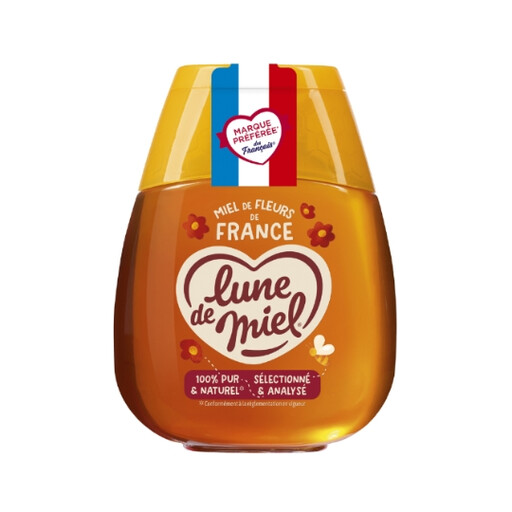 Image unavailable
For adding honey to a drink or yoghurt, this jar combines a runny texture with a measuring pourer. Check the packaging for the country of harvest.
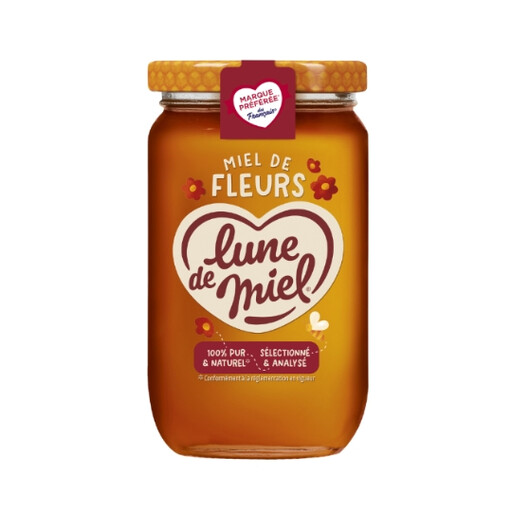 Image unavailable
If you’re looking for a 375 g jar of blossom honey, check the packaging to confirm the texture stated in the product name and find the country of harvest.
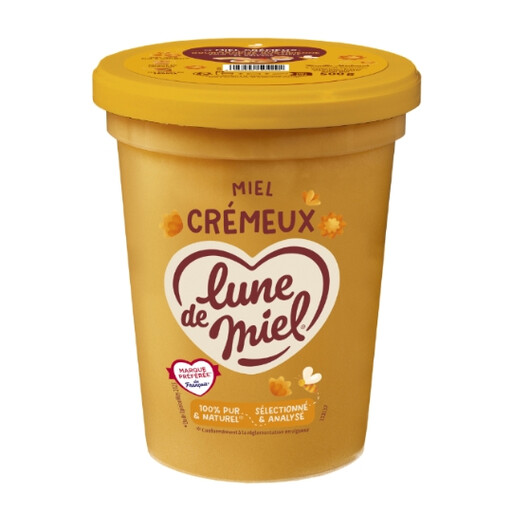 Image unavailable
This 500 g jar is described as creamy blossom honey, making it a good choice for spreading on toast. Check the packaging to confirm the texture and country of harvest.
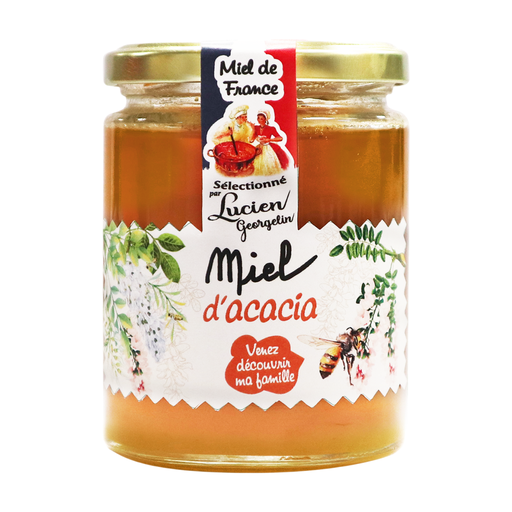 Image unavailable
If you’re specifically looking for acacia honey, this jar contains 375 g. Check the label for the country of harvest.
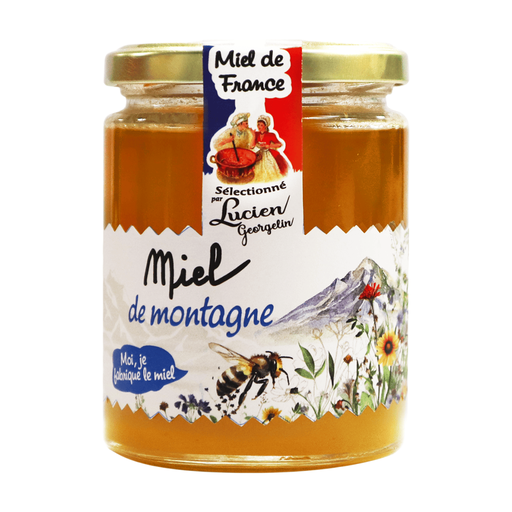 Image unavailable
If you’re looking for honey described as mountain honey, this jar contains 375 g. Check the label for its texture and country of harvest.
Check the product name and ingredients. According to the DGCCRF, a product with another ingredient added cannot be sold simply as “honey”: its name must reflect what it contains.
No. Packing and harvesting are two different things. To find out where the honey comes from, look for the country or countries of harvest on the label, as the DGCCRF advises.
No. Anses advises against giving honey to babies under one year old, regardless of its origin, because of the risk of infant botulism.
Follow the instructions on the packaging. For example, Joybuy’s listing for LUCIEN GEORGELIN acacia honey recommends keeping it away from heat and moisture. If the texture changes as it crystallises, that alone does not mean the honey is defective.