
Livraison le jour même ou le lendemain

Qualité garantie

Débloquez vos offres de bienvenue: Livraison GRATUITE | Jusqu'à -80 % | 30 jours d'essai gratuits à JoyPlus
Téléchargez l'application
Choosing a jar of honey might seem simple. Yet, between the floral varieties, blends, flavoured syrups and honey infusions, the differences in composition and use can be significant. An attractive price doesn't guarantee a pleasant texture, an origin that suits you, or a practical everyday experience.
Here are the main criteria to check before buying honey, along with a selection of products suited to different consumer profiles in the UK.
The mention "with honey" doesn't necessarily mean the product contains only honey. Some honey-based products combine sugar, glucose syrup, flavourings or extracts. This is particularly the case with certain honey syrups intended for drinks, whose composition is sometimes mainly sugar and water.
To know exactly what you're buying, check:
A natural honey, especially a monofloral honey, should not be confused with a sweetened preparation that contains only a limited amount of honey.
A creamy honey is particularly enjoyable on toast and pancakes, as well as in baking, thanks to its easy-to-spread texture. A runny honey, on the other hand, mixes more quickly into a drink and pours easily over a dessert.
Crystallisation isn't necessarily a flaw. It depends on the floral variety and storage conditions. Acacia honey generally stays runny for longer, while other varieties thicken or crystallise more quickly.
Terms like "mountain", "floral", "Manuka" or "traditional" suggest a style or origin, but they don't replace reading the label. Before comparing prices, look at the composition, origin and net weight.
The name of an infusion can also be misleading. A "honey, lemon and ginger" recipe may contain flavourings or a very small amount of honey in granule form. The ingredients list therefore remains the best reference point.
For a classic jar of honey, look for a composition stating 100% honey. The Lune de Miel Creamy Blossom Honey 500 g and Lucien Georgelin Acacia Honey 375 g products list blossom honey and acacia honey respectively as their ingredients.
Origin also deserves a careful look. A honey may be packed in the UK while coming from another country. The Lune de Miel product mentioned here states a Ukrainian origin, while the Lucien Georgelin mountain and acacia references are presented as produced in France, according to the information available on their product pages.
The format should match your consumption. A 500 g jar suits regular use, while a 150 g format may be preferable for trying a recipe or to avoid building up too many reserves in the cupboard.
A standard kettle is sufficient for preparing a honey infusion. If you also enjoy herbal teas, fruit teas or drinks requiring a precise temperature, a multifunction electric kettle can be more practical.
To best preserve the flavour qualities of honey, let the water cool slightly before adding it. Nevertheless, follow the manufacturer's recommendations and don't consider this precaution as a guarantee of nutritional or medicinal effect.
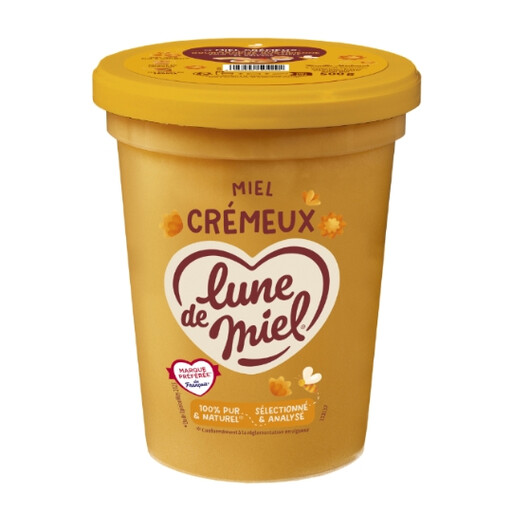
Why this choice suits this profile: With its 500 g and creamy texture, this honey is suitable for daily use on toast, pancakes or in a hot drink.
The product page states a composition based on blossom honey and a clearly indicated Ukrainian origin, making it easy to compare with other references.
A creamy texture, a net weight of 500 g and versatile use in cooking.
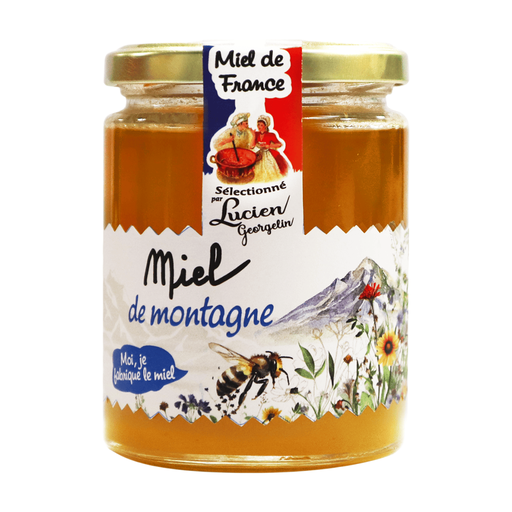
Why this choice suits this profile: This 375 g mountain honey is aimed at those looking for a rich, well-defined flavour.
The stated label mentions 100% mountain honey, with no additives or preservatives, and a French origin.
A simple composition, an intermediate format and suitability for use in drinks, baking and desserts alike.
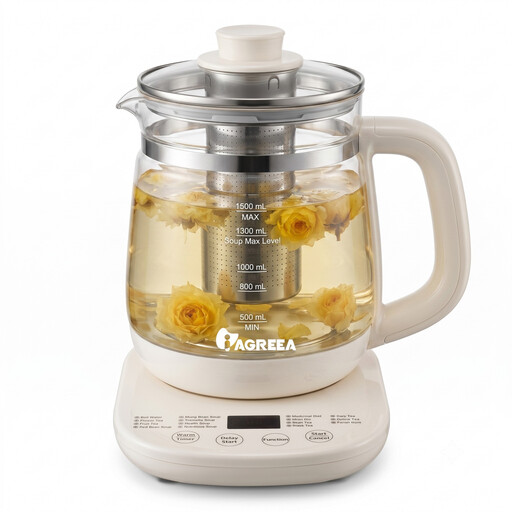
Why this choice suits this profile: Its 1.5 l capacity, programmes and temperature setting make it easy to regularly prepare teas, herbal teas, fruit drinks or honeyed water.
The wide opening and removable parts make cleaning simple. The keep-warm and delay-start functions are well suited to repeated preparations.
Borosilicate glass, a 304 stainless steel infuser, 14 programmes and six temperature settings from 40 to 90 °C.
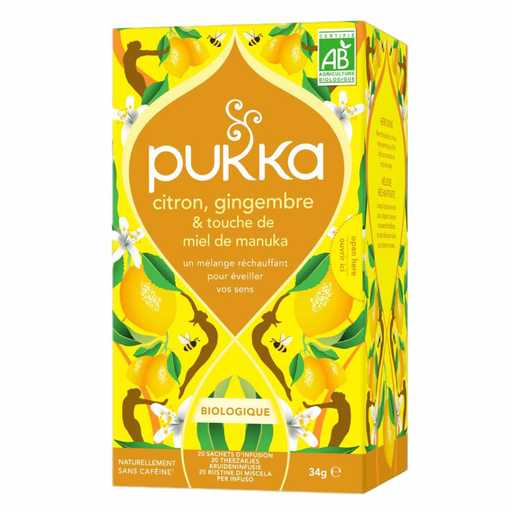
Why this choice suits this profile: The 20 individual sachets slip easily into a bag and allow you to quickly prepare a hot drink at the office, at home or on the go.
The product page details the composition and notably states the presence of 0.4% Manuka honey in granule form. This makes it impossible to confuse this infusion with a jar of pure honey.
A recipe based on ginger, lemongrass and lemon peel, stated to be caffeine-free, with a recommended infusion time of 5 to 15 minutes.
We've put together a comprehensive selection, updated in real time, of products that meet these selection criteria as well as European safety regulations.
A runny or soft honey mixes easily into a drink. Acacia honey offers a light flavour, while creamy honey will be more suitable if you also want to spread it. Add it to your taste in a hot drink, without it necessarily being boiling.
Store your jar in a dry place at room temperature, away from heat and humidity. Refer to the date on the packaging. Gradual crystallisation may change the texture of the honey without automatically meaning it's no longer fit for consumption.
Consumption depends on the appliance's power, the heating time, the volume of water and the use of the keep-warm function. An 800 W model can be suitable for gradual heating, but it's best to only heat the amount you need and avoid keeping the water hot for long periods.