
Livraison le jour même ou le lendemain

Qualité garantie

Débloquez vos offres de bienvenue: Livraison GRATUITE | Jusqu'à -80 % | 30 jours d'essai gratuits à JoyPlus
Téléchargez l'application
Making a smoothie, milkshake or frozen drink at home may seem simple. Yet many purchases disappoint because of marketing claims that are difficult to verify. An appliance presented as versatile may lack stability, heat up quickly or become tedious to clean. A portable blender, meanwhile, is ideal for a single serving, but may struggle with ice cubes or fibrous fruit.
Before choosing, bear these three common pitfalls in mind:
For blending bananas, mangoes, berries or liquids, a 500 to 700 W smoothie blender is generally sufficient for everyday home use. If you regularly plan to crush ice or grind dry ingredients, also check for a Pulse function, the blade design and the manufacturer's instructions.
A portable blender designed for a single serving focuses primarily on simplicity and a compact footprint. A model fitted with a 1 to 1.5 l jug will be better suited to family-sized preparations, soups, fruit purées or baby food, provided you follow the ingredients and temperatures permitted in the manual.
The stated capacity does not always correspond to the volume that can actually be used. It is better to have a clearly visible maximum fill line to prevent spills. For one person, a 400 to 600 ml container is particularly practical. To prepare several glasses or a smoothie bowl, a larger jug avoids having to blend multiple batches.
Also remember to check whether it comes with airtight lids and travel cups, and whether the parts are dishwasher-safe. The BPA-free label provides information about the declared composition of certain components, but it does not remove the need to follow the recommended temperatures and intended uses.
A locking system, non-slip base and overheating protection are features worth prioritising. Extra care is essential when preparing hot ingredients: some personal appliances explicitly prohibit them.
Running costs are not limited to electricity. You should also consider accessories, the possible replacement of seals and the time spent cleaning the appliance. A more powerful model is not necessarily the best choice if you only make one glass a few times a week.
The recommendations below are based on the features stated for each product. The resulting texture may vary depending on the quantities, the ripeness of the fruit and the recipe selected.
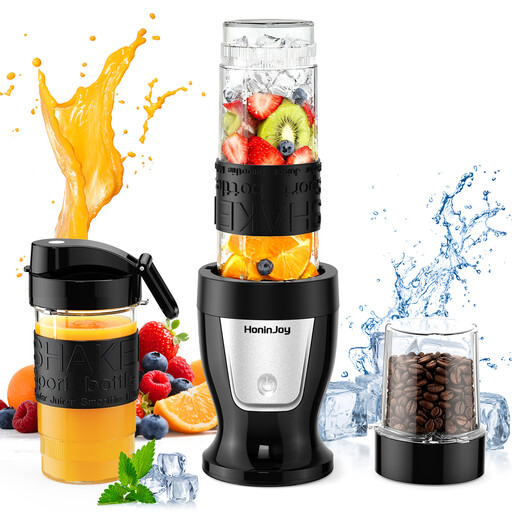
Why this choice suits this profile : Its personal format fits easily into a small kitchen, studio flat or office. The two 20 and 14 oz cups let you prepare a single serving and take it with you.
The container locking system, non-slip feet and overheating protection address several important points to consider when making your first purchase.
Stated 650 W motor, Pulse function, BPA-free cups and removable dishwasher-safe parts.
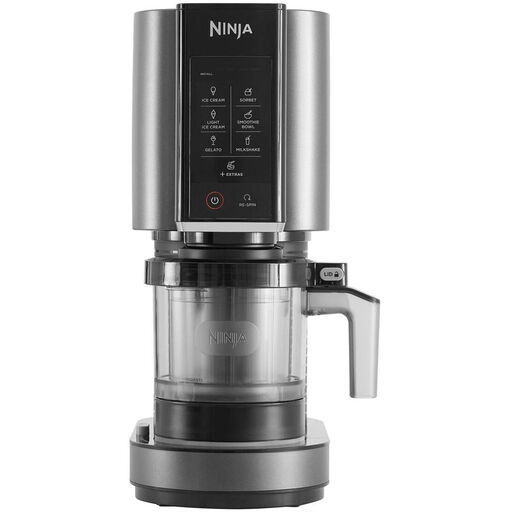
Why this choice suits this profile : This machine is designed for households that want to enjoy a wider variety of frozen desserts, from sorbet to smoothie bowls, thanks to its dedicated programmes.
The seven programmes and clearly identified accessories make it easy to distinguish a frozen-dessert maker from a standard blender.
Stated 800 W power, two 473 ml containers, removable dishwasher-safe parts and a « Mix-ins » function.
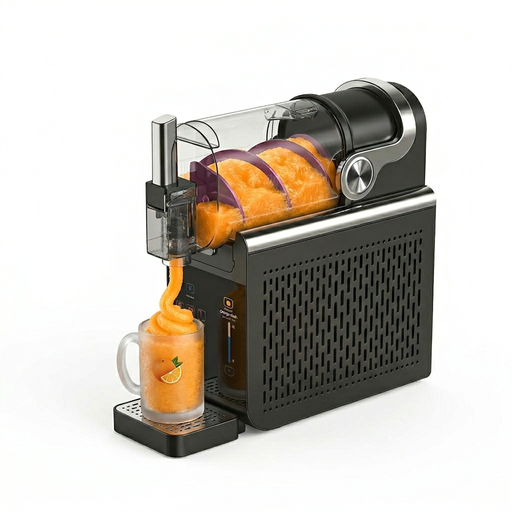
Why this choice suits this profile : Specialising in frozen drinks, this machine is ideal for people who regularly host friends and family at home.
Its design is dedicated to slushies and frozen drinks, so it does not present a standard blender as a specialist machine.
One-touch control, stated integrated cooling and continuous dispensing of the frozen preparation.
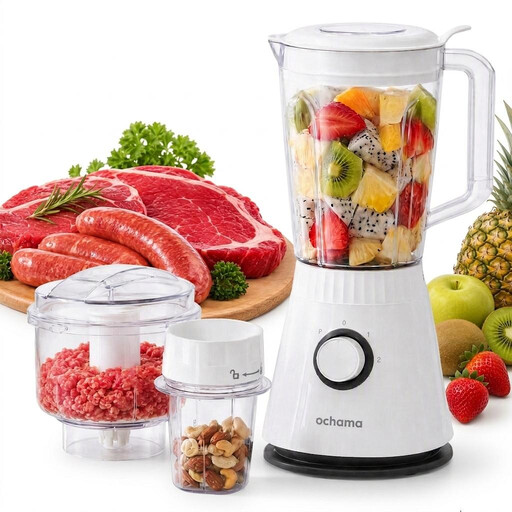
Why this choice suits this profile : Its 1.5 l jug and adjustable speeds are suitable for households that alternate between smoothies, juices, fruit-based preparations and small quantities of blended food.
The stated capacity and functions are clearly specified, so in principle you will not choose a personal appliance for the whole family.
Stated 600 W motor, 1.5 l jug, three speeds and functions for blending fruit, chopping and grinding spices.
The world of smoothies does not stop at the blender. A drink such as Maaza Aloe Vera Drink 6 × 1 l is best served chilled and should be kept in the fridge after opening. It is recommended that you consume it within three to four days. Fresh Goji Berry Juice 30 ml comes as a single-serving liquid purée: check the labelling and consume the product promptly after opening.
For little ones, HiPP Organic Fruit Baby Pouch pouches are suitable from 4 to 6 months. They are a complementary food and do not automatically replace milk or a varied diet. Ask a healthcare or nutrition professional for advice before introducing them.
The « smoothie skincare » trend borrows some of the visual and sensory cues of fruit, but has no connection with a food drink. According to its product information, ARENCIA Red Smoothie Lotion 5 contains 5% niacinamide, compared with 8% for ARENCIA Red Smoothie Serum 8. ARENCIA Red Smoothie Night Face Serum Mask is used as an overnight mask. These products are intended exclusively for external use: read the INCI list, carry out a patch test on a small area before first use and avoid contact with the eyes.
We have put together a complete, real-time updated selection of products that meet these strict selection criteria and European safety requirements.
For a daily serving, a 500 to 700 W personal blender with a travel cup can reduce preparation and cleaning time. If you make smoothies for several people, choose a jug of at least 1 l and check the maximum fill line.
Only if the manufacturer allows it. A Pulse function or a « crushed ice » setting is a useful indication, but the quantities recommended in the manual remain the priority. Avoid overfilling the container and allow the motor to cool between cycles if recommended in the instructions.
The electricity used by a short cycle is generally limited. However, the cost depends on the power, operating time and frequency of use. In the long term, cleaning, accessories and replacing certain parts may have a greater impact on your budget.