Which criteria should you prioritise?
Dedicated food steamer and blender
Worth considering: if you regularly prepare meals and want to combine cooking and blending in one appliance.
Bear in mind: it’s an additional appliance, and the process varies by model: you may need to turn the bowl or handle baskets.
Separate steamer and blender
Worth considering: if you already own both appliances and can prepare the quantities you want in your existing containers.
Bear in mind: you’ll still need to transfer the food and clean two appliances. Moulinex makes accessories for small quantities, but compatibility depends on the model.
Family food processor with an accessory
Worth considering: if you already own a compatible Companion and want to look at the XF397EF0 mini-bowl for small quantities.
Bear in mind: the mini-bowl is used inside the bowl of a compatible food processor; it isn’t a standalone appliance.
If you’re making homemade baby food and considering these three options, the criteria below each relate to a key need.
| What matters to you |
What to check |
Who it matters most to |
| Everyday steps |
Check how you move from cooking to blending, and how many times you need to transfer food or handle the bowl. |
If you want to move from one step to the next without lots of handling, easy preparation is your priority; around 20% of consumers care most about this. |
| Batch preparation |
Distinguish between cooking capacity, blending capacity and the size of your usual batch. |
If you prepare several portions in one session, you’ll want a capacity that suits your batch and the space you have to store it; around 20% of consumers put batch preparation first. |
| Cleaning |
Check which parts can be removed, any dishwasher exclusions, access to seals and how to maintain the steam circuit. |
If cleaning after every use is a significant part of your routine, access to the parts and care instructions will be especially important; around 20% of consumers prioritise this. |
| Space |
Check how much room you need to use the appliance and where the parts will go once it’s taken apart. |
If you have limited kitchen space, check how it fits on your worktop and where the bowls can be stored; around 20% of consumers prioritise space-saving design. |
| Equipment you already own |
Make a list of what you already use for cooking and blending, then check that any accessories are compatible with the exact model. |
If you’d rather reuse your existing equipment than add another appliance, start with what you already have; around 20% of consumers make reuse their main priority. |
Joybuy products for separate steaming and blending
These products suit a setup with one appliance for steaming and separate equipment for blending.
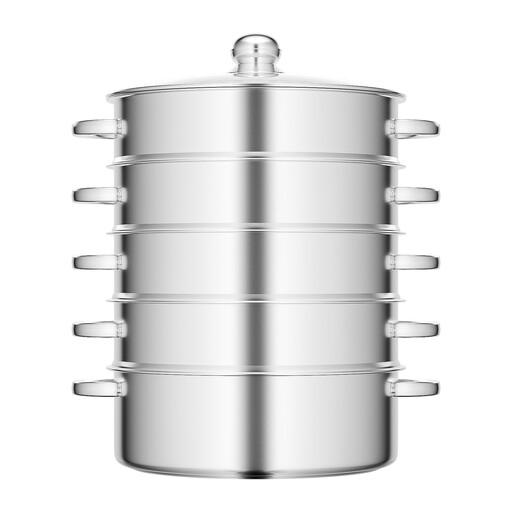 Image unavailable
Five-tier stackable stainless steel steamer, 11 inches
Worth considering if you want to steam several foods and already have an appliance for blending them.
The title states that it has five stackable tiers and a round 11-inch design.
Joybuy
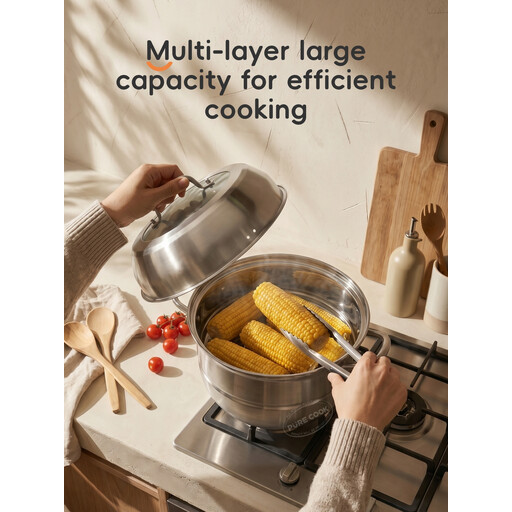 Image unavailable
PURECOOK 304 multi-layer steamer set, 7 pieces, 13.0QT
Worth considering if you’re looking for a separate steamer and already have a way to blend your food.
The description states that it has a 30 cm diameter and dishwasher-safe parts. It also notes that the lid and handles get hot during cooking; use oven gloves.
Joybuy
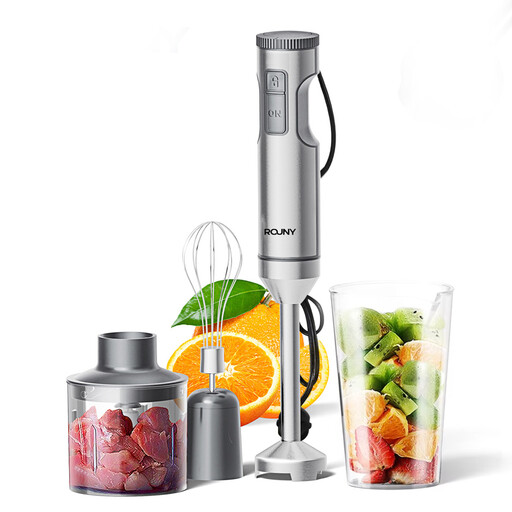 Image unavailable
ROUNY 4-in-1 hand blender, 1,200 W
Worth considering for blending if you steam your food separately.
The title states 1,200 W and 15,000 rpm. The description lists a 700 ml measuring beaker, a 500 ml chopper and accessories that are dishwasher-safe at temperatures below 60 °C. It limits continuous use to one minute, followed by one minute of rest.
Joybuy
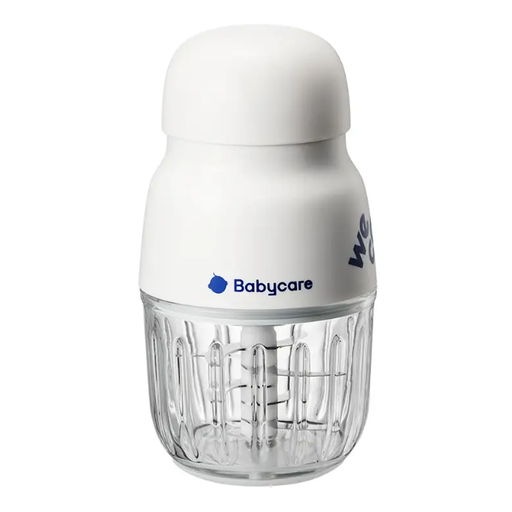 Image unavailable
BC Babycare baby food processor
Worth a look if you’re looking for an appliance to make small quantities of purée.
The description lists a 10 fl oz bowl and describes the appliance as compact and portable.
Joybuy
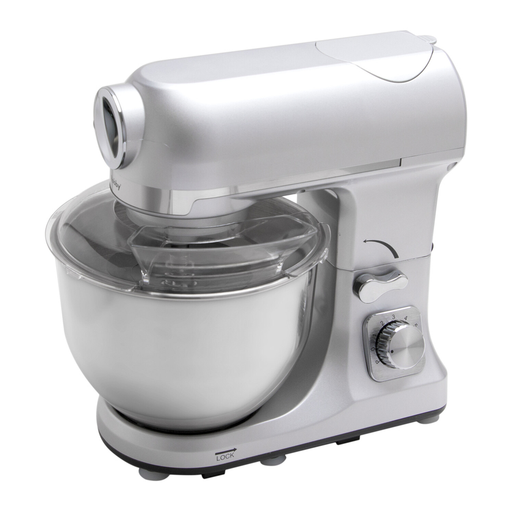 Image unavailable
Robby 5 L food processor with glass blender
Worth considering if you want to blend with a multi-function food processor and already have a separate way to steam food.
The title states 1,000 W and lists a chopper. The description mentions a 5 L bowl, a 1.5 L glass blender, six speeds and a pulse function; hand-washing is recommended.
Joybuy
Frequently asked questions
Does using the dishwasher replace descaling?
No. Cleaning removes food residue, while descaling tackles limescale in the water circuit. For the SCF883/01, Philips says parts other than the main unit can go in the dishwasher; follow the care instructions for the model you own.
Can the Companion mini-bowl work on its own?
No. The XF397EF0 fits inside the Companion bowl and requires a compatible model. Check the full model number of your food processor in the manufacturer’s information before choosing this accessory.
How long can you leave food at room temperature before refrigerating it?
Anses recommends not keeping food at room temperature for more than two hours before refrigerating it. This isn’t a waiting period to observe: plan to chill the food as soon as preparation is finished.
What temperature should your fridge be?
Anses puts the ideal temperature between 0 and +4 °C in the coldest part of the fridge. The temperature shown on the thermostat doesn’t necessarily reflect every area of the fridge.
Does freezing kill micro-organisms?
No. According to Anses, freezing food at home at −18 °C stops micro-organisms from multiplying, but most survive. Anses recommends freezing food as soon as it’s prepared rather than at the end of its storage period, and advises against refreezing food once it has thawed.


