For your daily coffee, start by deciding how much effort you’re happy to put in: capsules and pods make preparation simpler, a portafilter gives you more control, while a bean-to-cup machine automates the process from whole beans. If several people make coffee one after another, or you enjoy milk-based drinks, check how the specific model works between cups, along with its capacity, milk system and cleaning requirements. Don’t rely on the machine type alone.
Who are these machines for?
Households making several coffees in a row
If several people are waiting for a coffee, check how long the machine takes between brews, as well as the capacity of its water tank and grounds containers. Que Choisir looks in particular at how consistently the machine serves successive cups. A ‘two-cup’ function alone doesn’t tell you everything about its serving pace.
Fans of cappuccinos and lattes at home
If you switch between coffee and milk-based drinks, check whether the machine has a steam wand you operate manually or an automatic milk frothing system. Also check which parts need rinsing after using milk: cleaning them is part of the routine, whatever coffee you use.
People who care about consumables and cleaning
Before choosing a system, check which coffee or portions it takes, whether it needs filters and which descaling products are required. Capsules mean individual packaging to sort for recycling; machines that use ground coffee or beans also need regular cleaning.
What sets the different systems apart?
For everyday use, the system mainly determines what you do before each cup and which consumables you’ll need. You’ll still need to check each model’s milk functions and how well it handles several coffees in a row: Que Choisir assesses these as separate criteria.
Capsules
Worth considering: if you want to pop in a portion and keep the steps before brewing to a minimum.
Bear in mind: you’ll need capsules in a format compatible with the machine, and you’ll have to sort the used portions for recycling.
Soft pods
Worth considering: if you prefer pre-portioned coffee in soft pods.
Bear in mind: pod compatibility depends on the machine, and you’ll still need to descale it even though preparation is simple.
Portafilter
Worth considering: if you want to fill and tamp the ground coffee yourself before brewing.
Bear in mind: you’ll need to handle the coffee for every brew; if there’s a steam wand, making milk-based drinks involves extra steps too.
Bean-to-cup grinder
Worth considering: if you regularly want to make coffee from beans with most of the brewing process automated.
Bear in mind: you’ll need to empty and clean the containers, as well as maintain the coffee circuit and, where applicable, the milk system.
| Criterion |
What to check |
Who it matters to |
| Back-to-back drinks and milk |
Consistency between cups; tank capacity and cleaning requirements for the milk system. |
When several people want a coffee or cappuccino one after another, I need a machine that can keep up without too many interruptions. Around 29% of consumers prioritise this. |
| Everyday simplicity |
Steps needed for each cup; portion format or machine controls. |
When I’m in a hurry, I want to keep measuring and adjusting to a minimum before I pour a coffee. Around 29% of consumers put this simplicity first. |
| Consumables and waste |
Coffee and cleaning-product compatibility; portion materials and recycling guidance. |
If I use the machine every day, I want to know which consumables I’ll need to replace and which packaging I’ll have to sort for recycling. This is the main concern for around 24% of consumers. |
| Control and cleaning |
Choice of ground coffee or beans; access to parts that need cleaning and descaling steps. |
I’d rather have a say in how my coffee is made or use whole beans, even if that means more cleaning. For around 18% of consumers, having this control over their coffee is the priority. |
Points to keep in mind
-
Choosing without checking which coffee it takes
A capsule machine requires you to check its portion format, while other systems use ground coffee, soft pods or beans, depending on the model. And easy preparation doesn’t mean there’s no cleaning to do.
Check which consumables are compatible and read the manual to find out which descaling products and steps are required before you choose.
-
Assuming a milk function means you can make several cappuccinos in a row
A steam wand or frother doesn’t tell you how many steps are needed between drinks. Que Choisir assesses preheating, making successive cups and frothing systems separately.
For the model you’re considering, check the sequence of coffee and milk steps, the capacity of its containers and which parts need cleaning after each milk-based drink.
-
Underestimating the descaling process
Descaling procedures vary between machines. Nespresso recommends descaling its machines every three months or after around 300 capsules; check your model’s manual to confirm. Philips describes several cycles and rinses for SENSEO machines.
Check the procedure for your specific model and make sure you can follow all the steps using an approved descaling product.
Also allow for the time your machine will be out of action while it’s being descaled.
-
Judging waste by the material alone
How you sort capsules for recycling depends on their type and the collection options available where you live. In France, ADEME says aluminium and plastic capsules can go in the recycling container for paper and packaging.
Check the material your chosen portions are made from and the local guidance that applies to your home. If individual packaging is a big concern, consider systems that use ground coffee or beans too.
Brands to know
Nespresso
A capsule machine brand to consider if you’re looking for pre-portioned coffee.
- The manufacturer provides descaling guidance for its machines.
- Check the capsule format for each model and make sure it has the features you need.
Philips SENSEO
A range of soft pod machines for households that want to make pre-portioned coffee without filling a portafilter.
- Philips explains how to descale its SENSEO machines.
- Check pod compatibility, available drinks and cleaning cycles for the model you choose.
De'Longhi
A range that includes automatic bean-to-cup machines and manual portafilter models.
- De'Longhi says some of its automatic machines make a drink at the touch of a button, while its manual models leave more of the process to you.
- Milk systems and the parts that need cleaning vary by range, so start by choosing the preparation method that suits you.
Sage
Portafilter machines to consider if you want to be involved in preparing ground coffee.
- Sage lists a 54 mm portafilter and a 3-second heat-up time for the Bambino Plus.
- These features apply to the Bambino Plus; check the milk functions and cleaning requirements of any other Sage model separately.
Machines for different ways of making coffee
These machines showcase three ways to make your daily coffee: automated brewing from beans, a portafilter for ground coffee and Vertuo capsules for pre-portioned coffee. Compare the steps involved in preparing and cleaning each machine with what your household is happy to do.
 Image unavailable
Philips EP2230/10 Series 2200 with LatteGo
Worth considering if you want to make your daily coffee with a grinder and have the LatteGo milk system. Check the cleaning routine and make sure the capacity suits the number of cups you serve at home.
View on Joybuy
 Image unavailable
HiBREW H16, automatic espresso machine with grinder
Worth a look if you want automated brewing from beans and switch between coffee and milk-based drinks. The model is listed with a milk system and six coffee varieties; check the manual for the cleaning steps involved.
View on Joybuy
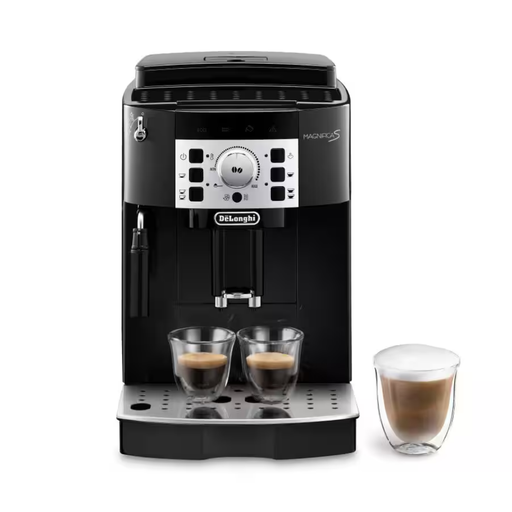 Image unavailable
De'Longhi Magnifica S ECAM22.140.B
An automatic machine with a grinder to consider if you want to use beans every day. For milk-based drinks, check whether the steps involved in preparing them and cleaning the milk system suit you.
View on Joybuy
 Image unavailable
HiBREW H13A 20Bar 3 in 1
Worth considering if you want to make coffee from ground coffee using a portafilter and also enjoy milk-based drinks. You’ll need to handle the coffee before each brew, so check the steps involved in cleaning the milk system.
View on Joybuy
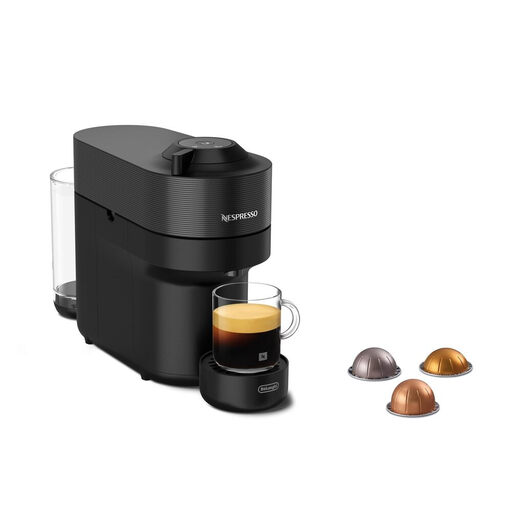 Image unavailable
Nespresso Vertuo Pop ENV90.B, 0.6 L
Worth considering if you prefer pre-portioned coffee made with Vertuo capsules. The tank capacity is listed as 0.6 L: check that it suits how often you use the machine, and confirm which capsules are compatible before you choose.
View on Joybuy
Frequently asked questions
What should I check if several people make coffee one after another?
Check how consistent successive cups are, how long the machine takes to preheat and the capacity of its containers. Que Choisir assesses several of these criteria separately in its testing; if your household also makes cappuccinos, include the milk system’s operation and cleaning in your comparison.
Does a capsule machine mean you don’t need to descale it?
No, capsule machines need maintenance too. Nespresso recommends descaling its machines every three months or after around 300 capsules. Follow the manual for your model rather than applying this schedule to another machine.
Where should I recycle aluminium or plastic capsules in France?
ADEME advises putting aluminium or plastic capsules in the recycling bin, bag or container for paper and packaging. Check what your capsules are made from so you can follow the relevant guidance.
What should I do with an espresso machine at the end of its life?
Take it to a collection point for electrical appliances rather than putting it in your household rubbish. The Ministry for Ecological Transition says that electrical appliances can, for example, be taken back by participating shops; check the arrangements at your chosen take-back point.


