
Livraison le jour même ou le lendemain

Qualité garantie

Débloquez vos offres de bienvenue: Livraison GRATUITE | Jusqu'à -80 % | 30 jours d'essai gratuits à JoyPlus
Téléchargez l'application
A ventilation appliance can cool a living room, distribute heat from a wood-burning stove more evenly or reduce fumes while cooking. The problem is that product descriptions sometimes mix up airflow, electrical power and the sensation of coolness. The result could be a fan that is too noisy for a bedroom, an undersized cooker hood or an appliance that is impossible to install in a rented property.
Before buying home ventilation appliances, three pitfalls are particularly common:
For a pedestal fan, ceiling fan or bladeless fan, perceived effectiveness mainly depends on how air circulates around the room. Check the stated coverage area, oscillation and number of speeds. An appliance placed in a corner will not distribute air as effectively as an adjustable or oscillating model.
The Dreame MF10 offers horizontal oscillation of up to 180° and vertical oscillation of up to 90°, with an electrical power rating of 55 W. These figures describe its functions and rated consumption; they do not guarantee a specific temperature in every home.
In a living room, a ceiling fan can circulate air more evenly without taking up floor space. Before installing one, however, check its diameter, ceiling height, the strength of the mounting point and electrical compatibility.
In a bedroom, home office or studio flat, noise levels often matter more than maximum speed. Compare the dB rating, whether it has a night mode and whether you can programme it to switch off.
A rechargeable portable fan is convenient when moving from room to room or for spaces where sockets are limited. However, battery capacity needs to be considered in context: battery life varies considerably depending on the selected speed. The JISULIFE Neck Fan Life 4 has a 5,000 mAh battery and claims a battery life of between 2.5 and 16.5 hours, depending on the settings.
Maintenance also deserves your attention. Grilles, blades and filters eventually collect dust and hair. A washable filter must be completely dry before it is refitted. For an air extractor or cooker hood, regular cleaning helps prevent grease build-up and maintains airflow.
A 60 cm cooker hood can operate with external extraction or in recirculation mode. In the first case, fumes are vented outside, provided the installation allows this. In the second, the filters trap some grease and odours before returning the air to the room.
The carbon filter is mainly used in recirculation mode. It must be replaced or maintained in accordance with the manufacturer’s recommendations. A compact cooker hood does not replace the home’s general ventilation and should not be used as the only way to refresh the air.
For more targeted ventilation, an air extractor with a speed controller may be suitable for a bathroom, garage or utility room. Before buying, check the duct type, its diameter, airflow and level of protection against moisture.
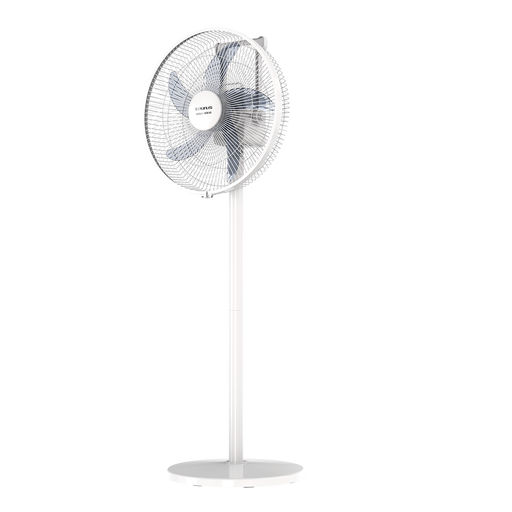
Why this choice suits this profile : Its versatile design means it can be used on the floor, on a desk, as a tower fan or wall-mounted. A practical solution for avoiding the need for several appliances in a small home.
The five speeds, night mode and timer adjustable up to 8 hours mean you do not have to use the maximum speed all the time, which is often noisier.
35 W DC motor, claimed battery life of up to 8 hours, remote control and automatic oscillation.
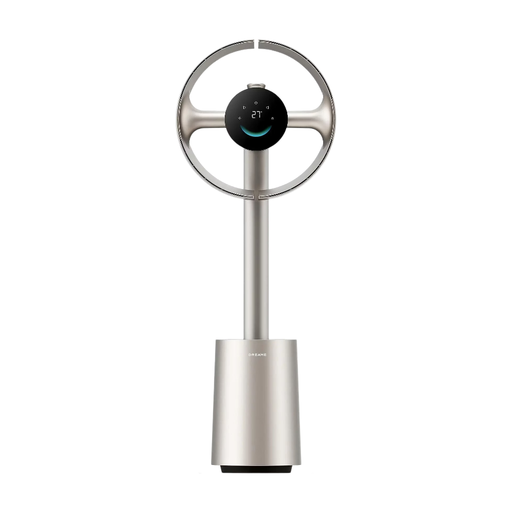
Why this choice suits this profile : This bladeless fan is aimed at those who prioritise remote control, design and adjustable air distribution in a living space.
The product description details the modes, oscillation, 55 W power and washable primary filter: all concrete points to assess rather than simply relying on a promise of air circulation.
Oscillation of up to 270°, control via the app or remote control, temperature sensor and washable filter.
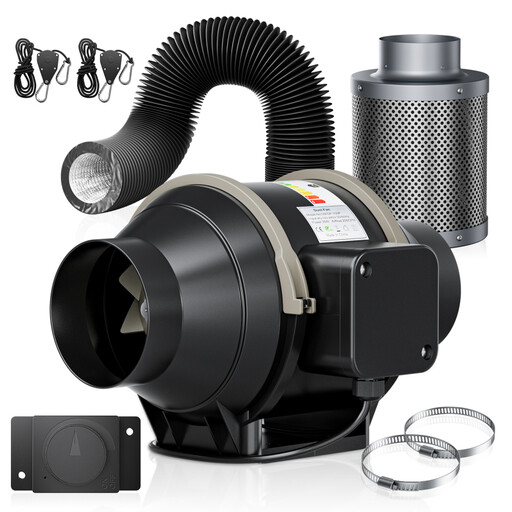
Why this choice suits this profile : This set is designed for spaces requiring connected ventilation, such as a bathroom, garage or utility room, subject to a compatible installation.
The speed controller lets you adjust operation to your needs instead of leaving the extractor running at full power all the time.
Set with carbon filter and speed control, to be selected with a duct of the appropriate diameter.
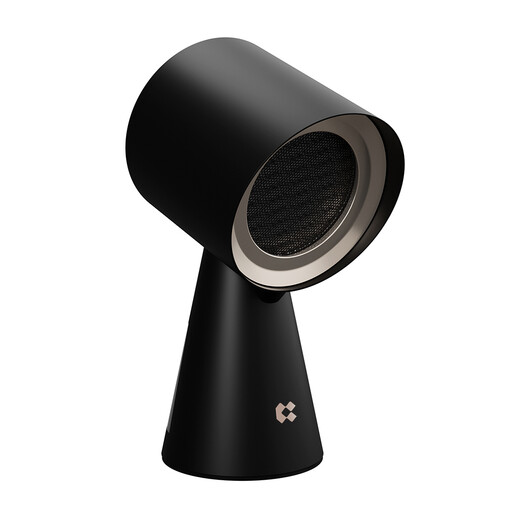
Why this choice suits this profile : Its tabletop design and recirculation operation are suitable for kitchens without fixed ducting, studio flats and temporary installations.
It requires no wall modifications. The product description states that it has two speeds, a maximum airflow of over 2 m³/min and a maximum noise level below 65 dB.
Multi-layer filters, oil collection tray, 24 W power supply and compact design.
We have put together a complete, real-time updated selection of products that meet these demanding criteria as well as European safety standards.
To distribute heat more evenly, a wood-burning stove fan generally works using the heat produced by the stove, without a mains connection. Follow the temperatures and positioning specified in the instructions, and never block the air outlets.
A ceiling fan such as the Sofucor 52K096 may be suitable for a room of compatible dimensions. Its product description states a diameter of 132 cm, six speeds, a reversible function and an adjustable tilt of up to 15°. The ceiling mounting must be sufficiently secure; in a rented property, obtain the necessary permission before carrying out any work.
For personal cooling, a neck fan or rechargeable portable model will be easier to carry than a pedestal fan. However, it does not replace the room’s general ventilation. Take care not to obstruct the air inlets and keep battery-powered appliances away from intense heat.
A desk fan, rechargeable model or bladeless fan can help keep the space clear. Check the noise level, timer, airflow direction and ease of cleaning. In a bedroom, a moderate speed will often be more comfortable than maximum airflow.
It can be suitable when it is impossible to connect the hood to an external duct. It works with a carbon filter and a grease filter, but does not vent fumes outside the property. The filters must be maintained or replaced in accordance with the instructions, while the room must still have sufficient ventilation.
The cost depends on the power rating in watts, how long it is used and the electricity tariff. A 35 W appliance used for several hours will consume less than a more powerful model, but actual consumption varies according to the selected mode. To compare two products, look at the rated power, whether there is a night mode and whether you can programme the appliance to switch off.