
Livraison le jour même ou le lendemain

Qualité garantie

Débloquez vos offres de bienvenue: Livraison GRATUITE | Jusqu'à -80 % | 30 jours d'essai gratuits à JoyPlus
Téléchargez l'application
Working out at home saves you precious time, but choosing your fitness equipment requires a bit of know-how. A poorly calibrated weight, a structure that’s too bulky, or storage that’s not well thought out can quickly turn a good resolution into gear that gathers dust.
Before you compare prices, keep an eye out for three common pitfalls:
The right choice therefore depends on your level, the space you have available, and the exercises you actually do.
For strength training, being able to gradually increase resistance is essential. Adjustable dumbbells let you tailor the load to each movement: light for raises, heavier for squats or lunges.
Make sure you check:
A dumbbell set with stand can also help you maintain a regular routine: the gear stays visible, neatly stored and immediately accessible. For beginners, several pairs of neoprene dumbbells offer simple increments and a generally comfortable grip for shorter sessions.
Measure your training area before placing an order. Think about the space you need to raise your arms, lie on the floor, and perform overhead movements.
For a pull-up and dip bar or a power tower, pay particular attention to:
A structure rated to support 204 kg must never be used beyond this limit. It should also be installed on a perfectly level floor, with all screws and adjustments properly tightened. The stated capacity does not make up for poor installation.
Cast iron plates, steel bars and non-slip coatings all serve different needs. Painted cast iron withstands repeated handling well, but may require protection from moisture. Neoprene improves grip and reduces noise if it comes into contact with the floor, but it does not replace a protective mat.
After each session:
Wrist and ankle weights should be fastened without restricting circulation or excessively affecting your posture. Start with a moderate resistance and stop the exercise if you feel any unusual pain.
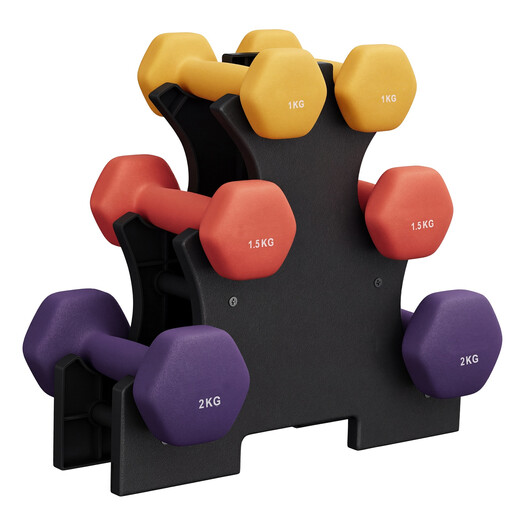
Why this choice suits this profile: These three pairs let you start with easy-to-handle weights for arms, shoulders and toning exercises. Their compact stand fits neatly into a flat or an office.
The composition clearly details the six dumbbells at 1, 1.5 and 2 kg. Their hexagonal shape limits rolling, while the stand prevents weights from being left on the floor.
Neoprene coating, ergonomic handles and included PP stand. The three weight levels are clearly identified.
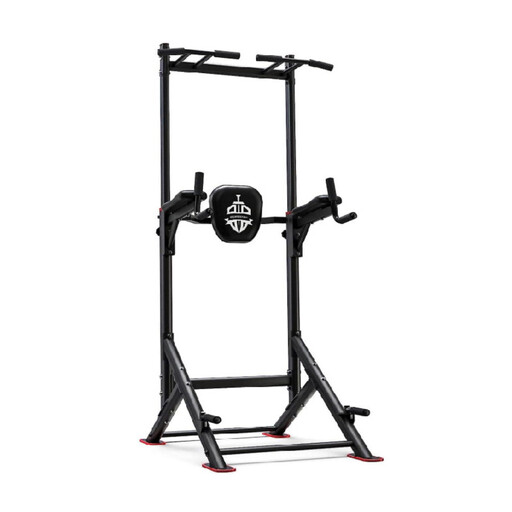
Why this choice suits this profile: This home strength training station is aimed at those who want to work with body weight using a dedicated structure, rather than accumulating multiple pieces of equipment.
The dimensions and adjustments are specified: height from 178 to 235 cm, double-triangle base, and assembly to be checked before first use.
Maximum stated weight capacity of 204 kg, multiple handles and several possible exercises: pull-ups, dips, press-ups and knee raises.
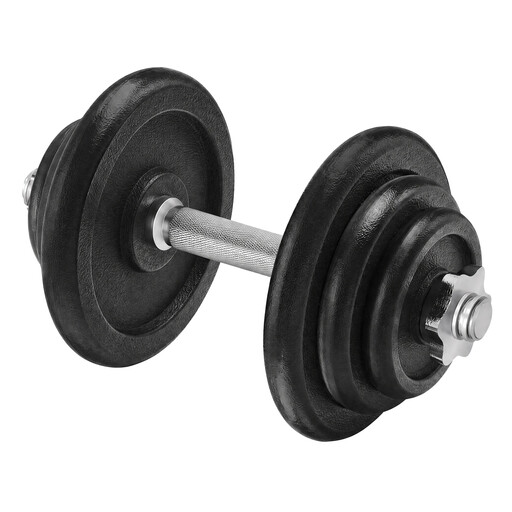
Why this choice suits this profile: Regular users can adjust the weight for curls, lunges, squats and various strength exercises, at home or in the office.
The list details the 5, 2.5 and 1.25 kg plates, as well as the bars and spinlocks. You can therefore calculate the actual weight available.
Painted cast iron plates, steel bars, 14 cm knurled handles and four spinlocks to keep the weights secure.
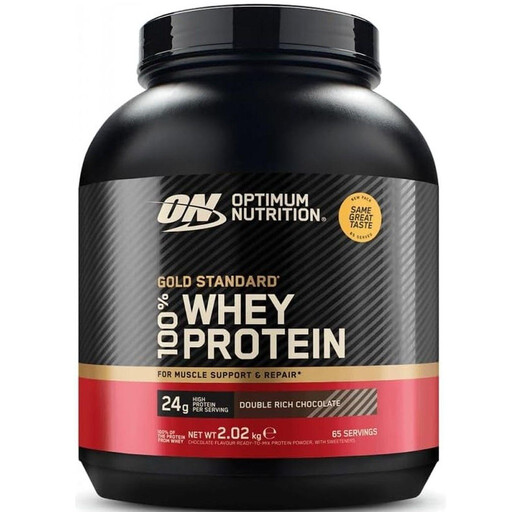
Why this choice suits this profile: A whey protein can supplement the diet of an active person when their daily protein intake is difficult to manage. It does not replace a varied diet.
The label states the amount per serving, the ingredients and the allergens, including milk and soya lecithin. Check this information according to the flavour you choose.
A 30 g serving provides 24 g of protein according to the product sheet. The manufacturer also states the recommended dosage and storage conditions.
We have put together a comprehensive, real-time updated selection of products that meet these strict criteria as well as European safety requirements.
The cost doesn't stop at the purchase price. You may also need to add a mat, a stand, spare collars or a storage solution. Free-weight equipment uses little energy day to day, whereas a home strength training station mainly requires regular checks of the screws, cables and moving parts.
To avoid unnecessary spending, choose a set suited to the exercises you actually do, rather than a machine packed with features you'll rarely use.
A set of light and medium weights, a mat and a clear area are enough to begin. Adjustable dumbbells or several pairs of weights allow you to gradually increase the difficulty. Technique and consistency should take priority over chasing ever-heavier loads.
It all depends on how often you use it, the weight handled, storage and maintenance. Regularly check the handles, threads, welds, straps and coatings. Replace any part that is cracked or shows unusual play.
No. A protein for muscle recovery in supplement form can help organise your intake, but it is not essential after every workout. Read the label, follow the stated dosage and take into account any allergies or intolerances to milk and soya.