
Livraison le jour même ou le lendemain

Qualité garantie

Débloquez vos offres de bienvenue: Livraison GRATUITE | Jusqu'à -80 % | 30 jours d'essai gratuits à JoyPlus
Téléchargez l'application
Who doesn't dream of a tidy and functional home? Yet, the home storage market is a jungle of products with tempting promises that often disappoint once you get them home. Between flimsy materials and poorly thought-out designs, it's all too easy to make a purchase you'll regret.
As a Product Expert at Joybuy, my role is to help you see things more clearly. This article breaks down the criteria that truly matter for choosing storage solutions that fit your needs, not just marketing claims.
Before you pull out your credit card, let's review the common pitfalls that turn a good deal into a future regret.
To make the right choice, focus on a few technical details that make all the difference in durability and practicality.
The choice of material is crucial. For a plastic storage box, you need to scrutinize the thickness and type of polymer. Reinforced polypropylene (PP) is a safe bet for its sturdiness and impact resistance. For kitchen organization, borosilicate glass is the gold standard for food containers: it doesn't retain odors or stains and handles thermal shock without flinching.
A truly modular storage solution must guarantee stable and secure stacking. Look closely at the design of the lid and base. Raised edges or interlocking grooves are signs of a well-designed system. On stackable boxes, look for reinforcing ribs on the walls and corners: these are what ensure the structure's rigidity, even when fully loaded.
Before buying a storage unit or cabinet, precisely measure your available space. But don't stop there: also consider its internal flexibility. A storage cabinet with height-adjustable shelves offers unparalleled versatility. It will allow you to optimize space for items of all sizes, from kitchen appliances to DIY tools.
Here are a few products that meet these criteria, each tailored to a specific use case.
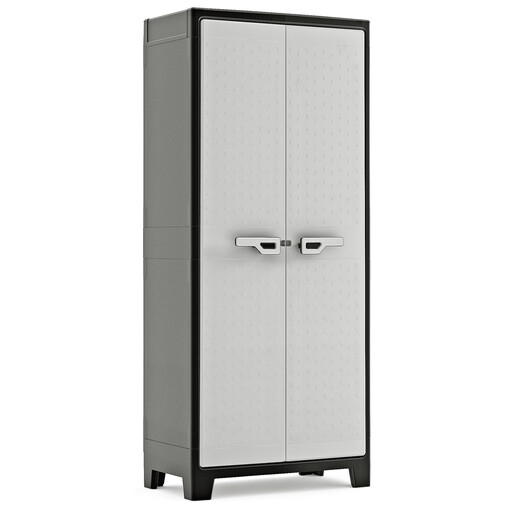
Why we chose it: Perfect for garage storage, the laundry room, or the basement. Its height and high load capacity allow you to store tools, cleaning products, and bulky equipment in an organized and secure way.
Unlike cabinets with fixed shelving, its 4 shelves are adjustable. You gain total flexibility to adapt the space to objects of all sizes. Its polypropylene structure is built to last.
Supports up to 150 kg load capacity. Lockable with a padlock (not included) for added security.
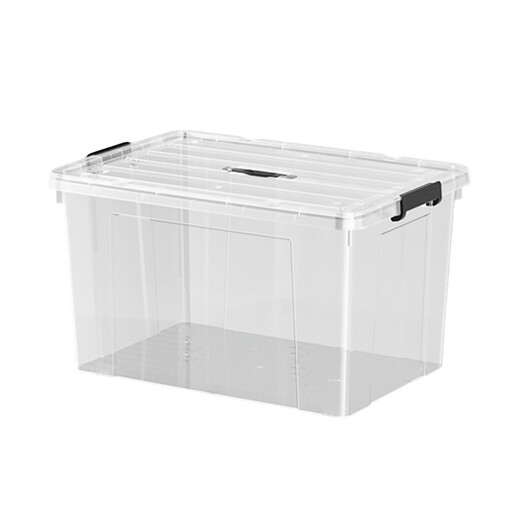
Why we chose them: Ideal for organizing closets, children's toys, or office supplies. Their transparency lets you identify the contents at a glance, and their format is designed for maximum space optimization.
This set avoids the pitfalls of brittle plastic and false modularity. The 2.5 mm thick body and reinforcing ribs ensure sturdiness, while the flat lid and non-slip base provide perfectly stable stacking.
Reinforced structure for enhanced durability. Integrated ergonomic handles make transport easy.

Why we chose it: This set is the perfect solution for meal prep enthusiasts or anyone who wants to store their food healthily. Glass remains a superior material, being both neutral and durable.
No more plastic containers that stain and warp. Borosilicate glass withstands extreme temperatures, going from the freezer to the microwave (without the lid) without any risk.
Healthy, non-porous material. Snap-lock lids for a perfect seal.
We have curated a complete selection of products that meet our demanding specifications for quality and safety.
It's all in the design details. Look for tell-tale signs: lids with raised edges or grooves that lock into the base of the box above. A slightly textured or non-slip base is also an excellent indicator to prevent the stack from collapsing.
Absolutely. Polypropylene resin is the ideal choice for these environments. It's highly resistant to moisture and temperature fluctuations, unlike particle board panels that eventually swell. For a balcony, just make sure the model is UV-treated to prevent the plastic from fading and becoming brittle in the sun.
There's no single answer; it all depends on your use case. Glass (especially borosilicate) is unbeatable for its neutrality (no taste or odor transfer), heat resistance, and easy cleaning. Its downside? It's heavier and more fragile. Food-grade plastic (BPA-free) is lighter, more affordable, and nearly unbreakable, making it perfect for transport. In short: use glass for storage and reheating at home, and plastic for dry storage and on-the-go meals.